
About María Izquierdo
Lived 1902 – 1955 (aged 53). María Izquierdo was a Mexican painter and artist.
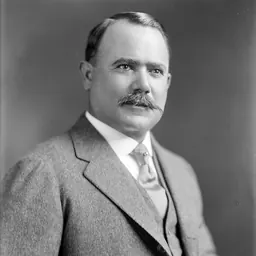
María Izquierdo (born María Cenobia Izquierdo Gutiérrez; October 30, 1902 – December 2, 1955) was a Mexican painter. She is known for being the first Mexican woman to have her artwork exhibited in the United States. Her grandmother and aunt were devout Catholics, and much of her upbringing revolved around daily Catholic traditions. Her move to Mexico City in the 1920s evoked her to explore her growing passion for art and came about the same time a paradigm shift occurred in Mexico. At the same time, the Mexican Revolution came to an end, bringing along a change of values in Mexico. Through President Álvaro Obregón, many new reform policies were emphasized, pushing for more social and educational institutions that upheld traditional Mexican beliefs and culture. These ideals resonated with Izquierdo, drawing her to attend the art academy.
Prior to Obregón's reforms, European art served as the model in art institutions. His new reforms drew in many of Mexico's most talented artists, commissioning their creation of murals addressing the importance of traditional Mexican values, which were painted on both schools and government buildings. While attending the Academy of Fine Arts, Izquierdo was instructed by Rufino Tamayo, Manuel Rodríguez Lozano and German Gedovius. She was also highly influenced by Diego Rivera, who served the director of Academy of Fine Arts in 1929 and later became pivotal in helping launch Izquierdo's career.
Recognized as one of Rivera's favorite students, the praise she received by Rivera lead to her undergoing frequent hostility from her peers. In February 1931, Izquierdo left the Academy of Fine Arts because of the animosity she received from her classmates and her frustration with the school's growing concentration on art serving only as a catalyst for political change. In the early 1920s a circle of young writers and artists, Including Maria Izquierdo, published a magazine called the Contemporáneos. The group would later adopt this name to identify themselves. Izquierdo, along with Manuel Rodríguez Lozano, Rufino Tamayo, and Julio Castellanos, all had been associated with the Movimiento Pro-Arte Mexicano, founded by Adolfo Best Maugard. Beyond the status of colleagues and friends, the Contemporáneos were collaborators. For the Contemporáneos, the city was a hub of Mexico's evolving modernity. While celebrating Mexico's unique traditions, the Contemporáneos embraced this idea of universal cosmopolitanism, and believed that Mexican culture should remain open to international influences and to the voice of the urban intellectual.
An instructor who continued to serve as a mentor even after she left the Academy of Fine Arts was Rufino Tamayo. He was said to be her lover.
Sharing a studio with the young artist for four years, Tamayo had a profound impact on Izquierdo's early development as an artist. Introducing her to watercolor, the two shared similar subject matter and color palettes. Both believed art should serve more as a poetic outlet than a political one, and while their professional relationship grew, so did a romantic one. Throughout their relationship, Izquierdo remained independent. Becoming an active part of the Liga de Escritores y Artistas Revoluctionaros (LEAR; League of Revolutionary Writers and Artists) in 1934, Izquierdo went on to use the artistic techniques that Tamayo helped her develop to create her own artistic style.
Initial career and exhibitions
In the early 1920s, Izquierdo began associating herself with the Movimiento Pro-Arte Mexicano and the Contemporáneos.
Within just her first year at the Academy of Fine Arts, Izquierdo participated in four art exhibitions. Her art was exhibited in New York's Museum of Modern Art in 1940 and that same year was also exhibited in Paris.
Quickly becoming an internationally known artist, Izquierdo hit the peak of her career in the early 1940s. In May 1944 she began serving as the cultural ambassador for Mexico and traveled to several South American countries until late September.
Maria Izquierdo was born into a Catholic family and was brought up in the Catholic church. This painting is from the famous biblical story “Adam and Eve” in translation for Izquierdo she named her painting “Adan y Eva.” She made this painting to symbolize her culture and demonstrate it from a different standpoint. She wanted others to view the story of Adam and Eve through her own visual perspective instead of the strict traditional standpoint. Izquierdo’s paintings and approach was always more personal, and she wanted to add a touch of her own culture into her artwork. That is why Adam and Eve weren't just human statues; she painted them to be folk- art statues, surrounded by an array of objects that symbolize Mexican culture. This version of the painting that Izquierdo executed so well shows a more naturalistic version of the biblical scene; it allowed those in Mexican culture to view the painting under the perspective of their own ethnicity. She touched on intimate symbolism, still lifes, and spiritual imagery. Izquierdo changed the way we saw this painting and biblical story by allowing us to view it outside of the traditional interpretation and more in touch with her culture and ethnicity.
An exhibition that traveled to Frankfurt, Vienna, and Dallas in 1987–88 showed a group of paintings by Izquierdo that displayed to a non-Mexican audience the presence of another painter of similar stature and originality. The career of this artist was the subject of a recent exhibition organised by the Centro Cultural/Arte Contemporaneo in Mexico City. Izquierdo's work shares many of the same themes and pre-occupations as that of Kahlo. Her paintings often refer to tragic elements in her life and incorporate the type of dream-like fantasies that are to be found in the work of artists of the Mexican School. The exhibition included 160 works. The catalog presented five biographical and interpretive essays, with a complete bibliography, chronology and exhibition history. The corpus of photographs of both the artist and her work gives a visual repertory of virtually every known painting, drawing and print.
Style Classified by some as a surrealist painter, María Izquierdo never identified herself as a surrealist. Instead, Izquierdo identified with the Contemporáneos, who believed that Mexican culture should be rightfully seen as a vital contributor to the dominant Western culture. She wasn't afraid to go against popular Mexican art movements and follow her own style of painting. Her culture as a mestiza was an essential part of her artistic style and themes used in her work. Her naive painterly technique, intended to recall the folk painting of regional artisans, heightened the effect.
During her time as Diego Rivera's star pupil, he described her artwork as "proud yet modest". Izquierdo's portraits are mature studies in interpretation, they are stylistically very feminine and unmistakably Mexican. In 1937, reviews of her work began to use words like "primitive" and to define her work as primitivist, these comments gained certain regional isolationism. Some representations of popular devotion could be interpreted as religious subjects or as homages to the popular and artisan traditions of Mexico, especially rural Mexico.
Making it a point to tie her art with Mexican popular tradition, Izquierdo pushed back from what many of her peers at the Academy of Fine Arts were doing. Instead of painting political messages, she painted images that held personal meaning and was rooted in Mexican traditions. She saw art as communication to the soul and her frequent images of the circus traced back to her memories visiting the circus with her aunt and grandmother in San Juan de los Lagos, Jalisco. According to scholar Robin Adèle Greeley, Izquierdo's paintings offer a deconstruction of 'heroic' Mexican nationalism using the marginalized identity of the female on two distinct levels:
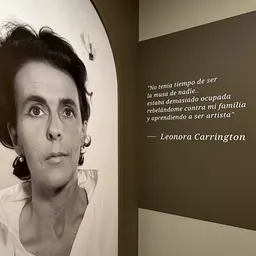
the more conventional one of protesting social discrimination against women, and more intriguingly as a hinge point for a variety of pictorial explorations. Even though she was a female Mexican artist who painted near the same time as feminist Latin American painters, Remedios Varo and Leonora Carrington, Izquierdo did not identify herself as a feminist. Painting herself holding her own severed head by the hair, the tree branches surrounding her also dangle severed heads. Diminishing figures run along the lower half of the painting while tears fall from her severed head. Although the painting can be interpreted as surrealistic, it is often interpreted as evidence to the suffering she endured in her final years of life. and although she is not as popularly known as Frida Kahlo, she helped establish a foundation for female artists. Maintaining value in art rooted in traditional Mexican values, Izquierdo's art stood out for its ingenious portrayals of Mexico among an area of highly politicized art.
She suffered a stroke in the mid-1940s which had a significant effect on her health, work and dexterity, but she persisted. Although her last years were some of the most painful in her life, she did not stop painting until she was physically unable. In December 1955, she died of a second stroke in Mexico City.
Don’t just read it —
keep it.
Full-length biographies made to live with: read them, listen on the way to work, watch them tonight.
- E-book
- Audio
- Video
Instant download · yours to keep · every purchase keeps this site free
Important facts
People in María Izquierdo's life
Named in this biography and alive at the same time




Related people
Same field, nearest in time



Contemporaries
People whose lives overlapped María Izquierdo's


Frequently asked questions
Who was María Izquierdo?
Mexican painter (1902–1955)
When was María Izquierdo born?
María Izquierdo was born on 30 October 1902 in San Juan de los Lagos.
When did María Izquierdo die?
María Izquierdo died on 3 December 1955 in Mexico City.
What was María Izquierdo's occupation?
María Izquierdo was a painter and artist.
What nationality was María Izquierdo?
María Izquierdo was Mexican.
Sources & further reading
· DBpedia: María Izquierdo (artist)
Cite this page
APA: Biography.guide. (2026). María Izquierdo. https://biography.guide/maria-izquierdo/
MLA: "María Izquierdo." Biography.guide, https://biography.guide/maria-izquierdo/.
Chicago: "María Izquierdo." Biography.guide. https://biography.guide/maria-izquierdo/.
Data last updated: 2026-09-25 · Spot an error? Report a correction.
Page generated 2026-09-27 05:13 UTC