
About Maria Hasse
Lived 1921 – 2014 (aged 92). Maria Hasse was a German mathematician and university teacher.
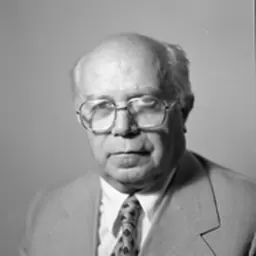
Maria-Viktoria Hasse (May 30, 1921 – January 10, 2014) was a German mathematician who became the first female professor in the faculty of mathematics and science at TU Dresden. She wrote books on set theory and category theory, and is known as one of the namesakes of the Gallai–Hasse–Roy–Vitaver theorem in graph coloring.
Education and career Hasse was born in Warnemünde. She went to the Gymnasium in Rostock, and after a term in the Reich Labour Service from 1939 to 1940, studied mathematics, physics, and philosophy at the University of Rostock and University of Tübingen from 1940 to 1943, earning a diploma in 1943 from Rostock. She continued at Rostock as an assistant and lecturer, earning a doctorate (Dr. rer. nat.) in 1949 and a habilitation in 1954. Her doctoral dissertation, Über eine singuläre Intergralgleichung 1. Art mit logarithmischer Unstetigkeit [On a singular integral equation of the 1st kind with logarithmic discontinuity], was supervised by Hans Schubert; her habilitation thesis was Über eine Hillsche Differentialgleichung [On Hill's differential equation]. She worked as a professor of algebra at TU Dresden from 1954 until her 1981 retirement.
Contributions With Lothar Michler, Hasse wrote Theorie der Kategorien [Category Theory] (Deutscher Verlag, 1966). She also wrote Grundbegriffe der Mengenlehre und Logik [Basic Concepts of Set Theory and Logic] (Harri Deutsch, 1968).
In the theory of graph coloring, the Gallai–Hasse–Roy–Vitaver theorem provides a duality between colorings of the vertices of a graph and orientations of its edges. It states that the minimum number of colors needed in a coloring equals the number of vertices in a longest path, in an orientation chosen to minimize the length of this path. It was stated in 1958 in a graph theory textbook by Claude Berge, and independently published by Hasse, Tibor Gallai, B. Roy, and L. Vitaver. Hasse's publication of this result was the second chronologically, in 1965.
Don’t just read it —
keep it.
Full-length biographies made to live with: read them, listen on the way to work, watch them tonight.
- E-book
- Audio
- Video
Instant download · yours to keep · every purchase keeps this site free
Important facts
People in Maria Hasse's life
Named in this biography and alive at the same time



Related people
Same field, nearest in time


Contemporaries
People whose lives overlapped Maria Hasse's



Frequently asked questions
Who was Maria Hasse?
German mathematician
When was Maria Hasse born?
Maria Hasse was born on 30 May 1921 in Warnemünde.
When did Maria Hasse die?
Maria Hasse died on 10 January 2014 in Dresden.
What was Maria Hasse's occupation?
Maria Hasse was a mathematician and university teacher.
What nationality was Maria Hasse?
Maria Hasse was German.
Sources & further reading
Cite this page
APA: Biography.guide. (2026). Maria Hasse. https://biography.guide/maria-hasse/
MLA: "Maria Hasse." Biography.guide, https://biography.guide/maria-hasse/.
Chicago: "Maria Hasse." Biography.guide. https://biography.guide/maria-hasse/.
Data last updated: 2026-09-20 · Spot an error? Report a correction.
Page generated 2026-09-27 04:59 UTC