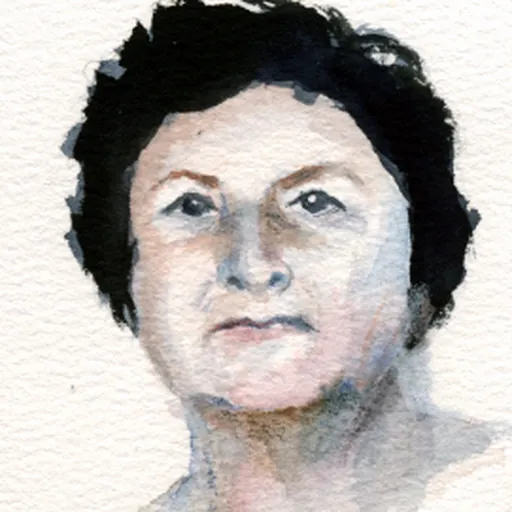
About María de los Ángeles Alvariño González
Lived 1916 – 2005 (aged 88). María de los Ángeles Alvariño González was a Spanish biologist, oceanographer and professor, known for Spanish Navy.
María de los Ángeles Alvariño González (, October 3, 1916 – May 29, 2005), known as Ángeles Alvariño, was a Spanish fishery research biologist and oceanographer globally recognized as an authority in plankton biology. She was the first woman ever appointed as scientist aboard any British or Spanish exploration ship. She discovered 22 new species of marine animals and published over a hundred scientific books, essays, and articles. In her late career she studied the history of early marine scientific exploration.
Early days
María de los Ángeles Alvariño Gonzalez was born in Serantes (Ferrol, Galicia), Spain on October 3, 1916, the daughter of Antonio Alvariño Grimaldos, a physician, and Maria del Carmen Gonzales Diaz-Saavedra de Alvariño. From an early age she showed an interest in the natural sciences and read her father's book on zoology. She attended the lycée Concepcion Arenal in Ferrol and in 1931 attended the University of Santiago de Compostela where she graduated summa cum laude in 1933. The titles of her dissertations were "Social Insects" and "Women in Don Quixote".
"Creativity and imagination are the basic ingredients for the scientists, as in the arts, because science is an art…" she later explained when she was asked about her diverse interests.
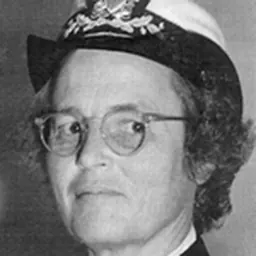
In 1940, she married Eugenio Leira Manso, captain of the Spanish War Navy and Knight of the Royal and Military Order of Saint Hermenegild. Two years later, their daughter was born, Maria de los Angeles Leira Alvariño, who is now a well-renowned architect and urbanist based in the US. In the United States In 1956, María de los Ángeles received a fellowship from the Fulbright Commission to conduct scientific work at the Woods Hole Oceanographic Institute on Cape Cod in Massachusetts, where she worked with Dr. Mary Sears, who was the president of the U.S. Oceanographic Congress and also a zooplankton researcher. Her career ramped up when Dr. Mary Sears, impressed with the quality of her research, recommended Ángeles Alvariño to Dr. Roger Revelle, the director of the Scripps Institution of Oceanography, part of the University of California San Diego, who offered her a position as a biologist. She worked at UCSD from 1958 to 1969 where she studied the zooplankton off the coast of California as well as the Atlantic, Pacific and Indian Oceans. During this period she discovered 12 new Chaetognatha species, nine siphonophore and one medusa. She also produced a model of the world's distribution of different species of Chaetognatha and Siphonophora. This research formed the basis of her doctoral dissertation; she received a PhD from the University of Madrid in 1967. She received various grants from institutions such as the U.S. Office of the Navy, the California Cooperative Oceanic Fisheries Investigations, and the US National Science Foundation.
In January 1970, she was appointed to a position as Fisheries Research Biologist at the prestigious Southwest Fisheries Science Center (which is part of the National Oceanic and Atmospheric Administration). Here she continued her research in Chaetognatha, Siphonophora, and studied the relationship between the predatory behavior of these organisms and the survival of fish larvae. She also studied the distribution of Chaetognatha and Siphonophora species in the Pacific and Antarctic Oceans, and plankton movement, in particular the effect of plankton introductions through pollution or ship movements.
In the later 1970s, Alvariño worked to coordinate oceanic research among Latin American nations, and she studied the Antarctic. During this period she received various grants from the Food and Agriculture Organization of the United Nations (FAO) and from the United Nations Educational, Scientific, and Cultural Organization (UNESCO).
She retired as an emeritus Scientist in 1993 but continued to conduct research on seagoing vessels hosted by various countries. Towards the end of her life, Ángeles Alvariño devoted herself to study the early history of scientific exploration. She looked closely into the scientific discoveries of early Spanish explorers and navigators who first mapped the oceans and their currents. As part of these investigations, she published a full account of the Malaspina Expedition, the first scientific oceanic expedition that traveled throughout the western Atlantic Ocean and the Pacific Ocean from 1789 to 1794.
Throughout her life, Ángeles Alvariño also served as a faculty member at the National Autonomous University of Mexico in 1976; at San Diego State University from 1979 to 1982; and later, at the University of San Diego from 1982 to 1985. She also was a visiting professor at the Federal University of Paraná in Brazil in 1982, and at the National Polytechnic Institute of Mexico from 1982 to 1986. During these years Alvariño directed the doctoral research of several students and served on thesis committees in various countries.
Upon her death in San Diego (California), on 29 May 2005, she left a finished manuscript on the birds and marine animals found in the Malaspina Expedition that she had previously studied. This project will soon be completed and translated by her daughter.
Google created a Doodle for its home page in many countries on October 3, 2021, to celebrate the 105th birthday of Dr. Ángeles Alvariño.
Taxonomy
During her career Alvariño discovered 22 new marine species, and revised their morphology at the different development stages by using illustrations and personal notes. She specialized in Jellyfish, Siphonophorae, Chaetognatha and Hydrozoa. These are the species that she described as new:
Sagitta bierii Alvariño, 1961; chaetognath (accepted as Serratosagitta bierii Alvariño, 1961) Sagitta euneritica Alvariño, 1961; chaetognath (accepted as Parasagitta euneritica Alvariño, 1961) Eukrohnia bathypelagica Alvariño, 1962; chaetognath Enneanogonum searsae Alvariño, 1968; siphonophore (accepted as Enneagonum hyalinum Quoy & Gaimard, 1827) Sulculeolaria brintoni Alvariño, 1968; siphonophore (accepted as Sulculeolaria quadrivalvis Blainville, 1830) Spadella legazpichessi Alvariño, 1981; chaetognath (accepted as Paraspadella legazpichessi Alvariño, 1981) Nectocarmen antonioi Alvariño, 1983; siphonophore (accepted as Praya dubia Quoy & Gaimard, 1833) Heteropyramis alcala Alvariño, 1983; siphonophore(accepted as Heteropyramis maculata Moser, 1925) Thalassophyes ferrarii Alvariño, 1983; siphonophore (accepted as Crystallophyes amygdalina Moser, 1925) Lensia eltanin Alvariño, 1984; siphonophore (accepted as Lensia achilles Totton, 1941) Lensia landrumae Alvariño, 1984; siphonophore (accepted as Lensia hunter Totton, 1941) Lensia eugenioi Alvariño, 1985; siphonophore (accepted as Lensia campanella Moser, 1917) Spadella pimukatharos Alvariño, 1987; chaetognath Pandea cybeles Alvariño, 1988; medusozoa
Eponymous species Aidanosagitta alvarinoae (arrow worm) Lizzia alvarinoae (jellyfish)
Don’t just read it —
keep it.
Full-length biographies made to live with: read them, listen on the way to work, watch them tonight.
- E-book
- Audio
- Video
Instant download · yours to keep · every purchase keeps this site free
Important facts
People in María de los Ángeles Alvariño González's life
Named in this biography and alive at the same time

Related people
Same field, nearest in time
Contemporaries
People whose lives overlapped María de los Ángeles Alvariño González's

Frequently asked questions
Who was María de los Ángeles Alvariño González?
Spanish fishery research biologist and oceanographer (1916-2005)
When was María de los Ángeles Alvariño González born?
María de los Ángeles Alvariño González was born on 3 October 1916 in Serantes.
When did María de los Ángeles Alvariño González die?
María de los Ángeles Alvariño González died on 29 May 2005 in La Jolla.
What was María de los Ángeles Alvariño González's occupation?
María de los Ángeles Alvariño González was a biologist, oceanographer and professor.
What was María de los Ángeles Alvariño González known for?
María de los Ángeles Alvariño González was known for Spanish Navy.
What nationality was María de los Ángeles Alvariño González?
María de los Ángeles Alvariño González was Spanish.
Sources & further reading
· Wikipedia: María de los Ángeles Alvariño González
· DBpedia: María de los Ángeles Alvariño González
Cite this page
APA: Biography.guide. (2026). María de los Ángeles Alvariño González. https://biography.guide/maria-de-los-angeles-alvarino-gonzalez/
MLA: "María de los Ángeles Alvariño González." Biography.guide, https://biography.guide/maria-de-los-angeles-alvarino-gonzalez/.
Chicago: "María de los Ángeles Alvariño González." Biography.guide. https://biography.guide/maria-de-los-angeles-alvarino-gonzalez/.
Data last updated: 2026-09-28 · Spot an error? Report a correction.
Portrait: Wikimedia Commons · author & licence
Page generated 2026-10-05 02:23 UTC