
About Margaret McFarland
Lived 1905 – 1988 (aged 83). Margaret McFarland was an American psychologist.
Margaret Beall McFarland (July 3, 1905 – September 12, 1988) was an American child psychologist and a consultant to the television show Mister Rogers' Neighborhood. She was the co-founder and director of the Arsenal Family and Children's Center in Pittsburgh, and much of her work focused on the meaning of the interactions between mothers and children. Fred Rogers referred to McFarland as his major professional influence.
A graduate of Goucher College and Columbia University, McFarland taught and conducted research with children in the United States and Australia. After earning a doctorate in childhood development, she taught at Mount Holyoke College in Massachusetts before returning to Pittsburgh. In 1953, with pediatrician Benjamin Spock and psychologist Erik Erikson, she co-founded the Arsenal Center as a nursery school and counseling center for children and their families. Professionals from various fields came to the center to learn about child development. McFarland remained the center's director until 1971. McFarland and Spock also established a child development department at the University of Pittsburgh School of Medicine.
McFarland met Fred Rogers in the 1950s when she agreed to supervise his work with a child for a seminary counseling course, and she became a child development consultant to Mister Rogers' Neighborhood in 1965. She met with Rogers on a nearly weekly basis and reviewed the content and wording of his scripts. She often influenced the presentation of material on the show, and McFarland and Rogers continued to meet until her death from myelofibrosis at the age of 83.
Early life McFarland, the youngest of three daughters, was born to Robert and Gertrude (Messer) McFarland on July 3, 1905, in Oakdale, Pennsylvania, a suburb of Pittsburgh. She was of Scottish and French-German ancestry.
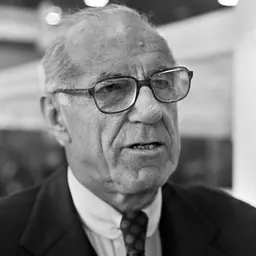
Pediatrician Benjamin Spock (pictured, 1976) was one of the co-founders of the Arsenal Family and Children's Center. McFarland returned to Columbia to complete a Ph.D. in childhood development in 1938. She then went to Melbourne, where she was principal at the Kindergarten Training College.
In 1951, McFarland returned to Pittsburgh and became an associate professor at the University of Pittsburgh.
With Spock, McFarland co-founded the Department of Child Development and Child Care at the University of Pittsburgh School of Medicine. That department later moved to the university's School of Social Work. John Hitchcock, former director of the center, said that though McFarland was not a psychoanalyst, she was invited to teach there because she could impart a deep understanding of the nuances of parent-child interactions.
Through her work in psychology and education, McFarland developed specific ideas about the best ways to teach children. She believed that a teacher did not so much teach a specific attitude to a student, but that the child "caught" a certain attitude toward a subject based on the teacher's enthusiasm and commitment to the material. Once, when a sculptor came to visit young children at the Arsenal Center, she instructed him not to teach the children how to sculpt, but instead to just "love clay in front of the children". After Rogers's course ended, McFarland continued to meet with him each week. She told him that he would be more effective on a show in which he appeared on camera himself. This way, McFarland said, Rogers would be able to help children to draw distinctions between reality and fantasy. Once, Rogers was preparing for an episode that would teach children about fire, and McFarland told him that children's fire-related dreams were closely related to their thoughts about controlling their body fluids. The episode started with a segment on common types of water flow, such as water filling a bathtub, and then there was a small, brief make-believe fire. When a few parents called the show and said that their children were experiencing some urinary difficulties, Rogers felt that McFarland had given him insight into the nature of the issue. Rogers's book "Mister Rogers Talks to Parents" is dedicated to McFarland. The spin-off series, Daniel Tiger's Neighborhood, includes a character named for her.
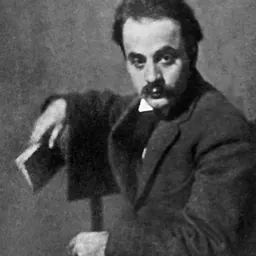
During a 1987 interview, McFarland was asked about the biggest issue for child development at that time, and she said it was the trend toward children being raised largely in group settings such as daycare centers. McFarland believed that there was no comparable replacement for a mother in the child-rearing process, and she was curious to learn more about the negative and positive results of such an upbringing. Despite her strong feelings about the contributions of women to the family unit, she said she was not a feminist. She felt that women were more introspective than men, leading to opportunities for them to be more creative, and she said that groups like the National Organization for Women did not recognize the uniqueness of women in this regard. After her death, a number of people, including early art therapist Judith A. Rubin and language specialist Ethel Tittnich, described her influence on them. Rubin characterized McFarland as a "creative catalyst" and "my professional mother". She contributed to a Festschrift in recognition of McFarland's work. In the epigraph of a book on children's language, Tittnich compared McFarland to a teacher described in Kahlil Gibran's The Prophet, saying that McFarland led students "to the threshold of [their] own minds".
In 2015, the Fred Rogers Center for Early Learning and Children's Media at Saint Vincent College established a project to analyze recorded conversations between McFarland and Rogers. The project's goal is to characterize the impact of these discussions on the development of Mister Rogers' Neighborhood.
Don’t just read it —
keep it.
Full-length biographies made to live with: read them, listen on the way to work, watch them tonight.
- E-book
- Audio
- Video
Instant download · yours to keep · every purchase keeps this site free
Important facts
People in Margaret McFarland's life
Named in this biography and alive at the same time



Related people
Same field, nearest in time



Contemporaries
People whose lives overlapped Margaret McFarland's


Frequently asked questions
Who was Margaret McFarland?
American psychologist
When was Margaret McFarland born?
Margaret McFarland was born on 3 July 1905 in Oakdale.
When did Margaret McFarland die?
Margaret McFarland died on 12 September 1988 in South Fayette Township.
What was Margaret McFarland's occupation?
Margaret McFarland was a psychologist.
What nationality was Margaret McFarland?
Margaret McFarland was American.
Sources & further reading
· Wikipedia: Margaret McFarland
Cite this page
APA: Biography.guide. (2026). Margaret McFarland. https://biography.guide/margaret-mcfarland/
MLA: "Margaret McFarland." Biography.guide, https://biography.guide/margaret-mcfarland/.
Chicago: "Margaret McFarland." Biography.guide. https://biography.guide/margaret-mcfarland/.
Data last updated: 2026-09-20 · Spot an error? Report a correction.
Page generated 2026-09-27 05:03 UTC