
About Margaret Crosfield
Lived 1859 – 1952 (aged 93). Margaret Crosfield was a British paleontologist.
Margaret Chorley Crosfield (7 September 1859 – 13 October 1952) was a British paleontologist and geologist.
Biography Crosfield became an active member of the Geologists' Association in 1892, later becoming a council member in 1918. Prior to that, in 1907, a decision was made by the Society to admit women as Associates, under the condition they distinguished themselves as geological investigators or submitted their own original research. She also was a member of the Paleontological Society from 1907–1932.
Personal life Margaret Chorley Crosfield grew up in Reigate, Surrey, where she lived her entire life. She never married, and died in 1952, aged 93.
She was the daughter of Joseph Crosfield, a wealthy tea merchant, and his second wife, Sarah. A branch of the Central Society for Women's Suffrage opened in Reigate in 1906, later becoming affiliated with the National Union of Women's Suffrage Societies in 1909, with this particular branch assuming the name of Reigate, Redhill and District Society for Women's Suffrage.
Education
Crosfield attended school at the Mount School, York, which was one of the first in the UK to send girls to University. At twenty years old, Crosfield went to study at Newnham College, Cambridge in 1878, in which she began the study of geology as part of her course. She took a period of leave due to illness. While she was on leave her father died in 1879. He left his children £8,200 in trust. She returned to the University 10 years later and gained special permission to study geology exclusively. Crosfield also was known to work with Gertrude Elles and Dame Ethel Shakespear by identifying and verifying fossil specimens that were collected on various field campaigns.
In her paper on Carmarthen, Crosfield surveyed four miles around the town and discovered syncline, collecting new species of trilobites. The objective in examining this district was to trace the continuation of the complex anticline which was discovered by the late Mr. T. Roberts, about 10 miles west of Carmarthen.
In 1906, along with Skeat and under the direction of Professor John Marr, Crosfield examined the "little-known series of Denbighshire Grits and Flags in the Clwydians, in order to establish a sequence by means of the graptolite fauna".
From 1906 to 1909, and again in 1911, geological surveys were conducted inside an area of seventy-two square miles their observations were published in Quarterly Journal of the Geological Society, volumes 52 (1896) and 81 (1925).
In 1914, she surveyed Wenlock limestone for Proceedings of the Geological Association with M.S Thompson and provided an account for C.E Salmon's publication on Surrey's flora.
Crosfield was an esteemed and active member of the Geologists' Association, later becoming a council member of said Association in 1899, working as a librarian from 1919 until 1923. From 1907 to 1932, Crosfield also played a role in the Palaeontological Society as well.
Crosfield was renowned for her detailed geologic notes and her meticulous organization of the wide array of field specimens that she had collected over the years.
Contribution to geology
Crosfield published three research papers. The first was written with Ethel Skeat on the geology of Carmarthen in 1896. The paper was clear and formed the basis of the geological map produced by the British Geological Survey for the area. Her second publication was with Mary Johnston, on the Wenlock limestone of Shropshire. Finally, she wrote again with Ethel Skeat in 1925 on the geology of the Silurian rocks of the Clywdian Range, largely focusing on structural geology, notably, the cross sections and erosion of the region.
Alongside her publications, she travelled widely and kept detailed notes. These notes contained field notes, and records of specimen locations still seen in British Geological Survey in Keyworth and the Grosvenor Museum in Chester. In 1906 Professors McKenny Hughes, and Marr of the University of Cambridge along with Professor Lapworth of Mason Science College initiated a small group of woman including Margaret Crosfield and Ethel Skeat to research the Silurian and Ordovician rock of North Wales and the borders to solve the "Silurian problem". Unfortunately, the research of developing and understanding the Silurian and Ordovician stratigraphy of Northeast Wales is lost over time.
Margaret surveyed a four-mile radius around Carmarthen and while examining the syncline she discovered new features of stratigraphy and also collected a new species of trilobite.
She was one of the first six women to be elected as fellows of the Geological Society. Her contribution to Geology was one that paved way for many women in Geology. Her information and readings are still preserved to this day and are used to collect old findings.
Don’t just read it —
keep it.
Full-length biographies made to live with: read them, listen on the way to work, watch them tonight.
- E-book
- Audio
- Video
Instant download · yours to keep · every purchase keeps this site free
Important facts
People in Margaret Crosfield's life
Named in this biography and alive at the same time



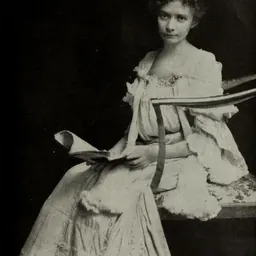
Related people
Same field, nearest in time


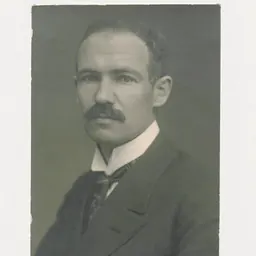
Contemporaries
People whose lives overlapped Margaret Crosfield's
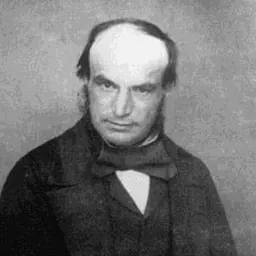
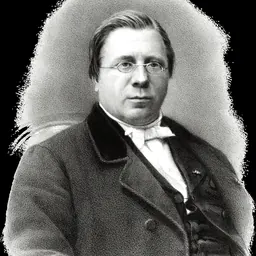
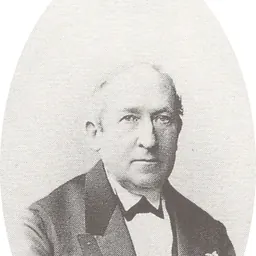


Frequently asked questions
Who was Margaret Crosfield?
British palaeontologist (1859-1952)
When was Margaret Crosfield born?
Margaret Crosfield was born on 7 September 1859 in Reigate.
When did Margaret Crosfield die?
Margaret Crosfield died on 13 October 1952 in Reigate.
What was Margaret Crosfield's occupation?
Margaret Crosfield was a paleontologist.
What nationality was Margaret Crosfield?
Margaret Crosfield was British.
Sources & further reading
· Wikipedia: Margaret Crosfield
Cite this page
APA: Biography.guide. (2026). Margaret Crosfield. https://biography.guide/margaret-crosfield/
MLA: "Margaret Crosfield." Biography.guide, https://biography.guide/margaret-crosfield/.
Chicago: "Margaret Crosfield." Biography.guide. https://biography.guide/margaret-crosfield/.
Data last updated: 2026-09-20 · Spot an error? Report a correction.
Page generated 2026-09-27 05:13 UTC