
About Marcin Bylica
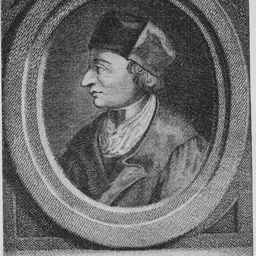
Lived 1433 – 1493 (aged 59–60). Marcin Bylica was a Polish astronomer and astrologer.
Marcin Bylica (c. 1433 in Olkusz – 1493 in Buda), also known as Martin Bylica, Martin of Olkusz and Marcin z Olkusza, was a Polish astronomer and astrologer at the court of Matthias Corvinus, King of Hungary. Biography Son of burgher Jan, waterworks caretaker of Olkusz. He studied first probably at parish school in Olkusz, and later at the University of Cracow, where he doubtless studied under the astronomer Marcin Król z Żurawicy. Bylica was invited by Johannes Lauratius de Fundis and taught astronomy at the University of Bologna in 1463.
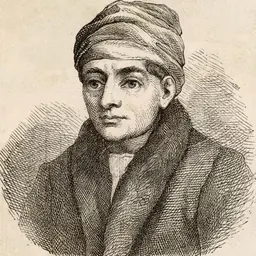
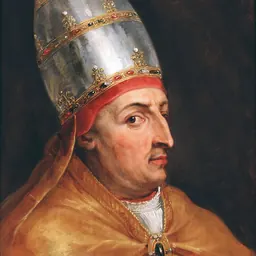
In 1464, he was in Rome as the astrologer to a cardinal - either Pietro Barbo, who was elevated to the papacy as Paul II in that year, or Rodrigo Borgia, the future pope Alexander VI. In Rome, Bylica met Regiomontanus and began a fruitful collaboration with him. They jointly developed astronomical tables and Disputationes inter Viennensem et Cracoviensem super Cremonensia in planetarum theoriae deliramenta (lat. Dialogues between a Viennese and a Cracovian about Gerard of Cremona's thoughts on planetary theories) - a critique of an obsolete astronomy book.
Not long after, Bylica and Regiomontaus were summoned by John Vitéz, archbishop of Esztergom, and his nephew Janus Pannonius, bishop of Pécs, to join their recently founded university in Presburg, known as the Universitas Istropolitana. Working in the palace of Esztergom where John Vitéz had installed an astronomic observatory, they set the Tabulæ directionum et profectionum in 1467. These tables were meant to allow astrologers to predict the future based on one's date of birth. They proved popular, going through 11 printed editions by 1626.
In the spring of 1468, Bylica became the official astrologer of Matthias Corvinus, King of Hungary. The appointment followed a public disputation he had with his colleague Johannes Stercz, almost certainly in Presburg, in the presence of the king and his court, about the horoscope of the conception of the son of count János Rozgon. By Bylica's own account, Stercz was humiliated. Matthias declared Bylica the winner and awarded him 100 florins. Bylica subsequently became one of Corvinus' closest councilors.
At his death, Bylica bequeathed an important collection of books and astronomical instruments, which survive to this day, to the university in Cracow. The book collection includes works by Regiomontanus and Georg von Peuerbach, as well as the Tractatus Astrarii by Giovanni Dondi dell'Orologio.
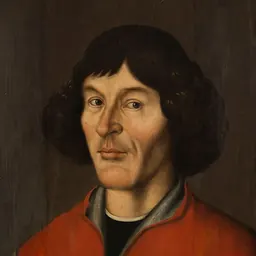
During last year of Nicolaus Copernicus in 1494, a large globe, two astrolabes and a triquetrum from Bylica were brought as a gift to the University of Cracow.
There is a street named after him in his hometown, Olkusz.
Works with Regiomontanus, Disputationes inter Viennensem et Cracoviensem super Cremonensia in planetarum theoriae deliramenta. Vitae archiepiscoporum gnesnensium, published in full after 1680.
Don’t just read it —
keep it.
Full-length biographies made to live with: read them, listen on the way to work, watch them tonight.
- E-book
- Audio
- Video
Instant download · yours to keep · every purchase keeps this site free
Important facts
People in Marcin Bylica's life
Named in this biography and alive at the same time


Related people
Same field, nearest in time

Contemporaries
People whose lives overlapped Marcin Bylica's

Frequently asked questions
Who was Marcin Bylica?
Polish astronomer
When was Marcin Bylica born?
Marcin Bylica was born in 1433 in Olkusz.
When did Marcin Bylica die?
Marcin Bylica died in 1493 in Buda, Hungary.
What was Marcin Bylica's occupation?
Marcin Bylica was an astronomer and astrologer.
What nationality was Marcin Bylica?
Marcin Bylica was Polish.
Sources & further reading
Cite this page
APA: Biography.guide. (2026). Marcin Bylica. https://biography.guide/marcin-bylica/
MLA: "Marcin Bylica." Biography.guide, https://biography.guide/marcin-bylica/.
Chicago: "Marcin Bylica." Biography.guide. https://biography.guide/marcin-bylica/.
Data last updated: 2026-09-20 · Spot an error? Report a correction.
Page generated 2026-09-27 05:27 UTC