
About Marcel Tyberg
Lived 1893 – 1944 (aged 51). Marcel Tyberg was an Austrian conductor, composer and pianist.
Marcel Tyberg (27 January 1893, in Vienna – 31 December 1944, in Auschwitz-Birkenau) was an Austrian composer, conductor and organist. His music is late-Romantic in style.
Biography and career Marcel Tyberg was born into a musical family in Vienna. His father, Marcell Tyberg (Sr.), was a well-known violinist, while his mother, Wanda Paltinger Tybergova, was a pianist in the school of Theodor Leschetizky, and a colleague of Artur Schnabel. Although little is known about his musical education, it is assumed that Tyberg had some formal training in orchestration, counterpoint and harmony outside the family home. Tyberg's father was on good terms with the renowned violinist Jan Kubelik and the two families frequented one another. Marcel dedicated lieder to Jan's two daughters and, despite a twenty-year age gap, cultivated a lifelong friendship with their young brother, the conductor Rafael Kubelik. Tyberg also became friendly with the Italian violinist and conductor, Rodolfo Lipizer. Tyberg's Piano Sonata No. 1 (1920) and his Symphony No. 1 (1924) both date from his time in Vienna.
In 1927, following the death of his father, Tyberg moved with his mother to the town of Abbazia (Opatija), today in Croatia, then part of Italy. To eke out a living, he turned his hand to any work on offer. He taught harmony, played church organs, conducted, and under the pseudonym "Till Bergmar" produced popular dance music for the local resorts (rumbas, tangos and waltzes, etc.).
Tyberg's surviving music, in the form of manuscript scores, was entrusted by him to his friend, Dr. Milan Mihich, and ultimately brought to the United States. Works from this cache have begun to be recorded. These include the Symphony No. 2 (JoAnn Falletta conducting the Buffalo Philharmonic), coupled with the Piano Sonata No. 2 (Fabio Bidini, pianist), on Naxos Records; the Symphony No. 3 (JoAnn Falletta conducting the Buffalo Philharmonic), coupled with the Piano Trio (Michael Ludwig, violinist; Roman Mekinulov, cellist; Ya-Fei Chuang, pianist), on Naxos Records; the two Masses (Brian A. Schmidt conducting the South Dakota Chorale, with Christopher Jacobsen, organist), on Pentatone; the String Sextet with Double Bass (Ensemble Alraune) on NovAntiqua Records (Musica & Regime 3).
The Symphony No. 3 contains in the second movement direct thematic citations and rhythmic over-structures that originate from Hans Rott's Symphony No. 1 and that were also cited by Gustav Mahler's Symphony No. 2 greatly. At current research status it is not known if Tyberg has directly cited Mahler or if he had access via Mahler to Rott's score of his Symphony No. 1, which was kept locked in private by Gustav Mahler, who was a close friend of Rott. Stylistic similarities to Anton Bruckner may be thought, however are not verified by compositional techniques, instrumentation and musical depth. Instead, they are much more related to Rott, who was a scholar of Bruckner and who, by Mahler's words, invented the new symphony.
Works The known surviving works by Marcel Tyberg include:
Orchestral
Symphony No. 1 (1922-1924) Allegro molto (1922) – Adagio (1922) - Scherzo (31 December 1922) – Finale, Allegro non troppo (12 April 1924)
Scherzo and Finale for Schubert's Unfinished Symphony (1927-1928) Symphony No. 2 in F minor (1927-1931) Allegro appassionato – Adagio – Scherzo – Finale
Symphony No. 3 in D minor (1938-1943) Andante Maestoso – Scherzo – Adagio – Rondo
Chamber
String sextet in F minor, for 2 violins, 2 violas, cello and double bass (1931-1932) Allegro non troppo – Scherzo – Adagio molto sostenuto (Tema con variationi) – Scherzo – Finale
Piano Trio in F major (1935-1936) Allegro maestoso – Adagio non troppo – Rondo
Instrumental
Piano Sonata No. 1 in B minor (1914-1920) Allegro appassionato – Larghetto (Tema con variationi) – Rondo
Piano Sonata No. 2 in F sharp minor (1934-1935) Allegro con fuoco – Adagio – Scherzo – Finale
4 Lieder without words for piano
Sacred Mass No. 1, for Soprano, Contralto, Tenor, Bass and organ (1933-1934) Mass No. 2, for Soprano, Contralto, Tenor, Basso and organ (1941)
Lieder
21 lieder on Heine’s lyric Intermezzo Rache, text by Poridzky 5 lieder on texts by Daisy von Adelsfeld-Salghetti Ave Maria 6 Austrian lieder for small orchestra (three orchestrated from the Heine lieder) 4 songs in English, texts by Moore and others Evening Bells, text by Thomas Moore To a Flower, text by Barry Cornwall My Heart’s in the Highlands, text by Robert Burns
Don’t just read it —
keep it.
Full-length biographies made to live with: read them, listen on the way to work, watch them tonight.
- E-book
- Audio
- Video
Instant download · yours to keep · every purchase keeps this site free
Important facts
People in Marcel Tyberg's life
Named in this biography and alive at the same time


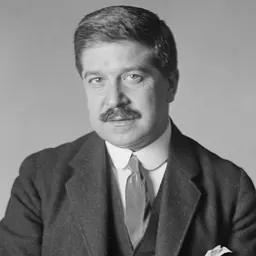


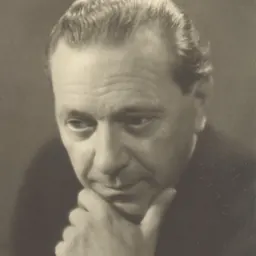
Related people
Same field, nearest in time

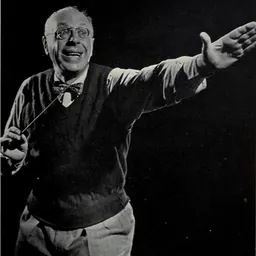


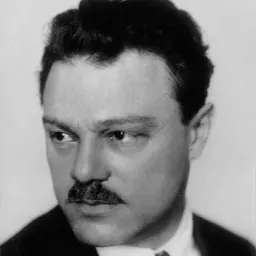
Contemporaries
People whose lives overlapped Marcel Tyberg's

Frequently asked questions
Who was Marcel Tyberg?
Austrian composer (1893-1944)
When was Marcel Tyberg born?
Marcel Tyberg was born on 27 January 1893 in Vienna.
When did Marcel Tyberg die?
Marcel Tyberg died on 31 December 1944 in Auschwitz.
What was Marcel Tyberg's occupation?
Marcel Tyberg was a conductor, composer and pianist.
What nationality was Marcel Tyberg?
Marcel Tyberg was Austrian.
Sources & further reading
Cite this page
APA: Biography.guide. (2026). Marcel Tyberg. https://biography.guide/marcel-tyberg/
MLA: "Marcel Tyberg." Biography.guide, https://biography.guide/marcel-tyberg/.
Chicago: "Marcel Tyberg." Biography.guide. https://biography.guide/marcel-tyberg/.
Data last updated: 2026-09-20 · Spot an error? Report a correction.
Page generated 2026-09-27 05:29 UTC