
Marcel-Paul Schützenberger
French mathematician
About Marcel-Paul Schützenberger
Lived 1920 – 1996 (aged 75). Marcel-Paul Schützenberger was a French mathematician, computer scientist, statistician, university teacher and physician, known for Chomsky hierarchy, Chomsky–Schützenberger enumeration theorem and Chomsky–Schützenberger representation theorem.
Marcel-Paul "Marco" Schützenberger (24 October 1920 – 29 July 1996) was a French mathematician and Doctor of Medicine. He worked in the fields of formal language, combinatorics, and information theory. In addition to his formal results in mathematics, he was "deeply involved in struggle against the votaries of [neo-]Darwinism", a stance which has resulted in some mixed reactions from his peers and from critics of his stance on evolution. Several notable theorems and objects in mathematics as well as computer science bear his name (for example Schutzenberger group or the Chomsky–Schützenberger hierarchy). Paul Schützenberger was his great-grandfather.
In the late 1940s, he was briefly married to the psychologist Anne Ancelin Schützenberger.
Contributions to medicine and biology Schützenberger's first doctorate, in medicine, was awarded in 1948 from the Faculté de Médecine de Paris. His doctoral thesis, on the statistical study of biological sex at birth, was distinguished by the Baron Larrey Prize from the French Academy of Medicine.
Biologist Jaques Besson, a co-author with Schützenberger on a biological topic, while noting that Schützenberger is perhaps most remembered for work in pure mathematical fields, credits him
Contributions to mathematics, computer science, and linguistics Schützenberger's second doctorate was awarded in 1953 through the Paris Institute of Statistics. This work, developed from earlier results is counted amongst the early influential French academic work in information theory. His later impact in both linguistics and combinatorics is reflected by two theorems in formal linguistics (the Chomsky–Schützenberger enumeration theorem and the Chomsky–Schützenberger representation theorem), and one in combinatorics (the Schützenberger theorem). With Alain Lascoux, Schützenberger is credited with the foundation of the notion of the plactic monoid, reflected in the name of the combinatorial structure called by some the Lascoux–Schützenberger tree. Relatedly, they invented Schubert polynomials.
In automata theory, Schützenberger is credited with first defining (what later became known as) weighted automata, the first studied model of automata which compute a quantitative output.
The mathematician Dominique Perrin credited Schützenberger with "deeply [influencing] the theory of semigroups" and "deep results on rational functions and transducers", amongst other contributions to mathematics. and again by the International Journal of Algebra and Computation in 1999.
The mathematician David Berlinski provided this dedication in his 2000 book The Advent of The Algorithm: The Idea that Rules the World: À la mémoire de mon ami . . M. P. Schützenberger, 1921–1996.
Trivia The character "Dr. Schütz" in Boris Vian's 1948 novel, Et on tuera tous les affreux, is said to have been inspired by Schützenberger. Together with many of his students, Schützenberger is one of the contributors of the pseudonymous collective M. Lothaire.
Works For the complete list of his papers, see: Papers
De la diversité de certains cancers. Pierre Florent Denoix, Paris (1954)/About the diversity of some cancers Théorie géométrique des polynômes eulériens, with Dominique Foata, Berlin, Heidelberg, New York, Springer (1970)/Geometric theory of Euler polynomials Triangle de pensées, with Alain Connes and André Lichnerowicz, Paris, O. Jacob; Saint-Gély du Fesc : Espace 34 (2000)/Triangle of thoughts Les failles du darwinisme, La Recherche, n°283 (January 1996)/The miracles of darwinism Œuvres complètes, edited by Jean Berstel, Alain Lascoux and Dominique Perrin, Institut Gaspard-Monge, Université Paris-Est (2009)/Complete Works
The Complete Works of Marcel-Paul Schützenberger: Complete Works
Don’t just read it —
keep it.
Full-length biographies made to live with: read them, listen on the way to work, watch them tonight.
- E-book
- Audio
- Video
Instant download · yours to keep · every purchase keeps this site free
Important facts
People in Marcel-Paul Schützenberger's life
Named in this biography and alive at the same time


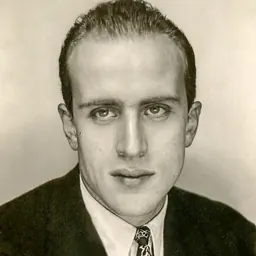
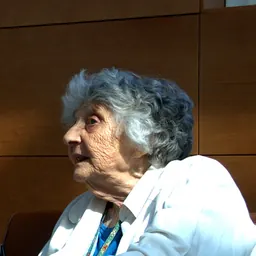
Related people
Same field, nearest in time
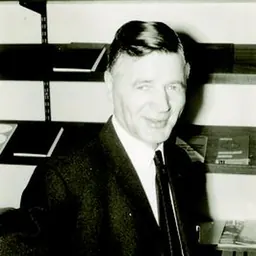
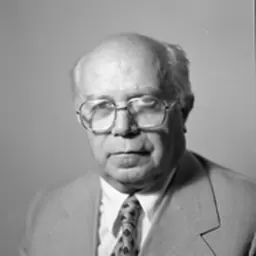
Contemporaries
People whose lives overlapped Marcel-Paul Schützenberger's





Frequently asked questions
Who was Marcel-Paul Schützenberger?
French mathematician (1920–1996)
When was Marcel-Paul Schützenberger born?
Marcel-Paul Schützenberger was born on 24 October 1920 in 7th arrondissement of Paris.
When did Marcel-Paul Schützenberger die?
Marcel-Paul Schützenberger died on 29 July 1996 in 16th arrondissement of Paris.
What was Marcel-Paul Schützenberger's occupation?
Marcel-Paul Schützenberger was a mathematician, computer scientist, statistician, university teacher and physician.
What was Marcel-Paul Schützenberger known for?
Marcel-Paul Schützenberger was known for Chomsky hierarchy, Chomsky–Schützenberger enumeration theorem, Chomsky–Schützenberger representation theorem, Plactic monoid, Schutzenberger group and Weighted automaton.
What nationality was Marcel-Paul Schützenberger?
Marcel-Paul Schützenberger was French.
Sources & further reading
· Wikipedia: Marcel-Paul Schützenberger
· DBpedia: Marcel-Paul Schützenberger
Cite this page
APA: Biography.guide. (2026). Marcel-Paul Schützenberger. https://biography.guide/marcel-paul-schutzenberger/
MLA: "Marcel-Paul Schützenberger." Biography.guide, https://biography.guide/marcel-paul-schutzenberger/.
Chicago: "Marcel-Paul Schützenberger." Biography.guide. https://biography.guide/marcel-paul-schutzenberger/.
Data last updated: 2026-09-20 · Spot an error? Report a correction.
Page generated 2026-09-27 05:32 UTC