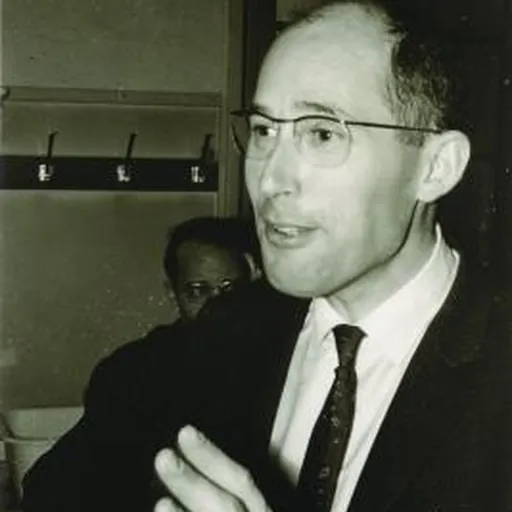
About Marcel Berger
Lived 1927 – 2016 (aged 89). Marcel Berger was a French mathematician and university teacher, known for Berger's inequality for Einstein manifolds, Berger's sphere and Berger–Kazdan comparison theorem.
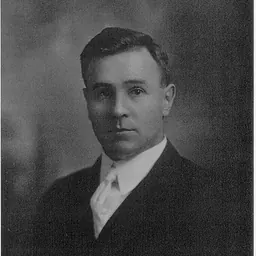
Marcel Berger (14 April 1927 – 15 October 2016) was a French mathematician, working in the field of differential geometry, and a former director of the Institut des Hautes Études Scientifiques (IHÉS), France.
Biography After studying from 1948 to 1951 at the École normale supérieure in Paris, Berger obtained in 1954 his PhD from the University of Paris, with thesis written under the direction of André Lichnerowicz. From 1958 to 1964 he taught at the University of Strasbourg and had visiting positions at the Massachusetts Institute of Technology and the University of California, Berkeley. From 1964 to 1966 he taught at the University of Nice, after which he joined the University of Paris VII. From 1985 to 1993 he served as director of the IHÉS. He was President of the French Mathematical Society in 1979–1980.
Formerly residing in Le Castera in Lasseube, Berger was instrumental in Mikhail Gromov's accepting positions both at the University of Paris and at the IHÉS.
Awards and honors 1956 Prix Peccot, Collège de France 1962 Prix Maurice Audin 1969 Prix Carrière, Académie des Sciences 1978 Prix Leconte, Académie des Sciences 1979 Prix Gaston Julia 1991 Lester R. Ford Award
Selected publications Berger, Marcel: Sur les groupes d'holonomie homogène des variétés à connexion affine et des variétés riemanniennes. (French) Bull. Soc. Math. France 83 (1955), 279–330. Berger, Marcel: Les espaces symétriques noncompacts. (French) Ann. Sci. École Norm. Sup. (3) 74 1957 85–177. Berger, M.: Les variétés riemanniennes homogènes normales simplement connexes à courbure strictement positive. (French) Ann. Scuola Norm. Sup. Pisa (3) 15 1961 179–246. Berger, Marcel; Gauduchon, Paul; Mazet, Edmond: Le spectre d'une variété riemannienne. (French) Lecture Notes in Mathematics, Vol. 194 Springer-Verlag, Berlin-New York 1971. Berger, M.: Blaschke's Conjecture for Sphere, in
Berger, Marcel: Systoles et applications selon Gromov. (French) [Systoles and their applications according to Gromov] Séminaire Bourbaki, Vol. 1992/93. Astérisque No. 216 (1993), Exp. No. 771, 5, 279–310. Berger, Marcel: Riemannian geometry during the second half of the twentieth century. Reprint of the 1998 original. University Lecture Series, 17. American Mathematical Society, Providence, Rhode Island, 2000. x+182 pp.
Berger, M.: What is... a Systole? Notices of the AMS 55 (2008), no. 3, 374–376. online text
Don’t just read it —
keep it.
Full-length biographies made to live with: read them, listen on the way to work, watch them tonight.
- E-book
- Audio
- Video
Instant download · yours to keep · every purchase keeps this site free
Important facts
People in Marcel Berger's life
Named in this biography and alive at the same time



Related people
Same field, nearest in time


Contemporaries
People whose lives overlapped Marcel Berger's


Frequently asked questions
Who was Marcel Berger?
French mathematician (1927–2016)
When was Marcel Berger born?
Marcel Berger was born on 14 April 1927 in 6th arrondissement of Paris, Paris.
When did Marcel Berger die?
Marcel Berger died on 15 October 2016 in 15th arrondissement of Paris.
What was Marcel Berger's occupation?
Marcel Berger was a mathematician and university teacher.
What was Marcel Berger known for?
Marcel Berger was known for Berger's inequality for Einstein manifolds, Berger's sphere, Berger–Kazdan comparison theorem and Holonomy.
What nationality was Marcel Berger?
Marcel Berger was French.
Sources & further reading
Cite this page
APA: Biography.guide. (2026). Marcel Berger. https://biography.guide/marcel-berger-mathematician/
MLA: "Marcel Berger." Biography.guide, https://biography.guide/marcel-berger-mathematician/.
Chicago: "Marcel Berger." Biography.guide. https://biography.guide/marcel-berger-mathematician/.
Data last updated: 2026-09-22 · Spot an error? Report a correction.
Portrait: Wikimedia Commons · author & licence
Page generated 2026-09-27 05:04 UTC