
About Marc-Antoine Parseval
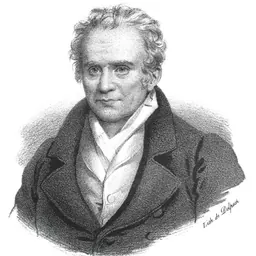
Lived 1755 – 1836 (aged 81). Marc-Antoine Parseval was a French mathematician, known for Parseval's identity and Parseval's theorem.
Marc-Antoine Parseval des Chênes (27 April 1755 – 16 August 1836) was a French mathematician, most famous for what is now known as Parseval's theorem, which showed that the Fourier transform is unitary.
He was born in Rosières-aux-Salines, France, into an aristocratic French family, and married Ursule Guerillot in 1795, but divorced her soon after. A monarchist opposed to the French Revolution, imprisoned in 1792, Parseval later fled the country for publishing poetry critical of the government of Napoleon.
Later, he was nominated to the French Academy of Sciences five times, from 1796 to 1828, but was never elected. His only mathematical publications were apparently five papers, published in 1806 as Mémoires présentés à l'Institut des Sciences, Lettres et Arts, par divers savants, et lus dans ses assemblées. Sciences mathématiques et physiques. (Savants étrangers.) This combined the following earlier monographs:
"Mémoire sur la résolution des équations aux différences partielles linéaires du second ordre," (5 May 1798). "Mémoire sur les séries et sur l'intégration complète d'une équation aux différences partielles linéaires du second ordre, à coefficients constants," (5 April 1799). "Intégration générale et complète des équations de la propagation du son, l'air étant considéré avec ses trois dimensions," (5 July 1801). "Intégration générale et complète de deux équations importantes dans la mécanique des fluides," (16 August 1803). "Méthode générale pour sommer, par le moyen des intégrales définies, la suite donnée par le théorème de M. Lagrange, au moyen de laquelle il trouve une valeur qui satisfait à une équation algébrique ou transcendante," (7 May 1804).
It was in the second 1799, memoir in which he stated, but did not prove (claiming it to be self-evident), the theorem that now bears his name. He further expanded it upon his 1801 memoir, and used it to solve various differential equations. The theorem was first printed in 1800 as a part (p. 377) of Traité des différences et des séries by Lacroix.
Don’t just read it —
keep it.
Full-length biographies made to live with: read them, listen on the way to work, watch them tonight.
- E-book
- Audio
- Video
Instant download · yours to keep · every purchase keeps this site free
Important facts
People in Marc-Antoine Parseval's life
Named in this biography and alive at the same time
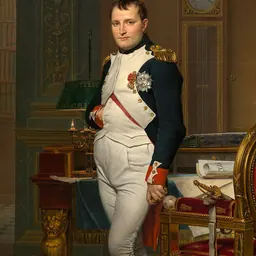
Related people
Same field, nearest in time
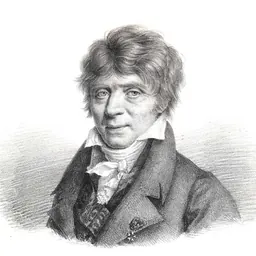


Contemporaries
People whose lives overlapped Marc-Antoine Parseval's





Frequently asked questions
Who was Marc-Antoine Parseval?
French mathematician
When was Marc-Antoine Parseval born?
Marc-Antoine Parseval was born on 27 April 1755 in Rosières-aux-Salines.
When did Marc-Antoine Parseval die?
Marc-Antoine Parseval died on 16 August 1836 in Paris.
What was Marc-Antoine Parseval's occupation?
Marc-Antoine Parseval was a mathematician.
What was Marc-Antoine Parseval known for?
Marc-Antoine Parseval was known for Parseval's identity and Parseval's theorem.
What nationality was Marc-Antoine Parseval?
Marc-Antoine Parseval was French.
Sources & further reading
· Wikipedia: Marc-Antoine Parseval
· DBpedia: Marc-Antoine Parseval
Cite this page
APA: Biography.guide. (2026). Marc-Antoine Parseval. https://biography.guide/marc-antoine-parseval/
MLA: "Marc-Antoine Parseval." Biography.guide, https://biography.guide/marc-antoine-parseval/.
Chicago: "Marc-Antoine Parseval." Biography.guide. https://biography.guide/marc-antoine-parseval/.
Data last updated: 2026-09-20 · Spot an error? Report a correction.
Page generated 2026-09-27 04:58 UTC