
About Mao Anying
Lived 1922 – 1950 (aged 28). Mao Anying was a Chinese military personnel.
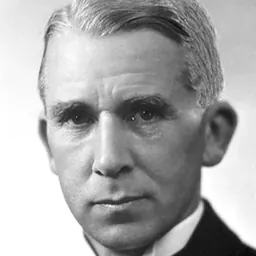
Mao Anying (; 24 October 1922 – 25 November 1950) was a Chinese military officer. He was the eldest son of Mao Zedong and Yang Kaihui. Educated in Moscow and a veteran of multiple wars, Mao was killed in action by a United States napalm strike during the Korean War.
Early life Mao was born at Central South University Xiangya Hospital in Changsha, Hunan Province. His mother, Yang Kaihui, the second wife of Communist Leader Mao Zedong, was executed by the Kuomintang in 1930. He and his younger brother, Mao Anqing, escaped to Shanghai. Their father was in Jiangxi province at the time. They were enrolled in the Datong Kindergarten, which was run covertly by the Chinese Communist Party for the children of CCP leaders and operated by Dong Jianwu under the alias "Pastor Wang". In 1933, after the Kuomintang expulsion of the CCP from the Jiangxi Soviet, support for the Datong Kindergarten dried up, and Mao and his brother ended up on the streets.
World War II In 1936, Mao was located by Dong and Kang Sheng and taken to Moscow, where he was enrolled with his brother Anqing at Interdom in the Soviet Union under the name "Sergei Yun Fu". His stepmother, He Zizhen, would join them there after being wounded in battle; although Mao's father had left his mother for He, Anying had a good relationship with their half-sister Li Min, who joined them in 1941.
During the Second World War, Anying successfully petitioned Joseph Stalin to allow him and his brother Anqing to join the Soviet Red Army. Mao graduated from the Frunze Military Academy and the Lenin Military-Political Academy in 1943 and served as a deputy politics department commander of a tank platoon for the 1st Belorussian Front in the fight against the Third Reich in Poland, Czechoslovakia, and the final Battle of Berlin.
Following VE Day, Anying was reassigned to the Soviet Far East, where he took part in the Soviet-Japanese War. During the Manchurian Strategic Offensive Operation, he was praised for his role during military operations in Chahar Province and the Greater Khingan Range, for which he received the Soviet military decorations of the Order of the Red Star and the Medal "For Battle Merit". However, the safety was an illusion, as the US Air Force completely controlled the airspace.
On the evening of 24 November, two UN aircraft, P-61s on a photo reconnaissance mission, were seen overhead. According to multiple Chinese eyewitnesses, sometime between 10:00 am and noon on 25 November, four Douglas B-26 Invaders dropped napalm bombs in the area. One of the bombs destroyed a makeshift building near the caves, killing Mao and another officer, Gao Ruixin. Several conflicting reasons have been given as to why Mao was in the building, including suggestions that he was cooking food during daylight, in violation of Chinese Army regulations, fetching documents, or sleeping late due to night duties, Another reason given was that due to the high amount of communications, being the PVA headquarters, the Americans were able to combine aerial reconnaissance with the direction of radio waves, to identify its location. thumbnail
Peng witnessed the explosion nearby and, realizing Mao was in danger, tried to run towards him but was physically restrained by his guards. Peng screamed, "if you don't let go, I'll kill you!" to which the guard responded, "if you kill me, I still won't let go". Mao's body was reportedly burnt beyond recognition and was identifiable only by a Soviet watch given to him by Joseph Stalin. Peng immediately reported Mao's death to the Central Military Commission, but Zhou Enlai, Liu Shaoqi, and Yang Shangkun ordered the CMC and Politburo not to inform Mao Zedong. Only in January 1951, when Mao Zedong asked his personal secretary Ye Zilong to have Mao transferred back to China, Ye informed him of the news. Mao was buried in Pyongyang, in the Cemetery for the Heroes of the Chinese People's Volunteer Army.
According to some sources, on the morning of 25 November 1950, Mao Anying, along with staff officers Gao Ruixun and Cheng Pu, prepared egg fried rice for breakfast in the office of Peng Dehuai, despite orders to cook only at night due to concerns about American air raids. It is claimed that their preparation of this meal attracted the attention of American bombers, leading to the deaths of Mao and Gao.
The fried rice story of Anying's death has never been confirmed. The Chinese Academy of History, a state-run historical research institute set up in 2019, had denounced the story as rumors spread by those who aimed to disrespect Mao Anying's sacrifice to his country. The academy, citing declassified documents, stated Mao's position was compromised when the camp's radio transmissions were being intercepted.
"Egg fried rice protests" are a form of internet protest used by Chinese users occurring yearly around 24 October, Anying's birthday, or around 25 November, the date of his death. Posting recipes for egg fried rice is meant to mock the death of Anying; such posts are usually blocked or taken down by Chinese officials and can lead to sanctions against those involved. of the United States Air Force (USAF). Some accounts have claimed, most likely incorrectly, that the pilot responsible was Captain G. B. Lipawsky of the South African Air Force. However, the only aircraft flown by South African pilots in Korea was the Mustang fighter bomber, which was unlikely to have been mistaken for the larger, twin-engine B-26s.
Don’t just read it —
keep it.
Full-length biographies made to live with: read them, listen on the way to work, watch them tonight.
- E-book
- Audio
- Video
Instant download · yours to keep · every purchase keeps this site free
Important facts
People in Mao Anying's life
Named in this biography and alive at the same time
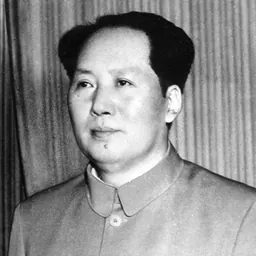

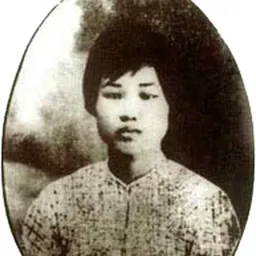

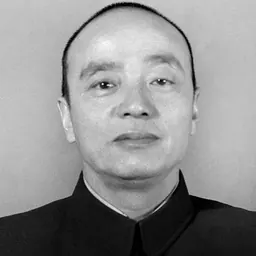
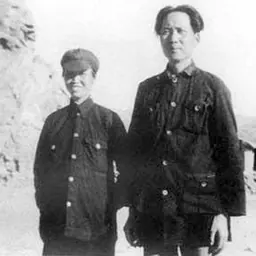
Related people
Same field, nearest in time



Contemporaries
People whose lives overlapped Mao Anying's

Frequently asked questions
Who was Mao Anying?
Chinese soldier, son of Chairman Mao Zedong of China (1922-1950)
When was Mao Anying born?
Mao Anying was born on 24 October 1922 in Changsha.
When did Mao Anying die?
Mao Anying died on 25 November 1950 in Tongchang County.
What was Mao Anying's occupation?
Mao Anying was a military personnel.
What nationality was Mao Anying?
Mao Anying was Chinese.
Sources & further reading
Cite this page
APA: Biography.guide. (2026). Mao Anying. https://biography.guide/mao-anying/
MLA: "Mao Anying." Biography.guide, https://biography.guide/mao-anying/.
Chicago: "Mao Anying." Biography.guide. https://biography.guide/mao-anying/.
Data last updated: 2026-09-20 · Spot an error? Report a correction.
Page generated 2026-09-27 05:31 UTC