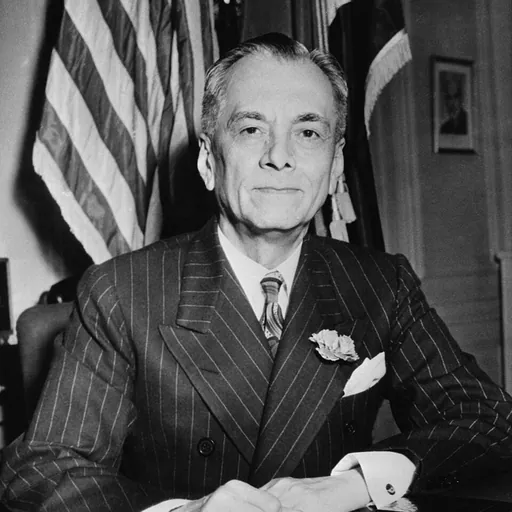
About Manuel L. Quezon
Lived 1878 – 1944 (aged 65). Manuel L. Quezon was a Filipino politician and lawyer.
Early life and education National historical marker installed in 1948 in Baler at the site of his birthplace.
Quezon was born on 19 August 1878 in Baler in the district of El Príncipe, then part of Nueva Écija (now Baler, Aurora). His parents were Lucio Quezon Urbina (1850–1898) and María Dolores Molina (1840–1893). Both were primary-school teachers, although his father was a retired sargento of the Guardia Civil (sergeant of the colonial gendarmerie).
According to historian Augusto de Viana in his timeline of Baler, Quezon's father was a Chinese mestizo who came from the Parián (a Chinatown outside Intramuros) in Paco, Manila. He spoke Spanish in the Civil Guard and married María, a Spanish mestiza sired by the Spanish priest José Urbina de Esparragosa. Urbina had come to Baler to serve as its parish priest in 1847 from Esparragosa de la Serena, Cáceres Province, Spain. Quezon is Chinese mestizo surname originally from Hokkien Chinese spelled in Spanish orthography used in the colonial period, possibly from the , with and ; many Filipino surnames that end with "-zon", "-son", and "-chon" as the Hispancised form of the Hokkien .
He later boarded at the Colegio de San Juan de Letrán, where he graduated from secondary school in 1894. Lucio and Quezon's brother Pedro were later killed in 1898 by road bandits disguised as government officials on the way to Baler.
In 1899, Quezon left his law studies at the University of Santo Tomas to join the Filipino war effort, and joined the Republican army during the Philippine–American War. He was an aide-de-camp to Emilio Aguinaldo. Quezon became a major, and fought in the Bataan sector. After surrendering in 1900, he returned to university and passed the 1903 bar examinations.
Quezon worked for a time as a clerk and surveyor, entering government service as treasurer for Mindoro and (later) his home province of Tayabas. He became a municipal councilor of Lucena, and was elected governor of Tayabas in 1906.
Congressional career
House of Representatives (1907–1916)
Quezon was elected in 1907 to represent Tayabas's 1st district in the first Philippine Assembly (which later became the House of Representatives) during the 1st Philippine Legislature, where he was majority floor leader and chairman of the committees on rules and appropriations. Quezon told the U.S. House of Representatives during a 1914 discussion of the Jones Bill that he received most of his primary education at the village school established by the Spanish government as part of the Philippines' free public-education system. Months before his term ended, he gave up his seat at the Philippine Assembly upon being appointed as one of the Philippines' two resident commissioners. Quezon aimed for the Resident Commissioner seat in 1909, which was held by Nacionalista Pablo Ocampo. He won decisively with 61 out of 71 votes, while Ocampo received four votes, and a third candidate got none. Due to the passage of the Jones Law, he resigned as resident commissioner on 15 October 1916. A farewell banquet was organized for him at the Willard Hotel by his friends and acquaintances in Washington. He served continuously until 1935 (19 years), the longest tenure in history until Senator Lorenzo Tañada's four consecutive terms (24 years, from 1947 to 1972). Quezon headed the first independent mission to the U.S. Congress in 1919, and secured passage of the Tydings–McDuffie Act in 1934.
In 1922, he became leader of the Nacionalista Party alliance Partido Nacionalista-Colectivista. As Osmeña joined the 1922 Senate elections, Quezon's faction won. The party once again reunited with Quezon as senate president and Osmeña as senate president pro tempore.
In 1933, both Quezon and Osmeña clashed regarding the ratification of the Hare–Hawes–Cutting bill in the Philippine Legislature. As a result of the HHC controversy, Quezon's faction gained more support and won against Osmeña's faction in the 1934 senate elections.
After his visit in Shanghai, Quezon then went to Nanjing meeting with Kuomintang leaders such as Chinese general Chiang Kai-shek and Chinese diplomat Hu Hanmin.
Presidency (1935–1944)
Administration and cabinet
First term (1935–1941) The First inauguration of Philippine Commonwealth President Manuel L. Quezon at the steps of the Legislative Building in Manila on the 15th of November 1935
In 1935, Quezon won the Philippines' first national presidential election under the Nacionalista Party. He received nearly 68 percent of the vote against his two main rivals, Emilio Aguinaldo and Gregorio Aglipay. Quezon, inaugurated on 15 November 1935, is recognized as the second President of the Philippines. In January 2008, however, House Representative Rodolfo Valencia (Oriental Mindoro–1st) filed a bill seeking to declare General Miguel Malvar the second Philippine President; Malvar succeeded Aguinaldo in 1901.
National Defense Quezon's administration established the Philippine Commonwealth's national-defense system under the National Defense Act of 1935, which provided for the development of a citizen army through compulsory military training and created the framework for building a Filipino force capable of defending the country.
Supreme Court appointments Under the Reorganization Act, Quezon was given the power to appoint the first all-Filipino cabinet in 1935. From 1901 to 1935, a Filipino was chief justice but most Supreme Court justices were Americans. Complete Filipinization was achieved with the establishment of the Commonwealth of the Philippines in 1935. Claro M. Recto and José P. Laurel were among Quezon's first appointees to replace the American justices. Membership in the Supreme Court increased to 11: a chief justice and ten associate justices, who sat en banc or in two divisions of five members each.
Ramón Avanceña – 1935 (Chief Justice) – 1935–1941 José Abad Santos – 1935 Claro M. Recto – 1935–1936 José P. Laurel – 1935 José Abad Santos (Chief Justice) – 1941–1942
Government reorganization President Manuel L. Quezon climbs up the grand staircase of Malacañang Palace with aide-de-camp Colonel Manuel Nieto and Presidential Guard Battalion Commander Colonel Narciso Manzano.
To meet the demands of the newly established government and comply with the Tydings-McDuffie Act and the Constitution, Quezon, true to his pledge of "more government and less politics,"initiated a reorganization of the government. He established a Government Survey Board to study existing institutions and, in light of changed circumstances, make necessary recommendations. the Board of National Relief, the Mindanao and Sulu Commission, and the Civil Service Board of Appeals.
Social justice program
Pledging to improve the conditions of the Philippine working class and inspired by the social doctrines of Pope Leo XIII and Pope Pius XI and treatises by the world's leading sociologists, Quezon began a program of social justice introduced with executive measures and legislation by the National Assembly. Quezon desired to follow the constitutional mandate on the promotion of social justice. Attention was paid to soil surveying and the disposition of public land. The act provided a better tenant-landlord relationship, a 50–50 sharing of the crop, regulation of interest at 10 percent per agricultural year, and protected against arbitrary dismissal by the landlord. Funds from the early Residence Certificate Law were devoted to maintaining public schools throughout the country and opening many more. There were 6,511 primary schools, 1,039 intermediate schools, 133 secondary and special schools, and five junior colleges by this time. Total enrollment was 1,262,353, with 28,485 teachers. The 1936 appropriation was . As a result of prolonged debate between proponents and opponents of women's suffrage, the constitution provided that the issue be resolved by women in a plebiscite. If at least 300,000 women voted for the right to vote, it would be granted. The plebiscite was held on 30 April 1937; there were 447,725 affirmative votes, and 44,307 opposition votes.
Jewish refugees (1938–1941)
In cooperation with US High Commissioner Paul V. McNutt, Quezon facilitated the entry into the Philippines of Jewish refugees fleeing fascist regimes in Europe and took on critics who were convinced by propaganda that Jewish settlement was a threat to the country. Quezon and McNutt proposed 30,000 refugee families on Mindanao and 30,000–40,000 refugees on Polillo. Quezon made a 10-year loan to Manila's Jewish Refugee Committee of land adjacent to his family home in Marikina to house homeless refugees in Marikina Hall (the present-day Philippine School of Business Administration), which was dedicated on 23 April 1940.
Council of State expansion In 1938, Quezon expanded the Council of State in Executive Order No. 144. This highest of advisory bodies to the president would be composed of the President, Vice President, Senate President, House Speaker, Senate President pro tempore, House Speaker pro tempore, the majority floor leaders of both chambers of Congress, former presidents, and three to five prominent citizens. and favored the governing Nacionalista Party. As expected, all 98 assembly seats went to the Nacionalistas. José Yulo, Quezon's Secretary of Justice from 1934 to 1938, was elected speaker.
The Second National Assembly intended to pass legislation strengthening the economy, but the Second World War clouded the horizon; laws passed by the First National Assembly were modified or repealed to meet existing realities. A controversial immigration law which set an annual limit of 50 immigrants per country, primarily affecting Chinese and Japanese nationals escaping the Sino-Japanese War, was passed in 1940. Since the law affected foreign relations, it required the approval of the U.S. president. When the 1939 census was published, the National Assembly updated the apportionment of legislative districts; this became the basis for the 1941 elections.
1939 plebiscite On 7 August 1939, the United States Congress enacted a law in accordance with the recommendations of the Joint Preparatory Commission on Philippine Affairs. Because the new law required an amendment of the Ordinance appended to the Constitution, a plebiscite was held on 24 August 1939. The amendment received 1,339,453 votes in favor, and 49,633 against.
1940 plebiscites
With the 1940 local elections, plebiscites were held for proposed amendments to the constitution about a bicameral legislature, the presidential term (four years, with one re-election, and the establishment of an independent Commission on Elections. The amendments were overwhelmingly ratified. Speaker José Yulo and Assemblyman Dominador Tan traveled to the United States to obtain President Franklin D. Roosevelt's approval, which they received on 2 December 1940. Two days later, Quezon proclaimed the amendments.
1941 presidential election Quezon was originally barred by the Philippine constitution from seeking re-election. In 1940, however, a constitutional amendment was ratified which allowed him to serve a second term ending in 1943. In the 1941 presidential election, Quezon was re-elected over former Senator Juan Sumulong with nearly 82 percent of the vote. He was inaugurated on 30 December 1941, at the Malinta Tunnel in Corregidor. The oath of office was administered by Chief Justice of the Supreme Court of the Philippines José Abad Santos. Corregidor was chosen as the venue of the inauguration and temporary seat of the government in-exile to take refuge from the uninterrupted Japanese bombing raids during the Japanese invasion.
Second term (1941–1944)
Pre-war activity As crises mounted in the Pacific, the Philippines prepared for war. Youth military training under General Douglas MacArthur was intensified. The first blackout practice was held on the night of 10 July 1941 in Manila. First aid was taught in all schools and social clubs. Quezon established the Civilian Emergency Administration (CEA) on 1 April 1941, with branches in provinces and towns. Air-raid drills were also held.
The dismal results of the practice blackouts raised concerns of the minimal preparedness in the Philippines. Problems arose when the army and Philippine Constabulary was needed to control the peasant violence throughout the Philippines. In 1942, during Quezon's evacuation in Visayas at Negros Occidental, he spent frustrating hours communicating with officials. Quezon handled disputes between sugar workers and sugar central managers. In one occasion, Quezon ordered the manager of the Binalbagan Sugar Central to obtain money from the Philippine National Bank and pay its employees their salaries. As Binalbagan workers threatened Quezon that they would riot, he ordered the Philippine Constabulary to control the situation. Quezon evacuated to Corregidor (where he was inaugurated for his second term) and then to the Visayas and Mindanao. At the invitation of the U.S. government, he was evacuated to Australia, and then to the United States. Quezon established the Commonwealth government in exile, with its headquarters in Washington, D.C. He was a member of the Pacific War Council, signed the United Nations declaration against the Axis powers and wrote The Good Fight, his autobiography.
Quezon then heard another broadcast by former president Emilio Aguinaldo urging him and his fellow Filipino officials to yield to superior Japanese forces. Quezon wrote a message to Roosevelt saying that he and his people had been abandoned by the US and it was Quezon's duty as president to stop fighting. MacArthur learned about the message, and ordered Major General Richard Marshall to counterbalance it with American propaganda whose purpose was the "glorification of Filipino loyalty and heroism".
On 2 June 1942, Quezon addressed the United States House of Representatives about the necessity of relieving the Philippine front. He did the same to the Senate, urging the senators to adopt the slogan "Remember Bataan". Despite his declining health, Quezon traveled across the US to remind the American people about the Philippine war.
Death and burial
Quezon had developed tuberculosis and spent his last years in hospitals, including a Miami Beach Army hospital in April 1944. That summer, he was at a cure cottage in Saranac Lake, New York. Quezon died there at 10:05 a.m. ET on 1 August 1944, at age 65. His remains were initially buried in Arlington National Cemetery, but his body was brought by former Governor-General and High Commissioner Frank Murphy aboard the and re-interred in the Manila North Cemetery on 17 July 1946. Those were then moved to a miniature copy of Napoleon's tomb at the Quezon Memorial Shrine in Quezon City, on 1 August 1979.
Electoral history Quezon (right) with presidential rival Emilio Aguinaldo in 1935.
Personal life
Quezon was married to his first cousin, Aurora Aragón Quezon. They wed through a civil ceremony on 14 December 1918, followed by a religious ceremony three days later, both in Hong Kong. The couple had four children: María Aurora "Baby" Quezon (23 September 1919 – 28 April 1949), María Zeneida "Nini" Quezon-Avanceña (9 April 1921 – 12 July 2021), Luisa Corazón Paz "Nenita" Quezon (17 February – 14 December 1924) and Manuel L. "Nonong" Quezon Jr. (23 June 1926 – 18 September 1998).
His grandson, Manuel L. "Manolo" Quezon III (born 30 May 1970), a writer and former undersecretary of the Presidential Communications Development and Strategic Planning Office, was named after him.
Awards and honors The Foreign Orders, Medals and Decorations of President Manuel L. Quezon: Foreign Awards
Legacy
Quezon City, the province of Quezon, Quezon Bridge in Manila, Manuel L. Quezon University, and many streets are named after him. The Quezon Service Cross is the Philippines' highest honor. Quezon is memorialized on Philippine currency, appearing on the Philippine twenty-peso note and two commemorative 1936 one-peso coins: one with Frank Murphy and another with Franklin Delano Roosevelt. Open Doors, a Holocaust memorial in Rishon LeZion, Israel, is a sculpture designed by Filipino artist Luis Lee Jr. It was erected in honor of Quezon and the Filipinos who saved over 1,200 Jews from Nazi Germany.
Municipalities in six provinces are named after Quezon: Quezon, Bukidnon; Quezon, Isabela; Quezon, Nueva Ecija; Quezon, Nueva Vizcaya; Quezon, Palawan; and Quezon, Quezon. The Presidential Papers of Manuel L. Quezon were inscribed in the UNESCO Memory of the World International Register in 2011. Quezon Island is the most developed island in the Hundred Islands National Park.
Annually on 19 August, Manuel L. Quezon Day is celebrated throughout the Philippines as a special working holiday, except for the provinces of Quezon (including Lucena) and Aurora and Quezon City, where it is a non-working holiday. His birthplace Baler is now part of Aurora, which was a sub-province of Quezon and was named after his cousin and wife.
The Presidential Papers of Manuel Luis Quezon was inscribed in the UNESCO Memory of the World Register – Asia and the Pacific in 2010, and in the UNESCO Memory of the World International Register in 2011.
In 2015, the Board of the International Raoul Wallenberg Foundation bestowed a posthumous Wallenberg Medal on Quezon and the people of the Philippines for reaching out to victims of the Holocaust from 1937 to 1941. President Benigno Aquino III and then-94-year-old Maria Zeneida Quezon-Avanceña, the daughter of the former president, were informed of this recognition.
In popular culture Quezon was played by Richard Gutierrez in the 2010 music video of the Philippine national anthem produced and aired by GMA Network. Arnold Reyes played him in the musical MLQ: Ang Buhay ni Manuel Luis Quezon (2015). Quezon was played by Benjamin Alves in the film, Heneral Luna (2015). Alves and TJ Trinidad portrayed him in the 2018 film Goyo: Ang Batang Heneral (2018). Quezon was played by Raymond Bagatsing in the film Quezon's Game (2019).
Jericho Rosales and Alves portrayed Quezon in his later and younger years, respectively, in the biopic, Quezon. With the National Commission for Culture and the Arts's support and the Film Development Council of the Philippines' funding, the biopic began filmmaking in March 2025 and was released in October 2025.
Speech recording A sample of Quezon's voice is preserved in a recorded speech, "Message to My People", which he delivered in English and Spanish. Quezon recorded it while he was President of the Senate "in the 1920s, when he was first diagnosed with tuberculosis and assumed he didn't have much longer to live," according to his grandson Manuel L. Quezon III.
Don’t just read it —
keep it.
Full-length biographies made to live with: read them, listen on the way to work, watch them tonight.
- E-book
- Audio
- Video
Instant download · yours to keep · every purchase keeps this site free
Important facts
Family & relationships
People in Manuel L. Quezon's life
Named in this biography and alive at the same time





Related people
Same field, nearest in time





Contemporaries
People whose lives overlapped Manuel L. Quezon's



Frequently asked questions
Who was Manuel L. Quezon?
President of the Philippines from 1935 to 1944
When was Manuel L. Quezon born?
Manuel L. Quezon was born on 19 August 1878 in Baler.
When did Manuel L. Quezon die?
Manuel L. Quezon died on 1 August 1944 in Saranac Lake.
What was Manuel L. Quezon's occupation?
Manuel L. Quezon was a politician and lawyer.
What nationality was Manuel L. Quezon?
Manuel L. Quezon was Filipino.
Sources & further reading
Cite this page
APA: Biography.guide. (2026). Manuel L. Quezon. https://biography.guide/manuel-l-quezon/
MLA: "Manuel L. Quezon." Biography.guide, https://biography.guide/manuel-l-quezon/.
Chicago: "Manuel L. Quezon." Biography.guide. https://biography.guide/manuel-l-quezon/.
Data last updated: 2026-09-23 · Spot an error? Report a correction.
Portrait: Wikimedia Commons · author & licence
Page generated 2026-09-27 05:07 UTC