
About Malcolm Lipkin
Lived 1932 – 2017 (aged 85). Malcolm Lipkin was a British composer and pianist.
Malcolm Lipkin (2 May 1932 – 2 June 2017) was an English composer.
Early life and career
Malcolm Leyland Lipkin was born in Liverpool. While a schoolboy at Liverpool College, he studied the piano privately with Gordon Green from 1944 to 1948, and theory with Dr. Caleb Jarvis. In 1949 he won a scholarship to the Royal College of Music in London, where he continued his piano studies with Kendall Taylor until 1953, as well as harmony and counterpoint with Bernard Stevens. Lipkin began his compositional career writing music for his instrument. He played his Second Piano Sonata to Georges Enesco at the 1950 Bryanston Summer School of Music, where he also took composition lessons from Boris Blacher.
From 1954 to 1957 Lipkin studied composition with Mátyás Seiber and later read music externally at London University for his B.Mus. under the guidance of Dr. Anthony Milner, eventually being awarded the degree of D.Mus.Lond for his published, reviewed, publicly performed works. His first major success was the Violin Sonata No 1 (1957), which received over 100 performances within a year of its composition. This was written for the violinist Yfrah Neaman and premiered by Neaman and Howard Ferguson.
Neaman then commissioned the second Violin Concerto (1960-62).
In 1966 the Royal Liverpool Philharmonic Society commissioned Lipkin's first Symphony, the Sinfonia di Roma. This was a turning point in his developing style, revealing the influence of Seiber in its construction from small melodic and rhythmic cells. However, Lipkin never fully adopted serial technique, so fashionable in the 1960s, and he always remained his own man, becoming something of an outsider in the context of compositional trends of the time, eventually finding an individual identity in his later music.
Later years During the 1970s, the influence of 17th-century English poetry resulted in Four Departures for Soprano and Violin (settings of Herrick) and The Pursuit (Symphony No. 2), inspired by a quatrain of Andrew Marvell. Herrick was again a starting point for another major work, Sun (Symphony No.3), premiered in 1993. It is structured in arch form, with the three movements representing the morning, noon and evening of human life, and with the central scherzo representing noon, or (in the composer's words) the zenith. It is in such works as the Third Symphony and the Oboe Concerto of 1988 (commissioned by the BBC) that Lipkin found his personal voice. As Meredith Oakes commented on The Pursuit: "Lipkin, who studied with Seiber and Blacher, doesn't exactly sound new but he doesn't sound like anyone else either."
Chamber music was the primary focus of his later years, with works such as the Wind Quintet (1985), Variations on a Theme of Bartok for string quartet (1989), and the Second Violin Sonata (1997). He also returned to composing for the piano, completing his Sixth Sonata in 2002. His eight nocturnes were composed over a 21-year period between 1987 and 2008.
He died 12 days after his wife, Judith (née Frankel), whom he had married in 1968. They had a son, Jonathan.
Principal compositions Orchestral Sinfonia di Roma, Symphony No. 1 (1958–1965) The Pursuit, Symphony No. 2 (1975–1979) Sun, Symphony No. 3 (1979–1986) From Across La Manche, Suite for string orchestra (1998)
Concertante Piano Concerto (1957) Violin Concerto No. 1 (1951–1952) Violin Concerto No. 2 (1960–1962) Concerto for Flute and Strings (1974) Oboe Concerto (1988–1990)
Chamber and instrumental music Sonata No. 1 for violin and piano (1957) Suite for flute and cello (1961) String Trio (1963–1964) Interplay for recorders, cello and harpsichord (1976) Clifford's Tower for wind quintet and string trio (1977) Trio for flute, viola and harp (1982) Prelude and Dance, for cello and piano (1987) Naboth's Vineyard for recorders, cello and harpsichord (1983) Piano Trio (1988) Variations on a Theme of Bartók for string quartet (1989–1990) Dance Fantasy for solo violin (1991) Sonata No. 2 for violin and piano (1997) Pierrot Dances for viola and piano (1998) Little Suite for Flute and Piano (2000) Three Pieces for Children for Instrumental Ensemble (2001-3) Diversions for Woodwind Sextet (2010) Walsingham Variations for chamber ensemble (2013) Invocation for Double Bass and Piano (2013) The Journey for Solo Recorder (2016) In Memoriam John McCabe for Clarinet, Viola and Piano (2016)
Keyboard Piano Sonata No 2 (circa 1950) Piano Sonata No 3 (1951) Piano Sonata No 4 (1954) Metamorphosis for harpsichord (1974) Piano Sonata No 5 (1986) Piano Sonata No 6 Fantasy (2002) Eight Nocturnes (1987-2006)
Choral Psalm 96 for mixed chorus and orchestra (1969)
Recordings 1985: Clifford's Tower, String Trio and Pastorale arranged for horn and string quintet, recorded on Hyperion Records by the Nash Ensemble 1992: Piano Trio, commissioned and recorded on Kingdom Records by the English Piano Trio 2005: From Across La Manche (Suite for Strings) recorded on Naxos Records by Royal Ballet Sinfonia conducted by Gavin Sutherland 2015: The Symphonies (Sinfonia di Roma, The Pursuit, Sun), recorded by the BBC and released by Lyrita 2018: In Memoriam John McCabe, released as part of A Garland for John McCabe on Divine Art 2019: Invocation, Leon Bosch, on Meridian 2020: String Trio, Pastorale, Clifford's Tower, Prelude and Dance, Naboth's Vineyard, Interplay, and The Journey. On Divine Art 2021: Trio for flute, viola and harp, Aurora Trio, EM Records EMRCD069 2023: Metamorphosis, Duncan Honeybourne, on Prima Facie 2023: Piano Sonatas Nos 5 and 6, Eight Nocturnes, Nathan Williamson, on Lyrita
Don’t just read it —
keep it.
Full-length biographies made to live with: read them, listen on the way to work, watch them tonight.
- E-book
- Audio
- Video
Instant download · yours to keep · every purchase keeps this site free
Important facts
People in Malcolm Lipkin's life
Named in this biography and alive at the same time

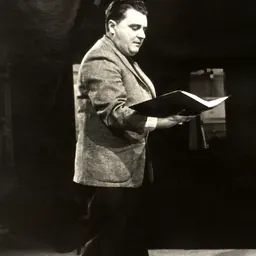

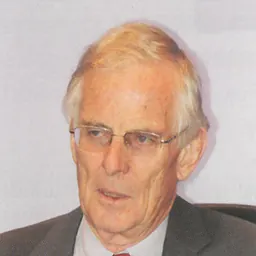
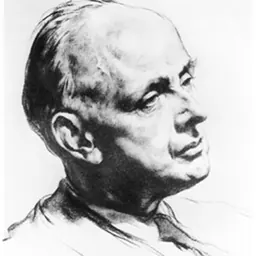
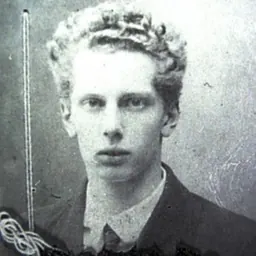
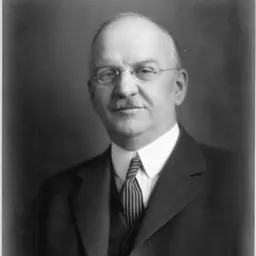

Related people
Same field, nearest in time
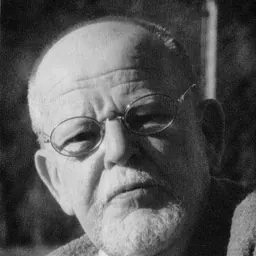
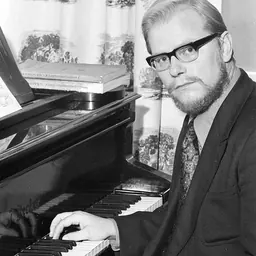
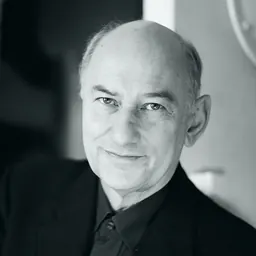


Contemporaries
People whose lives overlapped Malcolm Lipkin's



Frequently asked questions
Who was Malcolm Lipkin?
British musician (1932-2017)
When was Malcolm Lipkin born?
Malcolm Lipkin was born on 2 May 1932.
When did Malcolm Lipkin die?
Malcolm Lipkin died on 2 June 2017.
What was Malcolm Lipkin's occupation?
Malcolm Lipkin was a composer and pianist.
What nationality was Malcolm Lipkin?
Malcolm Lipkin was British.
Sources & further reading
Cite this page
APA: Biography.guide. (2026). Malcolm Lipkin. https://biography.guide/malcolm-lipkin/
MLA: "Malcolm Lipkin." Biography.guide, https://biography.guide/malcolm-lipkin/.
Chicago: "Malcolm Lipkin." Biography.guide. https://biography.guide/malcolm-lipkin/.
Data last updated: 2026-09-20 · Spot an error? Report a correction.
Page generated 2026-09-27 05:06 UTC