
Mahnaz Afkhami
Minister of gender equality, Human rights and gender equality activist
About Mahnaz Afkhami
Born 1941. Mahnaz Afkhami is an Iranian politician, human rights defender and feminist.
Mahnaz Afkhami (; born January 14, 1941) is an Iranian-American women's rights activist who served in the Cabinet of Iran from 1976 to 1978. She is founder and president of Women's Learning Partnership (WLP), executive director of the Foundation for Iranian Studies, and former Minister of Women's Affairs in Iran's pre-Revolution government. She has lived in exile in the United States since 1979.
Afkhami has been an advocate for women's rights since the 1970s. She has founded and headed several international non-governmental organizations focused on advancing the status of women in Iran and later around the world. She has lectured and published extensively on the international women's movement, women's human rights, women in leadership, women and technology, the status of women in Muslim-majority societies, and on women's participation in civil society-building and democratization. Her books have been translated into multiple languages and distributed internationally.
Biography Mahnaz Afkhami was born in Kerman, Iran in 1941, the eldest of three children. Her early childhood was spent in Kerman in a complex that housed a large extended family of Sheikhi Shi'ite Muslims.
When she was 11, her mother divorced her father and they moved to the United States. She later attended the University of San Francisco and the University of Colorado in Boulder.
In 1967, Mahnaz returned to Iran as a professor of literature at the National University of Iran. She worked there until 1978. Since then, she has lived in the United States, residing in Maryland with her husband, Gholam Reza Afkhami, until his death. She has a son and two grandchildren. to encourage women to be leaders in their families, communities, and countries. It has been translated into 20 languages. In 2010, she published Leading to Action: A Political Participation Handbook for Women. The manuals have been used for training around the world, reaching thousands.
Afkhami and her sister Farah Abrahimi were featured in the PBS series Destination America in 2005. At the time Afkhami became Minister of Women's Affairs, her sister was a leader in the students' movement demanding the overthrow of the Shah Mohammad Reza Pahlavi.
Gender equality In 1969, two years after returning to Iran as a professor of literature and Chair of the Department of English at the National University of Iran, Afkhami was drawn into Iran's women's movement and founded the Association of University Women. In 1970, she became the secretary general of the Women's Organization of Iran (WOI). She remained there for ten years, during which time she worked for Iranian women's rights.
Afkhami has served as a member of Iran's High Council of Family Planning and Welfare and on the boards of trustees of Kerman University and Farah University for Women. She has written that "omen's empowerment is a process, a holistic approach that involves raising consciousness, building skills and reforming unjust laws that limit women's education, their employment, their participation in decision making and, above all, their opportunities for economic independence."
Exile and involvement in the international women's movement When Iran's Islamic Revolution began in 1979, Afkhami was at the United Nations in New York City negotiating the establishment of the International Research and Training Institute for the Advancement of Women (INSTRAW). She was charged in absentia with "Corruption on earth and warring with God." She has never returned to Iran, living instead in exile, although she has said she would like to return to help rebuild Iran if its political system were to change.
She contributed the piece "A future in the past, the prerevolutionary women's movement" to the 1984 anthology Sisterhood Is Global: The International Women's Movement Anthology, edited by Robin Morgan.
In 1994, she published Women in Exile, a collection of portraits of activist women in political exile.
Afkhami then joined the international women's rights movement, saying: "The conditions women have in common outrank and outvalue those that set them apart." She became an advisor to Human Rights Watch and the vice-president and executive director of [The Sisterhood is Global?]. Since then, she has written Towards Global Feminism .
Afkhami has served on a number of boards and committees of international organizations including the Steering Committee of the World Movement for Democracy (1999–2010), the International League for Human Rights (2000–2006), the Global Fund for Women (1998–2007), Gender At Work (2003–2008), Women Leaders Intercultural Forum (2010) Global Women's Action Network for Children (2006–2009)., Global Fund for Women (1998–2007), International Museum of Women (2000–2014), Realizing Rights: The Ethical Globalization Initiative (2002–2010), and Women's Human Rights Net (2000–2004).
She serves on the Advisory Committee of the Women's Rights Division of Human Rights Watch, the Board of the Foundation for Iranian Studies,
She has taken a stand against cultural relativism and Islamic exceptionalism, stating clearly that human rights are universal and must supersede religious frameworks: "At the center of [the] conflict is the dilemma of Muslim women's human rights – whether Muslim women have rights because they are human beings, or whether they have rights because they are Muslim women."
Iranian Women's Movement Looking back on the changes which occurred in Iran just before the revolution, Afkhami said: "It seems to me that our main mistake was not that we did not do other things which we should have done. Our main mistake was that we created conditions in which the contradictions related to modernity, progress, equality, and human rights, especially women's rights, increased and the reaction to our work put perhaps too much pressure on the country's social fabric." She has publicly supported the Iranian One Million Signatures campaign to end discriminatory laws against women by promoting a book written by Iranian activist Noushin Ahmadi Khorasani. She believes that the movement is a new phase within a century-long cause.
Afkhami's life and work in the women's movement in Iran, breaking with tradition, and living in exile are the topics of the 2012 Voice of America Persian biopic .
Speaking engagements (selected) Chicago Council on Global Affairs, Election 2016 and the Global Women's Movement , Chicago, IL (November 1, 2016) (Moderated by Fay Hartog-Levin with Catherine Bertini and Ellen Chesler.)
Roosevelt Institute, Women and Girls Rising Conference , New York, NY (September 11, 2014) (Moderated by LaShawn R. Jefferson with Farida Shaheed and Jocelyn Olcott)
Creative Alternatives of New York, "CANY Seminar Series: Leading to Change: Eliminating Violence Against Women ", New York, NY (November 1, 2013)
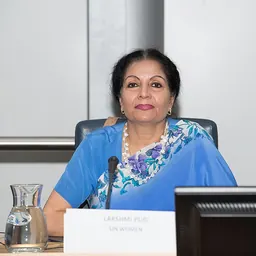
Women Deliver Conference 2013, Presidential Session: Ending Violence Against Women , Kualalumpur, Malaysia (May 29, 2013) (Moderated by Shereen El Feki with Gary Barker, Lakshmi Puri, Princess Mabel of Orange-Nassau)
Fortune (magazine) "Most Powerful Women Conference" 2011, Laguna Niguel, CA (October 3–5, 2011)
Chronological overview 2000– Founder and President of Women's Learning Partnership for Rights, Development, and Peace 1996–99 President of Sisterhood Is Global Institute 1992–96 Executive Director of Sisterhood Is Global Institute 1989–96 vice-president of Sisterhood Is Global Institute 1981– Founder and Executive Director of Foundation for Iranian Studies 1979–81 Consultant on Women and Development, Palo Alto, California 1976–78 Minister for Women's Affairs, Government of Iran 1970–79 Secretary General of the Women's Organization of Iran 1968–70 chairman, English Department, National University of Iran 1967–68 Assistant Professor, Department of English, National University of Iran 1966–67 Lecturer, University of Colorado, Colorado Springs, Colorado 1965–66 assistant editor, Abstracts of English Studies, Boulder, Colorado
Organizations founded or co-founded 2006 Global Women's Action Network for Children (with Marian Wright Edelman, Melanne Verveer, and Madeleine Albright) 2006 Women Leaders Intercultural Forum (with Mary Robinson, Lisa Anderson, and Thoraya Obaid) 2001 Gender at Work (with Kumi Naidoo, Aruna Rao, and Joanna Kerr) 2000 Women's Learning Partnership for Rights, Development, and Peace 1989 Sisterhood Is Global Institute 1981 Foundation for Iranian Studies Unknown South Tehran Development Program Unknown Association for Exceptional Children, Iran Unknown Association for English Professors in Iranian Universities Unknown University Women's Association of Iran
Honors Lifetime Achievement Award, Public Affairs Alliance of Iranian Americans, New York, NY (October 15, 2015) Walk of Courage Award, Lutheran Immigration and Refugee Services, Baltimore, MD (October 28, 2015) TrustWomen Hero Award 2015 (shortlist nominee)
Don’t just read it —
keep it.
Full-length biographies made to live with: read them, listen on the way to work, watch them tonight.
- E-book
- Audio
- Video
Instant download · yours to keep · every purchase keeps this site free
Important facts
Family & relationships
People in Mahnaz Afkhami's life
Named in this biography and alive at the same time





Related people
Same field, nearest in time



Contemporaries
People whose lives overlapped Mahnaz Afkhami's




Frequently asked questions
Who is Mahnaz Afkhami?
Minister of gender equality, Human rights and gender equality activist
When was Mahnaz Afkhami born?
Mahnaz Afkhami was born on 2 February 1941 in Kerman.
What is Mahnaz Afkhami's occupation?
Mahnaz Afkhami is a politician, human rights defender and feminist.
What nationality is Mahnaz Afkhami?
Mahnaz Afkhami is Iranian.
Sources & further reading
Cite this page
APA: Biography.guide. (2026). Mahnaz Afkhami. https://biography.guide/mahnaz-afkhami/
MLA: "Mahnaz Afkhami." Biography.guide, https://biography.guide/mahnaz-afkhami/.
Chicago: "Mahnaz Afkhami." Biography.guide. https://biography.guide/mahnaz-afkhami/.
Data last updated: 2026-09-25 · Spot an error? Report a correction.
Page generated 2026-09-27 05:12 UTC