
Mary Robinson
Former President of Ireland and former United Nations High Commissioner for Human Rights
About Mary Robinson
Born 1944. Mary Robinson is an Irish politician, jurist, university teacher and barrister.
Early life and background (1944–1969) Born in Ballina, County Mayo in 1944, she is the daughter of two medical doctors. Her family had links with many diverse political strands in Ireland. One ancestor was a leading activist in the Irish National Land League of Mayo and the Irish Republican Brotherhood (IRB); an uncle, Sir Paget John Bourke, was knighted by Queen Elizabeth II after a career as a judge in the Colonial Service; while another relative was a Catholic nun. Some branches of the family were members of the Anglican Church of Ireland while others were Catholics. More distant relatives included William Liath de Burgh, Tibbot MacWalter Kittagh Bourke, and Charles Bourke.
She attended Mount Anville Secondary School in Dublin Her time in office is most closely associated with these issues, as well as securing the right for women to serve on juries and her involvement with the Wood Quay protests.
In 1970, she married Nicholas Robinson, with whom she had a relationship since they were law students and who was then practising as a solicitor. They have three children together.
A result of Ireland joining the European Economic Community was that two of Robinson's key goals were met: Ireland was required to offer women in the public service equal pay to men, which came into effect in June 1973; and in July the marriage bar for women in the civil service was lifted.
In late July 1976, Robinson joined the Labour Party, though she later left the party in 1985. Whilst a member of the party, she ran for Dáil Éireann, including the 1981 general election for Dublin West, but failed to win a seat. Trinity College Dublin.Robinson served as Reid Professor of Law in the university, as well as being one of its three elected senators in for twenty years. During her time in office, Robinson won several landmark court cases. She first fought a gender-based case in the Labour Court on behalf of her husband. Under the pension scheme in place for politicians at the time, the widows of politicians were often entitled to pensions, but widowers were not. On 12 May 1979, the court ruled in her favour. In July 1979, she appeared in court on behalf of a couple who alleged that the Irish tax system was discriminatory as the tax allowances available to couples were less than double those available to single people. A court decision in their favour was made in October but was appealed by the Irish government. The Supreme Court eventually ruled in favour of the couple in April 1980. Robinson also lost a groundbreaking case in the European Court of Justice, the first case in which the court granted legal aid to a plaintiff.
On 23 May 1989, Robinson announced that she would not be seeking re-election, ending her career on the dissolution of the on 5 July 1989.
Presidential campaign
Background Robinson won the Labour Party nomination over former Minister for Health Noel Browne by a 4:1 majority. She had the advantage of being the first candidate nominated for the election (and the first female), in that she could cover more meetings, public addresses and interviews. However, she refused to be drawn on specifics in case she would alienate possible support. She also received the backing of The Irish Times newspaper, and this proved hugely advantageous.
Candidates from other parties Robinson ran against two other candidates: Austin Currie, for Fine Gael, and Brian Lenihan for Fianna Fáil. Currie was widely seen as Fine Gael's last choice as a candidate, nominated only when no one else was available. Fianna Fáil's candidate, then Tánaiste and Minister for Defence Brian Lenihan had become popular during his three decades in politics. Like Robinson, he had delivered liberal policy reform.
At the beginning of the campaign, Lenihan was seen as the favourite to win the presidency. As the campaign proceeded, however, it became apparent that Robinson was a serious contender. Crucial to her appeal was the deep unpopularity of the Taoiseach, Charles Haughey, and the rising popularity of Dick Spring.
Robinson obtained the backing of the Workers' Party which was strong in Dublin and Cork and was considered crucial to getting working-class votes.
A transfer pact was agreed upon between Fine Gael and Labour, as both parties were normally preferred partners for each other in general elections.
Lenihan controversy
During the campaign it emerged that what Lenihan had told friends and insiders in private flatly contradicted his public statements on a controversial effort in 1982 by the opposition Fianna Fáil to pressure President Hillery into refusing a parliamentary dissolution to Garret FitzGerald, the Taoiseach at the time; Hillery had resolutely rejected the pressure.
Lenihan denied he had pressured the President but then a tape was produced of an interview he had given to a postgraduate student the previous May, in which he frankly discussed attempting to apply pressure. Lenihan claimed that "on mature recollection" he hadn't pressured the President and had been confused in his interview with the student. The issue, however, nearly led to the collapse of the government.
Under pressure from the junior coalition partner, the Progressive Democrats, Haughey sacked Lenihan as Tánaiste and Minister for Defence. Lenihan's integrity was seriously questioned. Lenihan's role in the event in 1982 seemed to imply that he could be instructed by Haughey in his duties, and that electing Lenihan was in effect empowering the controversial Haughey. In an effort to weaken Robinson, a government minister and Haughey ally, Pádraig Flynn, launched a controversial personal attack on Mary Robinson "as a wife and mother" and "having a new-found interest in her family".
In 1991, Robinson was prevented from leaving the country by Charles Haughey's government. The power of the government to prevent the president from leaving the country is enshrined in Article 12.9 of the Irish constitution, which states that "the President shall not leave the State [...] save with the consent of the Government". Robinson had been invited to deliver the BBC Dimbleby Lecture, and was to be speaking on the position of women and the family in Ireland. Wary of Robinson's position as a feminist and human rights lawyer, the government prevented her from leaving as they wished to avoid the negative publicity that they believed would arise from a speech they believed would be highly critical of the Irish state.
International relations Robinson greets U.S. President Bill Clinton on a visit to Dublin, 1995
In 1992, Robinson travelled to Somalia, which at the time was struck by famine. She then travelled to the UN to make a report of her findings. The UN ultimately failed in its effort to relieve the famine, and the United States eventually intervened, ending the famine by March 1993.
In the summer of 1993, Robinson met and shook hands with both Queen Elizabeth II and Gerry Adams (the president of Sinn Féin), meetings which occurred on two separate occasions. On 27 May, Robinson became the first serving Irish president to visit the United Kingdom and meet Queen Elizabeth II at Buckingham Palace. and by President Éamon de Valera in 1969, to mark the fiftieth anniversary of the foundation of Dáil Éireann. Robinson delivered two such addresses. She was also invited to chair a committee to review the workings of the United Nations, but declined when asked to by the Government of Ireland, who feared that her involvement might make it difficult for it to oppose the proposals that would result.
Legislation and popularity
As President, she signed two significant bills that she had fought for throughout her political career: a bill to fully liberalise the law on the availability of contraceptives; and a bill fully decriminalising homosexuality, and which unlike legislation in much of the world at the time, provided for a fully equal age of consent.
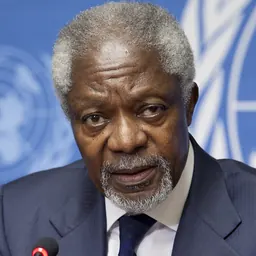
High Commissioner for Human Rights (1997–2002) Robinson became the United Nations High Commissioner for Human Rights on 12 September 1997, resigning the presidency a few weeks early to take up the post. Media reports suggested that she had been head-hunted for the post by Secretary-General of the United Nations Kofi Annan, to assume an advocacy as opposed to an administrative role, in other words, to become a public campaigner outlining principles rather than the previous implementational and consensus-building model. The belief was that the post had ceased to be seen as the voice of general principles and had become largely bureaucratic. Robinson's role was to set the human rights agenda within the organisation and internationally, refocusing its appeal.
In November 1997, she delivered the Romanes Lecture in Oxford on the topic of "Realizing Human Rights"; she spoke of the "daunting challenge" ahead of her, and how she intended to set about her task. She concluded the lecture with words from The Golden Bough: "If fate has called you, the bough will come easily, and of its own accord. Otherwise, no matter how much strength you muster, you never will manage to quell it or cut it down with the toughest of blades."
Robinson was the first High Commissioner for Human Rights to visit Tibet, making her trip in 1998. During her tenure, she criticised the Irish system of permits for non-EU immigrants as similar to "bonded labour" and criticised the United States' use of capital punishment.
In 2001, she chaired the Asia Regional Preparatory Meeting for the World Conference against Racism, Racial Discrimination, Xenophobia and related intolerances, which was held in Tehran, Iran. adopted for protection of rights by International Human Rights Law.
Post-commissioner period (2002 – present)
University of Dublin Robinson served as the twenty-fourth, and first female, Chancellor of the University of Dublin. She represented the university in the for over twenty years and held the Reid Chair in Law. She was succeeded as chancellor by Mary McAleese, who had also succeeded her as president of Ireland.
Membership of "The Elders"
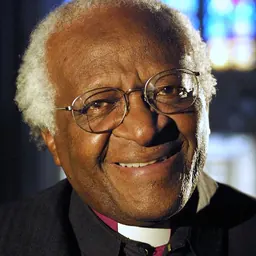
Along with Nelson Mandela, Graça Machel, and Desmond Tutu, and others, Robinson was a founding member of "The Elders", a group of world leaders with the goal of contributing their wisdom to tackle some of the world's toughest problems. She has travelled with Elders delegations to the Ivory Coast, the Korean Peninsula, Ethiopia, India, South Sudan and the Middle East. In 2019 Robinson announced that she believes in making tackling climate change a personal issue in our lives and for this reason she has stopped eating meat in favour of a more eco-friendly pescetarian diet.
Archive and tax avoidance controversy In October 2016, it was revealed in the media that Robinson was planning to donate her archive to Mayo County Council, as part of the development of The Mary Robinson Centre, and had applied to have the archive designated under the Taxes Consolidation Act, 1997, potentially resulting in a personal tax credit to her worth over €2m, arising from the donation of her personal papers. The house proposed to be used for the centre was to be purchased from Robinson's brother for €665,000. Institute for Human Rights & Business (IHRB), Patron Club de Madrid, member and former president World Justice Project, honorary co-chairwoman Association of European Parliamentarians with Africa (AWEPA), member of the Eminent Advisory Board Mothers of Invention (podcast), co-host (since 2018)
Roles in international organisations
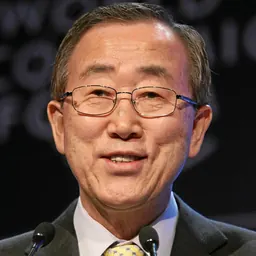
In March 2013, Robinson was chosen to oversee the implementation of a peace deal to stabilise the Democratic Republic of the Congo. Appointed as special envoy to Africa's Great Lakes region by UN Secretary-General Ban Ki-moon, During her tenure as special envoy, the 23 March Movement and other armed rebel groups surrendered to the Congolese government. In February 2021, Robinson retracted her 2018 statement claiming on the BBC's Panorama programme that she and Latifa's stepmother, Princess Haya, were both misled over the health and stability of Latifa during that period, when she was held in enforced detention in a Dubai villa and Robinson was embroiled into the proof of life controversy to allay international concern over Latifa's disappearance from the public eye. Robinson gave an account of the incident on The Late Late Show on 26 February 2021, referring to it as the biggest mistake of her career.
In 2020, she led an independent probe of a report that cleared Akinwumi Adesina, the president of the African Development Bank, of wrongdoing.
Recognition Over the course of her career, Robinson has been awarded numerous honours, including the following: 1993 – New Zealand Suffrage Centennial Medal 2000 – Félix Houphouët-Boigny Peace Prize by UNESCO 2002 – Sydney Peace Prize 2002 – James Parks Morton Interfaith Award 2003 – Otto Hahn Peace Medal in Gold of the United Nations Association of Germany 2004 – Amnesty International's Ambassador of Conscience Award for her work in promoting human rights. 2005 – "Outspoken" Award by the International Gay and Lesbian Human Rights Commission (IGLHRC) 2006 – Prince of Asturias Award for Social Science 2009 – Inamori Ethics Prize by Case Western Reserve University 2017 – Knight of Freedom Award 2018 – Kew International Medal
On 29 September 2010, at a ceremony in Dublin, she received a damehood from the Military and Hospitaller Order of St. Lazarus of Jerusalem. As a former Head of State and in recognition of her significant contribution towards human rights she was awarded the honour of Dame Grand Cross of Merit.
Honorary degrees In 1991 and in 2001, Robinson was awarded honorary doctorates by Brown University, University of Cambridge, University of Liverpool and Lisbon Nova University. On 22 January 2000, she received an honorary doctorate from the Faculty of Law at Uppsala University, Sweden.
Don’t just read it —
keep it.
Full-length biographies made to live with: read them, listen on the way to work, watch them tonight.
- E-book
- Audio
- Video
Instant download · yours to keep · every purchase keeps this site free
Important facts
more
Máire Treasa Úna Mhic Róibín, Her Excellency Mary RobinsonFamily & relationships
People in Mary Robinson's life
Named in this biography and alive at the same time



Related people
Same field, nearest in time




Contemporaries
People whose lives overlapped Mary Robinson's


Frequently asked questions
Who is Mary Robinson?
former President of Ireland and former United Nations High Commissioner for Human Rights
When was Mary Robinson born?
Mary Robinson was born on 21 May 1944 in Ballina.
What is Mary Robinson's occupation?
Mary Robinson is a politician, jurist, university teacher and barrister.
What nationality is Mary Robinson?
Mary Robinson is Irish.
Sources & further reading
Cite this page
APA: Biography.guide. (2026). Mary Robinson. https://biography.guide/mary-robinson-politician/
MLA: "Mary Robinson." Biography.guide, https://biography.guide/mary-robinson-politician/.
Chicago: "Mary Robinson." Biography.guide. https://biography.guide/mary-robinson-politician/.
Data last updated: 2026-09-26 · Spot an error? Report a correction.
Page generated 2026-09-27 05:14 UTC