
About Mahmud Ali
Lived 1919 – 2006 (aged 87). Mahmud Ali was a Pakistani and Indian politician.
Mahmud Ali (; ; 1 September 1919 – 17 November 2006) was a progressive leftist Pakistani politician known for his agrarian politics. He was part of the Freedom Movement and played an important role during the Sylhet referendum which led to its merger with East Bengal. As member of Pakistan's Second Constituent Assembly he demanded the recognition of Bengali as one of the national languages of Pakistan and advocated the cause through his newspaper, the Nao Belal. He strongly opposed the 'One Unit' scheme and voted against the merger in 1956. After the dissolution of the assembly and abrogation of the 1956 Constitution he worked towards the restoration of provinces and a parliamentary form of government based on adult franchise.
Early life and family Mahmud Ali was born into a Bengali Muslim family of lawyers, writers and politicians on 1 September 1919, in Alimabagh, Sunamganj, Sylhet District. His father, Moulvi Mujahid Ali was a writer, poet and law graduate from the Aligarh Muslim University.
Freedom Movement
All India Muslim League
Mahmud Ali was elected as the first student President of the Assam Provincial Muslim Students Federation when Raja of Mahmudabad was President of the All India Muslim Students Federation. In 1944 he was appointed as a member of the Assam Muslim League Working Committee by the President of the Assam Provincial Muslim League, Moulana Abdul Hamid Khan Bhashani. He was later elected as the general secretary in 1946 at the age of 26.
The Line System and Civil Disobedience Movement
The Government of India Act, 1935 made provisions for a Legislative Assembly in each province in British India; and elections for the Assam Legislative Assembly were held in 1937. Sir Syed Muhammed Saadullah was elected to the assembly and in the same year joined the All India Muslim League on Jinnah's request. Saadullah led a coalition government three times between 1 April 1937 and 11 February 1946. He supported Assam's inclusion within the new state of Pakistan and opposed the Line System which restricted Muslim immigrants to certain areas of Assam. The System originated in the district of Nowgong in 1920 and the lines were drawn with no fixed principles in determining them. Immigrant opposition grew and became a powerful force under Bhashani. On 15 September 1937, Mahmud Ali's uncle, Munawwar Ali moved a resolution in the Legislative Assembly calling for the abolition of the Line System. He argued that Bengali immigrants had brought "prosperity ... and wealth to the province of Assam". Danesh was its first president, and Ali was the secretary general. The Ganatantri Dal was the first to open its doors to non-Muslims on an equal footing and demanded a secular constitution. The party manifesto included the demand for the abolition of feudalism without any compensation, secession from the Commonwealth, nationalisation of the jute trade, equal rights for women in social, political, and economic spheres, and abolition of the visa system between Pakistan and India.
Ali spoke out against the League's pro-West stance and called for an independent foreign policy. As president, Mahmud Ali opposed the US-Pakistan Military Aid Pact signed on 19 April 1954, and on his party's appeal, almost all political parties observed "Anti US-Pakistan Military Pact Day"
Ali was elected the member of the National Assembly of Pakistan for constituency Sylhet-I in 1965 as a representative of the National Democratic Front. He lost the next election, in 1970, as a Pakistan Democratic Party candidate for the assembly.
Don’t just read it —
keep it.
Full-length biographies made to live with: read them, listen on the way to work, watch them tonight.
- E-book
- Audio
- Video
Instant download · yours to keep · every purchase keeps this site free
Important facts
People in Mahmud Ali's life
Named in this biography and alive at the same time
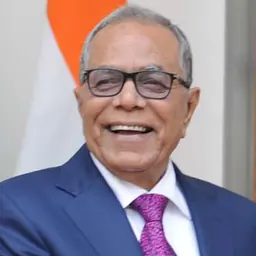
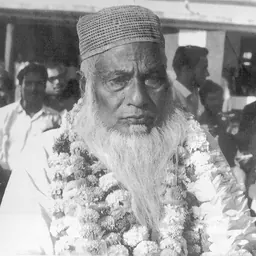



Related people
Same field, nearest in time





Contemporaries
People whose lives overlapped Mahmud Ali's
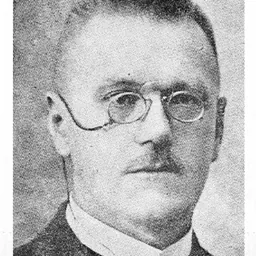


Frequently asked questions
Who was Mahmud Ali?
Pakistani politician
When was Mahmud Ali born?
Mahmud Ali was born on 1 September 1919 in Sunamganj District.
When did Mahmud Ali die?
Mahmud Ali died on 17 November 2006 in Lahore.
What was Mahmud Ali's occupation?
Mahmud Ali was a politician.
What nationality was Mahmud Ali?
Mahmud Ali was Pakistani and Indian.
Sources & further reading
· DBpedia: Mahmud Ali (politician)
Cite this page
APA: Biography.guide. (2026). Mahmud Ali. https://biography.guide/mahmud-ali/
MLA: "Mahmud Ali." Biography.guide, https://biography.guide/mahmud-ali/.
Chicago: "Mahmud Ali." Biography.guide. https://biography.guide/mahmud-ali/.
Data last updated: 2026-09-20 · Spot an error? Report a correction.
Page generated 2026-09-27 05:25 UTC