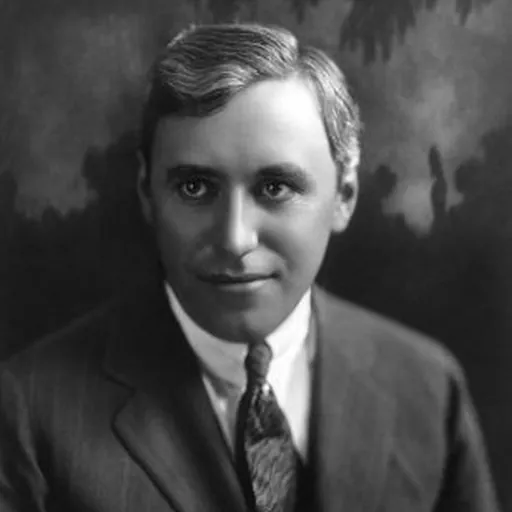
Mack Sennett
Canadian-American actor, producer and director
About Mack Sennett
Lived 1880 – 1960 (aged 80). Mack Sennett was an American and Canadian film director, film producer, screenwriter, cinematographer, television presenter and composer.
Mack Sennett (born Michael Sinnott; January 17, 1880 – November 5, 1960) was a Canadian-American producer, director, actor, and studio head who was known as the "King of Comedy" during his career. he started acting in films in the Biograph Company of New York City in 1908, and later opened Keystone Studios in Edendale, California in 1912. Keystone possessed the first fully enclosed film stage, and Sennett became famous as the originator of slapstick routines such as pie-throwing and car-chases, as seen in the Keystone Cops films. He also produced short features that displayed his Bathing Beauties, many of whom had acting careers.
After struggling with bankruptcy and the dominance of sound films in the early 1930s, Sennett was presented with an honorary Academy Award in 1938 for his contributions to the film industry, with the academy describing him as a "master of fun, discoverer of stars, sympathetic, kindly, understanding comedy genius".
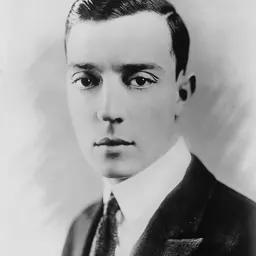
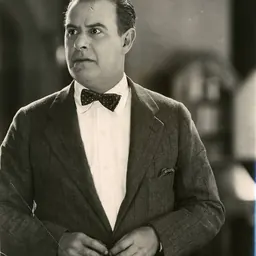
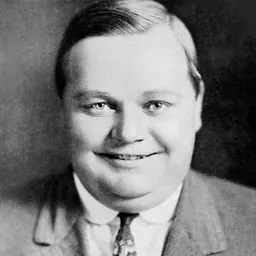
Early life Born Michael Sinnott in Danville, Quebec, By 1883, when Sennett's brother George was born, Sinnott was working as an innkeeper, a position he held for many years. Sennett's parents had all their children and raised their family in Richmond, then a small Eastern Townships village. At that time, Sennett's grandparents were living in Danville, Quebec. Sennett moved to Connecticut when he was 17. is still standing, as of 2023. Many successful actors began their film careers with Sennett, including Marie Dressler, Mabel Normand, Charlie Chaplin, Harry Langdon, Roscoe Arbuckle, Harold Lloyd, Raymond Griffith, Gloria Swanson, Charley Chase, Ford Sterling, Andy Clyde, Chester Conklin, Polly Moran, Slim Summerville, Louise Fazenda, The Keystone Cops, Carole Lombard, Bing Crosby, and W. C. Fields.
Dubbed the King of Hollywood's Fun Factory, Sennett's studios produced slapstick comedies that were noted for their hair-raising car chases and custard pie warfare, especially in the Keystone Cops series. The comic formulas, however well executed, were based on humorous situations rather than the personal traits of the comedians; the various social types, often grotesquely portrayed by members of Sennett's troupe, were adequate to render the largely "interchangeable routines: "Having a funny moustache, or crossed-eyes, or an extra two-hundred pounds was as much individualization as was required." ("Fatty's persona as the 'jolly fat man' constrained him from being something more than that.) The more conventionally good-looking Chaplin and Keaton could eventually aspire to roles that were more promising, leading to their ultimate transcendence of slapstick." And: "I have felt that Charles Chaplin and Buster Keaton rose to the heights of screen comedy by distancing themselves from their Sennett/Normand/Arbuckle roots."} Sennett also won an Academy Award in the novelty division for his film Wrestling Swordfish, also in 1932. Sennett wanted W. C. Fields to star as a carnival hypnotist, but Fields declined, and the role went to Ernest Torrence, sharing the spotlight with blackface comedians Moran and Mack, "The Two Black Crows". Production was completed in August 1932, but fell far short of Sennett's grandiose predictions. The finished film ran an ordinary 70 minutes and was released through ordinary channels by World Wide Pictures (Educational's feature-film outlet) in December 1932.
Sennett was also having differences with his distributor, Earle Hammons of Educational. Jack White, Educational's leading producer, explained, "We put Mack Sennett out of business. Theaters had [our] comedies booked solid. Sennett was very temperamental and wanted the exhibitor to do certain things, but they wouldn't stand for it. Sennett wouldn't stand for Hammons not telling him how much [money] he was cutting out of the grosses for himself. Sennett told him to go to hell." Sennett left Educational and signed with Paramount Pictures.{
Sennett's sound comedies usually starred young featured players like Frank Albertson or established stage comics like Walter Catlett, but Sennett didn't establish any new star names until he signed both Bing Crosby and W. C. Fields for two-reel comedies. Crosby starred in six; Fields wrote and starred in four. Two other Sennett shorts were made with Fields scripts: The Singing Boxer (1933) with Donald Novis and Too Many Highballs (1933) with Lloyd Hamilton. Despite Paramount's wide distribution of the Crosby and Fields shorts, Sennett's studio did not survive the Depression. Sennett's partnership with Paramount lasted only one year and he was forced into bankruptcy in November 1933. His former protege Bing Crosby, whose popularity and income had skyrocketed, helped Sennett during a period of financial hardship. This act prompted columnist Lloyd Pantages to refer to Crosby as Sennett's "guardian angel".
On January 12, 1934, Sennett was injured in an automobile accident that killed blackface performer Charles Mack (of Moran and Mack) in Mesa, Arizona.
His last work, in 1935, was as a producer-director for Educational, in which he directed Buster Keaton in The Timid Young Man and Joan Davis in Way Up Thar. Sennett was not connected with the 1935 Vitaphone short subject Keystone Hotel, which featured several alumni from the Sennett studios, including Ben Turpin, Ford Sterling, Hank Mann, and Chester Conklin. The film was directed by Ralph Staub.
Sennett made one last attempt to continue to work in the comedy field. By this time he had been supplanted as the major producer of two-reel comedies by Jules White at Columbia Pictures. White's brother, Jack White, recalled: "When Jules and I were at Columbia in the 1930s, Sennett tried to come to Columbia but they wouldn't have him. He was finished, and the studio was happy with Jules." Sennett did sell some scripts and stories to Jules White, receiving screen credit under his "Michael Emmes" alias. Columbia really didn't need Sennett's services; the studio already had four producers and six directors on its short-subject payroll.
Mack Sennett went into semi-retirement at the age of 55, having produced more than 1,000 silent films and several dozen talkies during a 25-year career. His studio property was purchased by Mascot Pictures (later part of Republic Pictures), and many of his former staffers found work at Columbia.
In March 1938, Sennett was presented with an honorary Academy Award: "for his lasting contribution to the comedy technique of the screen, the basic principles of which are as important today as when they were first put into practice, the Academy presents a Special Award to that master of fun, discoverer of stars, sympathetic, kindly, understanding comedy genius – Mack Sennett.".
Later projects Rumors abounded that Sennett would be returning to film production (a September 1938 publicity release indicated that he would be working with Stan Laurel of Laurel and Hardy), but apart from Sennett reissuing a couple of his Bing Crosby two-reelers to theaters, nothing happened.
Sennett did appear in front of the camera, however, in Hollywood Cavalcade (1939), a thinly disguised version of the Mack Sennett-Mabel Normand romance.
In 1949, he provided film footage for the first full-length comedy compilation film, Down Memory Lane (1949), written and narrated by Steve Allen. Sennett made a guest appearance in the film, and received a special "Mack Sennett presents" credit.
Sennett wrote a memoir, King of Comedy, in collaboration with Cameron Shipp. The book was published in 1954, prompting TV producer Ralph Edwards to mount a tribute to Sennett for the television series This Is Your Life. Sennett made a cameo appearance (for $1,000) in Abbott and Costello Meet the Keystone Kops (1955).
Sennett's last appearance in the national media was in the NBC radio program Biography in Sound, relating memories of working with W.C. Fields. The program was broadcast February 28, 1956.
Personal life Sennett was never married, but his tumultuous relationship with actress Mabel Normand was widely publicized in the press at the time. According to the Los Angeles Times, Sennett reportedly lived a "madcap, extravagant life", often throwing "lavish parties", and at the peak of his career he owned three homes.
Death Sennett died on November 5, 1960, in Woodland Hills, California, aged 80. He was interred in the Holy Cross Cemetery in Culver City, California.
Filmography
Tributes For his contribution to the motion picture industry, Sennett was honored with a star on the Hollywood Walk of Fame at 6712 Hollywood Boulevard.
In popular culture In A Story of Water, a 1961 short film by Jean-Luc Godard and François Truffaut, the directors dedicated the film to Mack Sennett. In 1974, Michael Stewart and Jerry Herman wrote the musical Mack & Mabel, chronicling the romance between Sennett and Mabel Normand. Sennett was portrayed by Robert Preston in the original Broadway production, with Bernadette Peters as Normand. Sennett was a leading character in The Biograph Girl, a 1980 musical about the silent film era. Guy Siner appeared as Sennett in the West End production. Peter Lovesey's 1983 novel Keystone is a whodunnit set in the Keystone Studios and involving (among others), Mack Sennett, Mabel Normand, Roscoe Arbuckle, and the Keystone Cops. Dan Aykroyd portrayed Mack Sennett in the 1992 movie Chaplin alongside Marisa Tomei as Mabel Normand and Robert Downey Jr. as Charlie Chaplin. Joseph Beattie and Andrea Deck portrayed Mack Sennett and Mabel Normand, respectively, in episode eight of series two of ITV's Mr. Selfridge. Carol Burnett did a lengthy tribute skit to Mack Sennett on her show that aired on Me TV in June 2021.
Don’t just read it —
keep it.
Full-length biographies made to live with: read them, listen on the way to work, watch them tonight.
- E-book
- Audio
- Video
Instant download · yours to keep · every purchase keeps this site free
Important facts
People in Mack Sennett's life
Named in this biography and alive at the same time


Related people
Same field, nearest in time


Contemporaries
People whose lives overlapped Mack Sennett's



Frequently asked questions
Who was Mack Sennett?
Canadian-American actor, producer and director (1880–1960)
When was Mack Sennett born?
Mack Sennett was born on 17 January 1880 in Melbourne.
When did Mack Sennett die?
Mack Sennett died on 5 November 1960 in Woodland Hills.
What was Mack Sennett's occupation?
Mack Sennett was a film director, film producer, screenwriter, cinematographer, television presenter and composer.
What nationality was Mack Sennett?
Mack Sennett was American and Canadian.
Sources & further reading
Cite this page
APA: Biography.guide. (2026). Mack Sennett. https://biography.guide/mack-sennett/
MLA: "Mack Sennett." Biography.guide, https://biography.guide/mack-sennett/.
Chicago: "Mack Sennett." Biography.guide. https://biography.guide/mack-sennett/.
Data last updated: 2026-09-23 · Spot an error? Report a correction.
Portrait: Wikimedia Commons · author & licence
Page generated 2026-09-27 05:07 UTC