
About M'siri
Lived 1830 – 1891 (aged 60–61). M'siri was a sovereign.
Msiri (c. 1830 – December 20, 1891) founded and ruled the Yeke Kingdom (also called the Garanganze or Garenganze kingdom) in south-east Katanga (now in DR Congo) from about 1856 to 1891. His name is sometimes spelled 'M'Siri' in articles in French. Other variants are "Mziri", "Msidi", and "Mushidi"; and his full name was Mwenda Msiri Ngelengwa Shitambi.
Msiri's origins and rise to power Southern Central Africa in 1890 showing the central position of Msiri's Yeke Kingdom and the principal trade routes, with the approximate territories of Msiri's main allies (names in yellow) and the approximate areas occupied by European powers (names in orange — does not show spheres of influence or borders). The east coast trade was controlled by the Sultan of Zanzibar. Areas of influence of other tribes and of France and Germany are not shown.
From Tabora to Katanga Msiri was a Nyamwezi from Tabora in modern-day Tanzania and a trader, like his father Kalasa, involved in the copper, ivory and East African slave trade controlled by the Sultan of Zanzibar and his Arab and Swahili agents. The main trade route went to Ujiji on Lake Tanganyika and then to Lake Mweru and Katanga.
Military power Msiri realised access to guns was the key to power, and in Katanga, he had copper and ivory resources to trade for them. He formed a militia and started to conquer his neighbours. He also married into the Luba royal family, starting his practice of using wives as spies.
He depended on the east coast trade for his guns and gunpowder, which passed through the territory of his rivals, making supplies expensive and unreliable. Instead he turned to the west coast, sending his nephew Molenga to the Ovimbundu and Portuguese traders around Benguela in Angola, and a trader there called Coimbra became his supplier. The Luba people to his north-west had controlled the west coast trade, but Msiri took it over and halted their southwards expansion. and Msiri subsequently influenced the appointment of his successors. Msiri's control of south-east Katanga and its copper resources was consolidated.
Msiri's strategy Msiri's favourite wife, the Portuguese-Angolan Maria de Fonseca, who died a grisly death at the hand of Msiri's adopted son and successor.
In a region and age dominated by armed traders, Msiri was very successful. His control of the trade routes between the Atlantic and Indian Oceans took ruthlessness and arms (and over his neighbours, Msiri had what would be called in the west ‘superior military technology’). But it also took a strategic eye, and the guile and persuasion required to form alliances with hundreds of other tribes, rulers and traders. He did this through his wives, who numbered more than 500. He took a wife from the village of each subordinate chief, making the chief think this gave him an advocate at Msiri's court, but the wife was used to spy on the chief instead and to obtain information about his dealings and loyalty. Msiri married one of his own daughters to Tippu Tip.
Thus, the first missionaries in Katanga did not decide to go there at their own initiative. Msiri's strategy worked: the missionaries' advice prevented him being taken in by the first British and Belgian expeditions (see below).
The scramble for Katanga and killing of Msiri
British Expeditions (Sharpe and Thomson), 1890 Cecil Rhodes’ British South Africa Company (BSAC) and Belgian King Leopold II’s Congo Free State (CFS) both wanted to sign treaties with Msiri to fulfil their colonial ambitions and competed to do so. Some of Msiri's subordinate chiefs and trading competitors took the opportunity of the arrival of new powers in the region to start rebellions against his authority. In November 1890 Alfred Sharpe arrived in Bunkeya from Nyasaland on behalf of the BSAC and the British Commissioner in Central Africa/Nyasaland, Sir Harry Johnston, with a mineral rights concession and a British protectorate treaty for signature. The explorer Joseph Thomson was sent by the BSAC to meet up with and reinforce Sharpe's mission in Bunkeya, but its route was blocked by a smallpox epidemic and it could not continue.
Arnot was still in Britain but Charles Swan and Dan Crawford were present. Msiri and his officials could not read English and Sharpe described the agreement favourably, but Arnot had advised Msiri to have any treaties translated, and Swan now gave the same advice. For this the missionaries were later the subject of resentment and anger on behalf of the BSAC, It did not mention agreeing to the CFS flag being hoisted nor to recognising Leopold's sovereignty, and its lack of precision was probably designed to keep Leopold at bay, so a few months later the Delcommune Expedition followed up to try to achieve those objectives, but again Msiri refused. Expecting that the BSAC would try again with Thomson, Leopold resolved to take stronger action with his third expedition of 1891.
The Stairs Expedition and the killing of Msiri
On December 14, 1891 the armed Stairs Expedition of the CFS arrived in Bunkeya with 400 troops and porters, led by Canadian mercenary, Captain W. G. Stairs, ordered by Leopold to raise the CFS flag and claim Katanga by force if necessary. Negotiations commenced and Msiri indicated he might agree to a treaty if supplied with gunpowder.
The oral history of the Garanganze people contains some contradictions about the incident. In one story, Msiri speared Bodson to death and was shot by other members of the expedition.
The fate of Msiri's head In an article published in Paris in 1892, de Bonchamps revealed that having carried Msiri's body back to their camp, the expedition cut off his head and hoisted it on a pole as a 'barbaric lesson' to the Garanganze.
Garanganze oral history says that the body returned to them by Stairs for burial was headless, and that the expedition kept the head. One account says that it cursed and killed everyone who carried it and eventually, this included Stairs himself, who died of malaria six months later on the return journey, and it was alleged he had with him Msiri's head in a can of kerosene.
In 1974 Congolese artist Tshibumba Kanda-Matulu said:
Moloney, the Stairs Expedition's doctor, wrote up his account on his return to London in 1892. Influenced by the writings of men such as Livingstone, public opinion in Britain began to clamor for reforms which benefited the indigenous subjects of the British Empire. Moloney noted that Msiri had his "apologists" in London. King Leopold had to legitimise his Congo Free State's claim to Katanga under the Berlin Conference's Principle of Effectivity, so a justification for the killing of Msiri was required. The Stairs Expedition's reports were used in Europe to emphasise self-defence as the reason for his death, coupled with the claim he was a bloodthirsty tyrant. Moloney's quotation of Bodson's dramatic dying words helped in this respect.
The question remains as to whether Msiri was being described as a bloodthirsty tyrant to the same extent before he was killed, when his signature to a treaty was being assiduously courted by the imperial powers.
Don’t just read it —
keep it.
Full-length biographies made to live with: read them, listen on the way to work, watch them tonight.
- E-book
- Audio
- Video
Instant download · yours to keep · every purchase keeps this site free
Important facts
People in M'siri's life
Named in this biography and alive at the same time
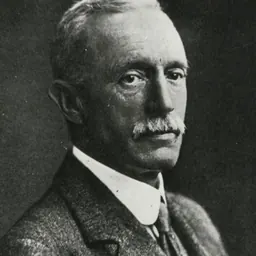


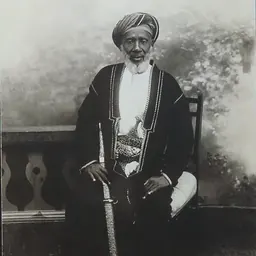

Related people
Same field, nearest in time
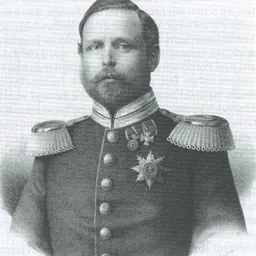

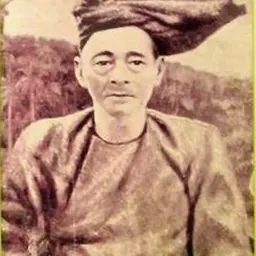
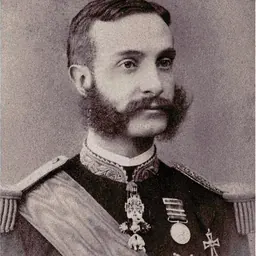


Contemporaries
People whose lives overlapped M'siri's


Frequently asked questions
Who was M'siri?
founder and ruler of the Yeke Kingdom
When was M'siri born?
M'siri was born in 1830.
When did M'siri die?
M'siri died on 20 December 1891 in Katanga Province.
What was M'siri's occupation?
M'siri was a sovereign.
What nationality was M'siri?
M'siri's recorded nationality: Yeke Kingdom.
Sources & further reading
Cite this page
APA: Biography.guide. (2026). M'siri. https://biography.guide/m-siri/
MLA: "M'siri." Biography.guide, https://biography.guide/m-siri/.
Chicago: "M'siri." Biography.guide. https://biography.guide/m-siri/.
Data last updated: 2026-09-26 · Spot an error? Report a correction.
Page generated 2026-09-27 05:16 UTC