
About M. G. Smith
Lived 1921 – 1993 (aged 71). M. G. Smith was a Jamaican anthropologist and poet, known for Social anthropologist.
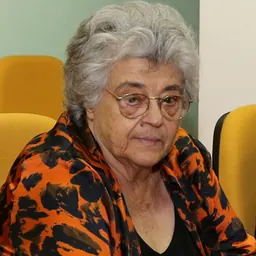
Michael Garfield Smith (18 August 1921 – 5 January 1993) was a Jamaican social anthropologist and poet of international repute.
Biography
Born in Kingston, Jamaica, M.G. Smith was from an early age academically minded and performed well in school. When he was a schoolboy at Jamaica College, his schoolmates claimed him as their "intellectual hero." In 1939 at age seventeen, Smith achieved the highest marks of all Higher Schools Certificate candidates in the entire British Empire. More than a student scholar, he later emerged as a published poet of promise. His scholarly feats earned him the Jamaica Scholarship, which did not take him to Bombay as he had wished, but to Canada, where he went to study English literature at McGill University. Demobilized in London in 1945, he turned from literature to law, which he studied for a year before his switch to anthropology. As his wife Mary reported, Smith found the law "an ass" and not, as he had hoped, about justice. He took to anthropology quickly and anthropology to him. Soon he became a prize student in Daryll Forde's department at University College London, completed his undergraduate work in short order, and after field research in Northern Nigeria, was awarded the PhD in 1951.
Anthropology Smith's professional career in anthropology, straddling three continents and the Caribbean, was distinguished. His first appointment, which made possible a return home after eleven years, was to the Institute of Social and Economic Research in Jamaica. When the ISER was merged into what is now the University of the West Indies, Smith was also appointed a senior lecturer in sociology. Over eight years, he embarked on an ambitious program of Caribbean research, carried out a year's field work in Nigeria, published prolifically on both the West Indies and Africa, and established his reputation as an anthropologist. In 1961, he left Jamaica to become professor of anthropology at the University of California at Los Angeles. Lasting eight years, this first stay in the United States provided the impetus for four books and some thirty articles. He, Mary and their three boys returned to Great Britain in 1969. It was a move made for personal rather than academic reasons, without any prior offers of employment. Smith was offered the chair of his old department at University College London. When in 1972 while at UCL, his old schoolmate and Prime Minister of Jamaica, Michael Manley, requested his services as special adviser, he accepted this added appointment as well. This policy-related assignment lasted until 1977 and was carried out during one of the darkest periods of modern Jamaican history. Smith returned to the United States in 1978 as the Franklin M. Crosby Professor of the Human Environment at Yale University, a post he held until his retirement in 1986.
Smith was both theorist and field worker. His personal field research in Africa and the West Indies stretched over half a century. In 1949–50, 1958–59, 1972, and 1977–78, he studied the Hausa, Kagoro, and Kadara in Northern Nigeria. In 1952–53, he worked in Grenada and its dependency Carriacou on social stratification, religion, kinship, and community. In 1955, 1960, 1964, and 1974–75 he carried out a variety of field projects, some with an applied bent, in Jamaica. And, finally in 1990, when he was nearly seventy years old, he returned to Grenada to study the course of education since independence. His books on Africa include: The Economy of Hausa Communities of Zaria; Government in Zazzau, 1800–1950; Pluralism in Africa (with Leo Kuper); The Affairs of Daura; and Government in Kano, 1350–1959. On West Indian themes, they include: has also been set to music. Nobel Laureate Derek Walcott once ranked Smith as "one of the two important writers of recent Jamaican poetry." His collected poems have been published in the book In the Kingdom of Light (2003).
Don’t just read it —
keep it.
Full-length biographies made to live with: read them, listen on the way to work, watch them tonight.
- E-book
- Audio
- Video
Instant download · yours to keep · every purchase keeps this site free
Important facts
People in M. G. Smith's life
Named in this biography and alive at the same time


Related people
Same field, nearest in time



Contemporaries
People whose lives overlapped M. G. Smith's




Frequently asked questions
Who was M. G. Smith?
Jamaican social anthropologist and poet (1921-1993)
When was M. G. Smith born?
M. G. Smith was born on 18 August 1921 in Kingston.
When did M. G. Smith die?
M. G. Smith died on 5 January 1993.
What was M. G. Smith's occupation?
M. G. Smith was an anthropologist and poet.
What was M. G. Smith known for?
M. G. Smith was known for Social anthropologist.
What nationality was M. G. Smith?
M. G. Smith was Jamaican.
Sources & further reading
Cite this page
APA: Biography.guide. (2026). M. G. Smith. https://biography.guide/m-g-smith/
MLA: "M. G. Smith." Biography.guide, https://biography.guide/m-g-smith/.
Chicago: "M. G. Smith." Biography.guide. https://biography.guide/m-g-smith/.
Data last updated: 2026-09-22 · Spot an error? Report a correction.
Page generated 2026-09-27 05:00 UTC