
About Daryll Forde
Lived 1902 – 1973 (aged 71). Daryll Forde was a British anthropologist, university teacher and geographer.
Cyril Daryll Forde FRAI (16 March 1902 – 3 May 1973) was a British anthropologist and Africanist.
Education and early career
Forde was born in Tottenham on 16 March 1902, the son of John Percival Daniel Forde, a reverend and schoolmaster, and Caroline Pearce Pittman. He attended the local county school in Tottenham, then went on to read geography at University College London (UCL).
At that time there was no department of anthropology at UCL; the geography department had interests in ethnography and archaeology, but for the most part it was the domain of Grafton Elliot Smith, a professor of anatomy and noted proponent of hyperdiffusionism. Forde studied under Smith and, upon completing his bachelor's degree in 1924, he was appointed a lecturer in the department of anatomy. His earliest work was influenced by Smith's belief that all of human civilisation originated in ancient Egypt. The main focus of his research in the anatomy department, however, was the megalithic cultures of prehistoric western Europe. In this he was influenced by the culture historical theories of V. Gordon Childe, who would become a lifelong friend and collaborator.
Forde's archaeological work won him the Society of Antiquaries' prestigious Franks Studentship in 1924, The intellectual climate there—very different to anthropology in Britain—had a profound effect on Forde's scholarship. He would later refer to it as his "transatlantic noviciate". It was here, aged 31, that he commenced a 5-year excavation programme on the local Iron Age hillfort of Pen Dinas between 1933 and 1937, answering many earlier calls made during the 1920s for the excavation and dating of a local hillfort. Contemporary photographs of the excavation show the young Daryll Forde on site, well-dressed among the workmen and clearly enjoying directing one of the largest hillfort excavations in southern Britain at that time. It was during his early years at Aberystwyth in 1934 that he also published his influential text book 'Habitat, Economy and Society'.
Later career From 1945 he worked at University College London, and built a school of American-style cultural anthropology there, distinct from the social anthropology of British-trained contemporaries such as Alfred Radcliffe-Brown, Meyer Fortes and E. E. Evans-Pritchard.
From 1935 he worked in Nigeria with the Yakö people. His work in Africa resulted in several volumes of African Worlds: Studies in the Cosmological Ideas and Social Values of African Peoples (1954). From 1945 to 1973 he was the director of the International African Institute.
UCL's department of anthropology has an annual lecture series and a seminar room named in his honour.
Don’t just read it —
keep it.
Full-length biographies made to live with: read them, listen on the way to work, watch them tonight.
- E-book
- Audio
- Video
Instant download · yours to keep · every purchase keeps this site free
Important facts
People in Daryll Forde's life
Named in this biography and alive at the same time
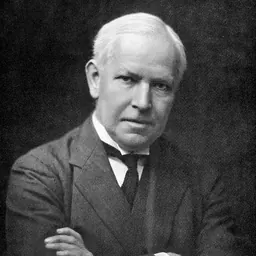
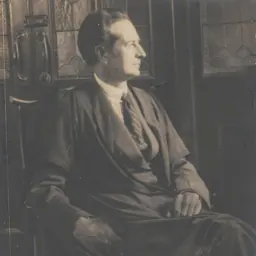

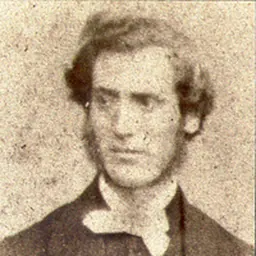


Related people
Same field, nearest in time


Contemporaries
People whose lives overlapped Daryll Forde's
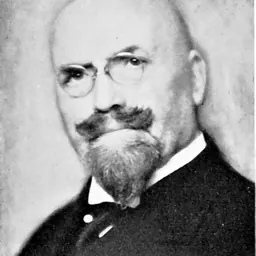




Frequently asked questions
Who was Daryll Forde?
British anthropologist (1902-1973)
When was Daryll Forde born?
Daryll Forde was born on 16 March 1902 in London.
When did Daryll Forde die?
Daryll Forde died on 3 May 1973 in London.
What was Daryll Forde's occupation?
Daryll Forde was an anthropologist, university teacher and geographer.
What nationality was Daryll Forde?
Daryll Forde was British.
Sources & further reading
Cite this page
APA: Biography.guide. (2026). Daryll Forde. https://biography.guide/daryll-forde/
MLA: "Daryll Forde." Biography.guide, https://biography.guide/daryll-forde/.
Chicago: "Daryll Forde." Biography.guide. https://biography.guide/daryll-forde/.
Data last updated: 2026-09-20 · Spot an error? Report a correction.
Page generated 2026-09-27 05:23 UTC