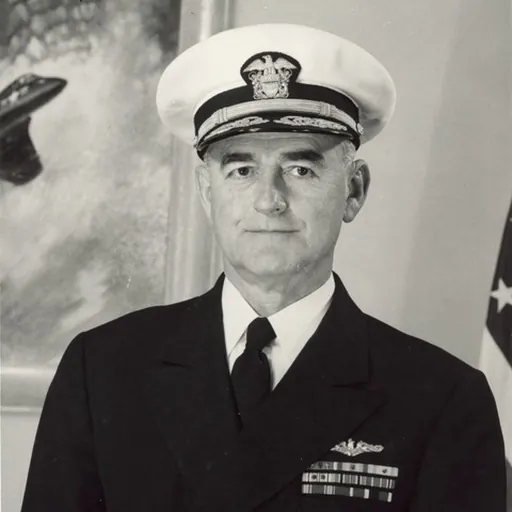
About Lynde D. McCormick
Lived 1895 – 1956 (aged 61). Lynde D. McCormick was an American military officer.
Lynde Dupuy McCormick (August 12, 1895 – August 16, 1956) was a four-star admiral in the United States Navy who served as vice chief of naval operations from 1950 to 1951 and as commander in chief of the United States Atlantic Fleet from 1951 to 1954, and was the first supreme allied commander of all NATO forces in the Atlantic.
Early career Born in Annapolis, Maryland to the former Edith Lynde Abbot and naval surgeon, late Rear admiral Albert Montgomery Dupuy McCormick, he attended St. John's Preparatory School and College, a military school in Annapolis. In 1911, he was appointed by President William Howard Taft to the United States Naval Academy, where he played lacrosse and soccer and, as a first classman, was business manager of the Academy yearbook, the Lucky Bag. He graduated second in a class of 183 and was commissioned ensign in the United States Navy in June 1915.
World War I His first assignment was aboard the battleship Wyoming, operating in the Caribbean Sea and along the eastern seaboard. In November 1917, following the United States entry into World War I, Wyoming and the rest of Battleship Division 9 (, Delaware, and Florida) joined the British Grand Fleet as its Sixth Battle Squadron and were present at the surrender of the German High Seas Fleet in the North Sea after the armistice.
In April 1919, McCormick was assigned as aide and flag lieutenant on the staff of Commander Battleship Division 4, United States Fleet. He served aboard the battleship South Carolina from June to September, then became aide and flag lieutenant to Commander Destroyer Squadron 4, Pacific Fleet, aboard the squadron flagship Birmingham. He transferred to the destroyer Buchanan in December 1920. Despite suffering a fractured vertebra, McCormick never went on the sick list, choosing to continue on active duty while wearing a plaster cast for three months.
In March 1945, he returned to the Pacific theater as Commander of Battleship Division 3, serving as Task Group Commander for two months at the Battle of Okinawa. He was awarded a second Gold Star for his Legion of Merit "as Commander of a Battleship Division, of a Task Group, and of a Fire Support Unit, in action against enemy Japanese forces on Okinawa, Ryukyu Islands, from March through May 1945."
Upon relieving Price as vice chief, McCormick was again promoted to vice admiral, with date of rank April 3, 1950. He was confirmed in his new rank on December 22, 1950. Fechteler was named chief of naval operations on August 1, 1951, and McCormick was selected to replace Fechteler as commander in chief of the Atlantic Fleet. When the change was announced, press reports noted that this would be McCormick's first fleet command, and speculated that the lack of a fleet command in his record had eliminated him from consideration as Sherman's successor.
Commander in Chief, Atlantic Fleet As Commander in Chief, Atlantic Fleet (right), welcoming Secretary of the Navy Robert B. Anderson to Naval Air Station Norfolk, Virginia, February 21, 1953
He became Commander in Chief, Atlantic Command and Commander in Chief, Atlantic Fleet (CINCLANT/CINCLANTFLT) on August 15, 1951.
A month later, at the recommissioning ceremony for the aircraft carrier Wasp, McCormick aroused comment by indicating that atomic bombs had been developed that were small enough to be carried by the light bombers deployed on aircraft carriers. "Eventually, I think every carrier will be equipped with atomic bombs. Since their reduction in size they have become more available for carrier use." His remarks were consistent with his previous statement while acting chief of naval operations that atomic weapons use should be treated more normally: "It is in our interest to convince the world at large that the use of atomic weapons is no less humane than the employment of an equivalent weight of so-called conventional weapons. The destruction of certain targets is essential to the successful completion of a war with the U.S.S.R. The pros and cons of the means to accomplish their destruction is purely academic."
As Fechteler's CINCLANT successor, McCormick inherited Fechteler's long-delayed appointment as the first supreme allied commander of NATO naval forces in the Atlantic. Fechteler's nomination for the post was announced on February 19, 1951, but had been stalled by British opposition led by former Prime Minister Winston Churchill, who took offense at the concept of subordinating the Royal Navy to an American admiral and demanded that a British admiral be appointed instead. Incumbent Prime Minister Clement Attlee confirmed Fechteler's nomination in July, but Fechteler almost immediately vacated command of the Atlantic Fleet to become chief of naval operations, giving Churchill the opportunity to reopen the issue when he resumed the premiership in October. Churchill now argued that there was no need for a single supreme naval commander, suggesting that the Atlantic instead be divided into American and British sectors, but the United States insisted on unity of command and Churchill ultimately had to yield to American pressure, reluctantly consenting to McCormick's appointment in January 1952.
Despite his distaste for the idea of any American as supreme Atlantic commander, Churchill had no objection to McCormick personally, declaring that McCormick would "inspire the highest confidence" as that commander. To assuage British sensitivities, McCormick said that he regarded the Royal Navy as a model for his men, that he knew London better than New York, and that he was equally at home in Portsmouth, Hampshire, and Portsmouth, New Hampshire.
Supreme Allied Commander Atlantic
McCormick was appointed Supreme Allied Commander Atlantic (SACLANT) on January 30, 1952, and opened SACLANT headquarters in Norfolk, Virginia on April 10. As SACLANT, he reported directly to the NATO Standing Group, and was coequal in the NATO military hierarchy with General of the Army Dwight D. Eisenhower, Supreme Allied Commander Europe (SACEUR). McCormick's new command extended from the North Pole to the Tropic of Cancer and from the shores of North America to those of Europe and Africa, with the exception of the English Channel and British coastal waters. It was said to be the largest naval command given an individual since Christopher Columbus had been appointed Grand Admiral of the Ocean Seas in the fifteenth century. It was also said that McCormick was an admiral without a fleet, since he would only command allied forces during wartime. However, as commander in chief of the Atlantic Fleet, he exercised peacetime control over most of his actual striking power.
Soon after becoming SACLANT, McCormick traveled to every NATO capital seeking pledges of contributions from allied navies. He hoped that the European allies could begin by preparing to secure their own national waters in the event of war, but quickly found that the smaller nations viewed SACLANT as a concern primarily for the United States, Britain, and Canada, the major NATO sea powers. He complained to the NATO Standing Group that Europe treated his appointment as an excuse for complacency: "Now that SACLANT is appointed, we no longer have any naval worries, he will take care of everything for us...we need not do anything now."
In September 1952, NATO held its first major naval exercise, Operation Mainbrace, commanded jointly by McCormick and SACEUR Matthew B. Ridgway. Operation Mainbrace involved 160 allied ships of all types and tested SACLANT's ability to "provide northern flank support for a European land battle." The exercise assumed that Soviet forces had already swept through West Germany and were moving into Denmark and Norway, and was intended in part to "reassure the Scandinavian signatories that their countries could be defended in the event of war." At the conclusion of the exercise, McCormick and Ridgway stated that Operation Mainbrace had highlighted several weaknesses in NATO for future correction. "Many questions have been asked during the exercise as to whether any great lessons were learned from it. The answer is no. ... A test of this sort enables us to determine our weaknesses and the corrective measures we must take. Thus far certain weaknesses have been revealed, but we regard none of them as insurmountable. Mainbrace is not an ending—it is merely a beginning."
The next year, NATO conducted a follow-up exercise, Operation Mariner, from September 16 to October 4, 1953. McCormick called Operation Mariner "the most complete and widespread international exercise ever held," involving 500,000 men, 1,000 planes, and 300 ships from nine navies. The exercise tested a variety of allied naval capabilities, ranging from command relationships to mine warfare and intelligence, although "there was no strategic concept other than Blue was fighting Orange." Convoys crossed the Atlantic while defending against submarines and surface ships. In order "to keep us all atomic minded," both sides launched and defended against simulated nuclear attacks. McCormick viewed the exercise as a qualified success, showing that ships and aircraft of the disparate NATO navies could cooperate effectively even under adverse weather conditions, although there had been problems with communications and logistical support. After the exercise, McCormick told a dinner of the American Council on NATO on October 29, 1953, that the Kremlin was "well aware" of the importance of the transatlantic sea lane and was readying submarines to fight another possible Battle of the Atlantic. While Operation Mariner had demonstrated that NATO could control the Atlantic given sufficient forces, he warned, "The forces we have available at present to counter the potential underseas menace would be spread precariously thin for this task."
At the end of McCormick's tour, Chief of Naval Operations Robert B. Carney looked for a successor who would be better at standing up to the British staff at SACLANT headquarters. "I had felt a great deal of concern about the handling of the United States interests down there and in the Atlantic, vis-à-vis the British...I had felt that the United States viewpoint had been handled rather naively in some previous instances and that it was imperative that we put somebody down there who could take care of these interests." Carney selected Admiral Jerauld Wright, who relieved McCormick on April 12, 1954.
President, Naval War College After stepping down as SACLANT, McCormick was appointed President of the Naval War College in the rank of vice admiral on May 3, 1954.
The most significant event of his presidency was the establishment in 1956 of the naval command course, a new course for senior naval officers from up to 30 allied and friendly nations, organized and directed by Captain Richard G. Colbert at the behest of Chief of Naval Operations Arleigh A. Burke. The Naval War College staff was initially unenthusiastic about the new course, worrying that it would detract from the regular courses. However, McCormick had already witnessed the difficulties caused by a lack of inter-allied understanding during large-scale SACLANT operations like Operation Mainbrace, and he gave Burke his full cooperation. Burke recalled, "[McCormick] was absolutely correct that this new course should not reduce the caliber of the other work the War College was doing. The president and his staff made many helpful suggestions right from the start and after it was going awhile, their enthusiasm grew, perhaps due to the quality of the foreign officers assigned."
On August 16, 1956, McCormick suffered a heart attack in his quarters around 3 a.m., and died four hours later at the Naval Hospital in Newport at the age of 61, the day before the start of classes for the 1957 course year. Students and faculty were stunned, since he had appeared to be in excellent health. A SACLANT subordinate recalled him as "a delightful, smart clean-cut gentleman." He is buried with his wife in the Naval Academy cemetery.
He married Lillian Addison Sprigg Graham, on October 2, 1920. Lillian was the widow of his best friend and roommate at USNA, Ivan Montrose Graham. Ivan had died on September 21, 1918, of influenza, leaving his wife and an infant son he had never seen. When Lynde and Lillian married, the then two-year-old boy was formally adopted and his name became Montrose Graham McCormick. "Monty" McCormick, who graduated from USNA in 1939 commanded a submarine during World War II and was killed in a plane crash in Australia in 1945. The McCormicks had two more sons, Navy officer Lynde Dupuy Jr. who graduated from USNA with the class of 1944 (which graduated a year early); and Marine James Jett II, who was severely wounded at the Battle of Okinawa. The amount of service to country given by this one family has rarely been duplicated His father, Rear Admiral Albert Montgomery Dupuy McCormick, was a Spanish–American War veteran and former fleet surgeon for the Atlantic Fleet.
Honors and awards He was the namesake of the guided-missile destroyer Lynde McCormick. His decorations include the Legion of Merit with two Gold Stars; the World War I Victory Medal, Grand Fleet Clasp; the American Defense Service Medal; the European-African-Middle Eastern Campaign Medal; the Asiatic-Pacific Campaign Medal; the American Campaign Medal; and the World War II Victory Medal.
Legacy The Charles F. Adams class guided missile destroyer USS Lynde McCormick (DDG-8) was named after him.
Don’t just read it —
keep it.
Full-length biographies made to live with: read them, listen on the way to work, watch them tonight.
- E-book
- Audio
- Video
Instant download · yours to keep · every purchase keeps this site free
Important facts
People in Lynde D. McCormick's life
Named in this biography and alive at the same time



Related people
Same field, nearest in time
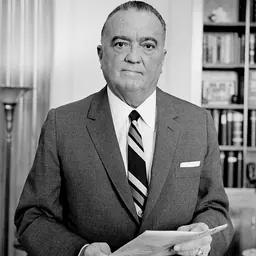


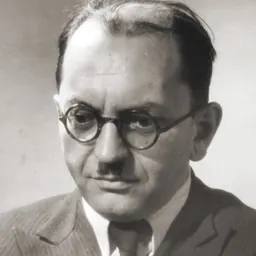
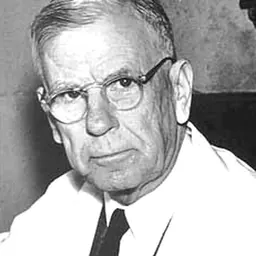
Contemporaries
People whose lives overlapped Lynde D. McCormick's
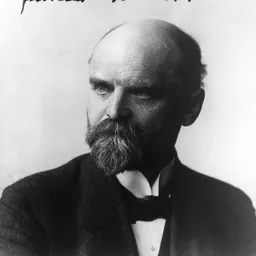
Frequently asked questions
Who was Lynde D. McCormick?
United States admiral
When was Lynde D. McCormick born?
Lynde D. McCormick was born on 12 August 1895 in Annapolis.
When did Lynde D. McCormick die?
Lynde D. McCormick died on 16 August 1956 in Newport.
What was Lynde D. McCormick's occupation?
Lynde D. McCormick was a military officer.
What nationality was Lynde D. McCormick?
Lynde D. McCormick was American.
Sources & further reading
· Wikipedia: Lynde D. McCormick
Cite this page
APA: Biography.guide. (2026). Lynde D. McCormick. https://biography.guide/lynde-d-mccormick/
MLA: "Lynde D. McCormick." Biography.guide, https://biography.guide/lynde-d-mccormick/.
Chicago: "Lynde D. McCormick." Biography.guide. https://biography.guide/lynde-d-mccormick/.
Data last updated: 2026-09-21 · Spot an error? Report a correction.
Portrait: Wikimedia Commons · author & licence
Page generated 2026-09-27 04:59 UTC