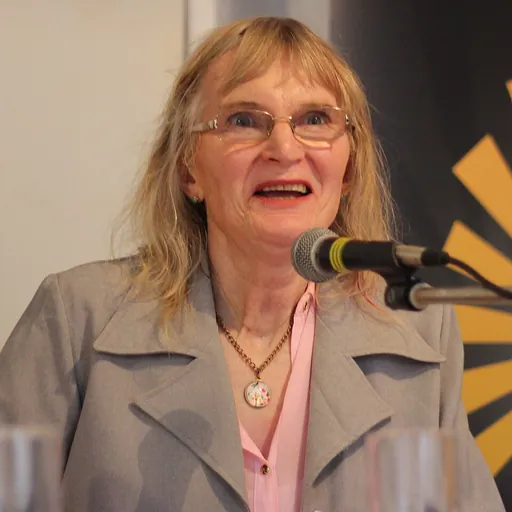
About Lydia Foy
Born 1947. Lydia Foy is an Irish dentist and lGBTQ rights activist.
Lydia Annice Foy is an Irish trans woman notable for leading legal challenges regarding gender recognition in Ireland. In 1992, Foy had sex reassignment surgery, and began a 20-year battle to have her birth certificate reflect her gender identity. In 2007, the High Court ruled that the relevant portions of the Irish law were incompatible with the European Convention on Human Rights. By February 2013, the law had not been changed and she began new proceedings to enforce the 2007 decision. The Gender Recognition Act 2015 allowed for the recognition of change of gender and provided for gender recognition certificates.
Early life and marriage Foy is a retired dentist from Athy, County Kildare. Born in a private nursing home in the Midland Region, Foy had five brothers and one sister.
From early childhood Foy was conscious of a feeling of 'femininity'. This continued throughout boarding school at Clongowes Wood College from 1960 to 1965. Having obtained the Leaving Certificate, Foy started pre-med studies at University College Dublin, but changed to dentistry a year later. Foy graduated with a Bachelor's degree in Dental Surgery in 1971, and began to practice as a dentist. was diagnosed a transsexual, and was prescribed a course of hormone treatment. Foy attended two further psychiatrists in England who diagnosed her as suffering from gender dysphoria.
First court case Foy began legal proceedings in April 1997, to challenge the refusal of the Registrar General to issue her with a new birth certificate. Unemployed, Foy was represented in the action by Free Legal Advice Centres. The basis of her action was a contention that the Births and Deaths Registration (Ireland) Act 1863 did not justify the practice of using solely biological indicators existing at the time of birth to determine sex for the purposes of registration. According to Foy, she had been born a "congenitally disabled woman" and the error recording her sex on her birth certificate was not only embarrassing to her but also could interfere with her constitutional rights, as she would be unable to ever choose to marry a man.
Judgment was reserved for nearly two years until 9 July 2002 when Mr Justice Liam McKechnie rejected Lydia Foy's challenge, stating that Foy had been born male based on medical and scientific evidence and that accordingly the registration could not be changed. He did express concern about the position of transsexuals in Ireland, however, and called on the government to urgently review the matter.
Second court case
Just two days after the decision against Foy, the European Court of Human Rights in Strasbourg heard a similar case (Goodwin & I v United Kingdom). Christine Goodwin, a British transsexual, had claimed that the United Kingdom's refusal to allow her to amend her birth certificate and to marry as a female violated the European Convention on Human Rights. The Court declared that the UK Government had violated Article 8 and Article 12 of the convention. In response, Britain passed the Gender Recognition Act 2004, providing for legal recognition of transgender persons in their new or acquired gender, and for the issuing of new birth certificates reflecting that gender. In the interim Ireland had passed the European Convention on Human Rights Act 2003 to give greater effect to the European Convention on Human Rights in Irish law. Relying on this, Foy made another application for a new birth certificate in November 2005 and when this was rejected, she issued new legal proceedings in the High Court in January 2006, referring to the Goodwin decision by the European Court of Human Rights. These proceedings were consolidated with the earlier case and the matter was heard again by Mr Justice McKechnie. On 19 October 2007, the court found Ireland in violation of the European Convention on Human Rights, and decided to issue the first declaration of incompatibility between Irish and European law. According to Justice Liam McKechnie, provisions of Article 8 of the Convention protecting Foy's right to respect for private life had been violated when the State failed "to provide for 'meaningful recognition' of her female identity". He also expressed frustration at the Irish government's failure to take any steps to improve the position of transsexuals following his previous judgment in 2002.
Effect on law Although the issues had been raised in parliamentary debate, no ruling had been made. The declaration of incompatibility could not override domestic law, but did place an onus on the government to reconcile Irish and European legislation.
On 5 January 2009, Thomas Hammarberg, the Human Rights Commissioner of the Council of Europe, stated with respect to the transgender community and specifically Foy that "there is no excuse for not immediately granting this community their full and unconditional human rights."
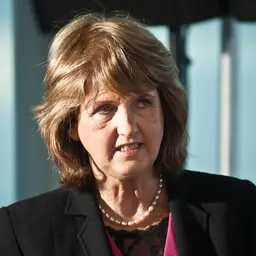
Government challenge Initially challenging the 2007 ruling, on 21 June 2010 the Irish Government withdrew its appeal and set up an inter-departmental committee on the legal recognition of transsexuals. The report of this Gender Recognition Advisory Group was published in July 2011 and recommended legislation to recognise transsexuals. Launching the report, the then Minister for Social Protection Joan Burton said the government would introduce gender recognition legislation as soon as possible, but by February 2013 no legislation had been introduced.
Third court case On 27 February 2013 Free Legal Advice Centres, representing Lydia Foy, announced that she had issued new proceedings in the Irish High Court seeking orders requiring the government to act on the judgment of Mr Justice McKechnie in 2007 and enable her to obtain a new birth certificate recognising her female gender.
Other achievements In 1997, Foy grew the world's largest foxglove in her garden.
In 2011, she was the subject of a documentary on RTÉ Radio 1 called My name is Lydia Foy.
In 2025, she was awarded the Jim Larkin Thirst for Justice Award by the Labour Party in recognition of her ‘decades long struggle for equality and State recognition for who she truly is.’
Don’t just read it —
keep it.
Full-length biographies made to live with: read them, listen on the way to work, watch them tonight.
- E-book
- Audio
- Video
Instant download · yours to keep · every purchase keeps this site free
Important facts
People in Lydia Foy's life
Named in this biography and alive at the same time




Related people
Same field, nearest in time


Contemporaries
People whose lives overlapped Lydia Foy's



Frequently asked questions
Who is Lydia Foy?
Irish transgender activist
When was Lydia Foy born?
Lydia Foy was born on 23 June 1947 in Ireland.
What is Lydia Foy's occupation?
Lydia Foy is a dentist and lGBTQ rights activist.
What nationality is Lydia Foy?
Lydia Foy is Irish.
Sources & further reading
Cite this page
APA: Biography.guide. (2026). Lydia Foy. https://biography.guide/lydia-foy/
MLA: "Lydia Foy." Biography.guide, https://biography.guide/lydia-foy/.
Chicago: "Lydia Foy." Biography.guide. https://biography.guide/lydia-foy/.
Data last updated: 2026-09-22 · Spot an error? Report a correction.
Portrait: Wikimedia Commons · author & licence
Page generated 2026-09-27 05:00 UTC