
About Christine Goodwin
Lived 1937 – 2014 (aged 76–77). Christine Goodwin was a British lGBTQ rights activist.
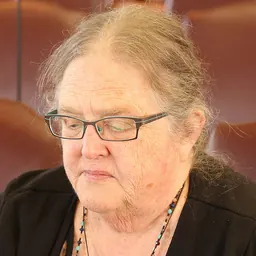
Christine Goodwin (4 June 1937 8 December 2014) was a British transgender rights activist who played a crucial role in forcing the UK government to introduce the Gender Recognition Act 2004. She was a former bus driver who underwent sex reassignment surgery in 1990, at Charing Cross Hospital, London, before eventually challenging the UK government in the European Court of Human Rights over her inability to draw a state pension at the same age as other women. The surgery was paid for in full and completely provided for by the National Health Service. Since then, she continued to work different jobs. However, within many of these workplaces, she would be discriminated against in a variety of ways.
After her surgery, Goodwin was continuously harassed at work due to her transgender identity. Her experience was not isolated. A study in the UK in 2024 found that 79% of transgender individuals reported harassment at work. After continued harassment, Goodwin tried to file a case for sexual harassment at the Employment Tribunal, but was unsuccessful as the Tribunal claimed that she was still a man under the law. A National Insurance number is required by every working citizen within the UK, so not using one was a difficult roadblock. She had applied for a National Insurance number to the Department of Social Security, but was denied. Goodwin eventually gave her employer her National Insurance number. This fear of presenting her birth certificate resulted in her feeling unable to report to the police that she had £200 stolen from her. She continued to pay the higher motor insurance cost that is standard for men. Similarly, her biological gender was indicated in the Department of Social Security though her social security number, and her National Insurance number.
Goodwin's case was specifically based on the violations of Articles 8, 12, 13, and 14 of the European Commission of Human Rights. Goodwin's lawyers made the case that Goodwin's biological gender was part of her private life, and her inability to access basic services without part of her private life coming to light violated Article 8. The Court ruled that she was eligible to receive compensation at the time of her court case, therefore, Article 13 had not been violated. which Goodwin argued discrimination based on her biological gender prevented her from her rights. She was also awarded 39,000 euros. The purpose of the act is to give people with gender dysphoria a legal recognition of their gender identity. Anyone born in the UK or abroad with British authorities is now eligible to attain a new birth certificate for their recognized legal gender. This act protects the rights of transgender people by denying employers the ability to gain information regarding the Gender Recognition Act.
Corbett v. Corbett The act was drafted in response to court rulings from the European Courts of Human Rights Corbett v. Corbett and Goodwin v. United Kingdom. Corbett V Corbett is a family law divorce case that took place in 1970 involving Arthur Corbett seeking annulment of his marriage to April Ashley, a transgender woman. After being married for 14 days, Arthur wished to annul the marriage. Corbett's legal ground for ending the marriage was that the marriage was invalid considering that Ashley is biologically male, and marriage would only be valid between a man and a woman. The court ruled that in regards to marriage Ashley was a biological male and had been since birth. Because of this, as "marriage is and always has been recognized as the union of man and woman" the marriage was held to be void. As a result of this case ways for transgender and intersex people to gain legal recognition of their gender ceased until the introduction of the Gender Recognition Act.
On June 2, 2002, the European Courts of Human Rights ruled in Goodwin v. the United Kingdom that a transgender person's inability to change their sex on legal documents was a breach of their rights under the European Convention of Human Rights. This ruling led to the Gender Recognition Act, which was introduced to the House of Lords in 2003. In February 2004, the act had 155 votes in favor and 57 against, and by July 2004 it had 355 votes in favor and 55 opposing. The Act went into place on July 1, 2004.
Current Opinion The act was originally celebrated by transgender organizations in the United Kingdom but as affirming transgender laws progressed around the world problems began to be highlighted in the Gender Recognition Act, by people and legislation. In a June 2020 report, the European Commission classified the legal processes for gender recognition in 28 European countries into five categories according to the level of access barriers. The Gender Recognition Act 2004 was ranked in the second-lowest category due to its "intrusive medical requirements," which do not meet international human rights standards. Although this report was published the UK government decided to uphold the current law and not make any legislative changes regarding the Gender Recognition Act of 2004.
Don’t just read it —
keep it.
Full-length biographies made to live with: read them, listen on the way to work, watch them tonight.
- E-book
- Audio
- Video
Instant download · yours to keep · every purchase keeps this site free
Important facts
People in Christine Goodwin's life
Named in this biography and alive at the same time

Related people
Same field, nearest in time





Contemporaries
People whose lives overlapped Christine Goodwin's


Frequently asked questions
Who was Christine Goodwin?
British transgender rights activist
When was Christine Goodwin born?
Christine Goodwin was born in 1937.
When did Christine Goodwin die?
Christine Goodwin died on 8 December 2014.
What was Christine Goodwin's occupation?
Christine Goodwin was a lGBTQ rights activist.
What nationality was Christine Goodwin?
Christine Goodwin was British.
Sources & further reading
· Wikipedia: Christine Goodwin
· DBpedia: Christine Goodwin (activist)
Cite this page
APA: Biography.guide. (2026). Christine Goodwin. https://biography.guide/christine-goodwin-lgbtq-rights-activist/
MLA: "Christine Goodwin." Biography.guide, https://biography.guide/christine-goodwin-lgbtq-rights-activist/.
Chicago: "Christine Goodwin." Biography.guide. https://biography.guide/christine-goodwin-lgbtq-rights-activist/.
Data last updated: 2026-09-20 · Spot an error? Report a correction.
Page generated 2026-09-27 05:33 UTC