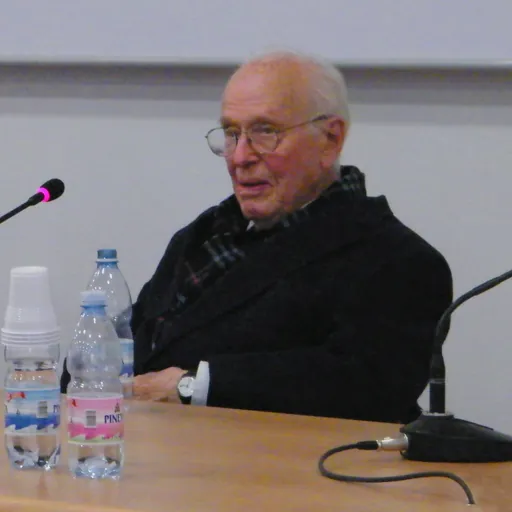
Luigi Luca Cavalli-Sforza
Italian population geneticist
About Luigi Luca Cavalli-Sforza
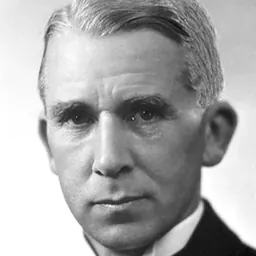
Lived 1922 – 2018 (aged 96). Luigi Luca Cavalli-Sforza was an Italian population geneticist, anthropologist, geneticist, university teacher and physician.
Luigi Luca Cavalli-Sforza (; 25 January 1922 – 31 August 2018) was an Italian geneticist. He was a population geneticist who taught at the University of Parma, the University of Pavia, and then at Stanford University.
Works
Schooling and positions Cavalli-Sforza entered Ghislieri College in Pavia in 1939 and he received his M.D. from the University of Pavia in 1944. In 1949, he was appointed to a research post at the Department of Genetics, Cambridge University by the statistician and evolutionary biologist Ronald A. Fisher in the field of E. coli genetics. In 1950, he left the University of Cambridge to teach in northern Italy (Parma, and Pavia) before taking up a professorship at Stanford in 1970. He remained at Stanford until he retired in 1992. In 1999, he won the Balzan Prize for the Science of human origins. He has been a member of the Pontifical Academy of Sciences since 1994. In 1992 he was elected Foreign Member of the Royal Society of London. Writing in the mid-1960s with A.W.F. Edwards, another genetics student of Ronald A. Fisher, Cavalli-Sforza pioneered statistical methods for estimating evolutionary trees (phylogenies). Edwards and Cavalli-Sforza wrote about trees of populations within the human species, where genetic differences are affected both by treelike patterns of historical separation of populations and by spread of genes among populations by migration and admixture. Many of these influential and fundamental early papers were reprinted in 2018 in a volume focusing on A. W. F. Edwards, and dedicated to Cavalli-Sforza and Ian Hacking.
In later papers, Cavalli-Sforza has written about the effects of both divergence and migration on human gene frequencies. While Cavalli-Sforza is best known for his work in genetics, he initiated, in collaboration with Marcus Feldman and others, the line of inquiry known variously as coevolution, gene-culture coevolution, cultural transmission theory, or dual inheritance theory. The publication Cultural Transmission and Evolution: A Quantitative Approach (1981) made use of models from population genetics and infectious disease epidemiology to investigate the transmission of culturally transmitted units. This line of inquiry initiated research into the correlation of patterns of genetic and cultural dispersion. Cavalli-Sforza conducted several studies of how language differences may serve as barriers to gene flow between adjacent human populations. His studies of human migration have tested hypotheses of linguists Merritt Ruhlen and Joseph Greenberg about language "superfamilies". The hypothesized superfamilies are controversial among other linguists.
Books Cavalli-Sforza has summed up his work for laymen in five topics covered in Genes, Peoples, and Languages. According to an article published in The Economist, the work of Cavalli-Sforza "challenges the assumption that there are significant genetic differences between human races, and indeed, the idea that 'race' has any useful biological meaning at all". The book illustrates both the problems of constructing a general "hereditary tree" for the entire human race, and some mechanisms and data analysis methods to greatly reduce these problems, thus constructing a fascinating hypothesis of the recent 150,000 years of human expansion, migration, and human diversity formation. In the book Cavalli-Sforza asserts that Europeans are, in their ancestry, about two-thirds Asian and one-third African.
Cavalli-Sforza's The History and Geography of Human Genes (1994 with Paolo Menozzi and Alberto Piazza) is a standard reference on human genetic variation. Cavalli-Sforza also wrote The Great Human Diasporas: The History of Diversity and Evolution (together with his son Francesco). Earlier in the 1970s, he and Walter Bodmer wrote what was the standard textbook on modern human genetics, and was also a basic reference for population genetics more generally, as the field was at the time, The Genetics of Human Populations (W. H. Freeman, 1971). The two, with Bodmer as first author, later wrote another more basic text, Genetics, Evolution, and Man (W. H. Freeman, 1976). Along with his 1994 book these are essentially classical presentations of human genetics before the genomics era began providing very much more detailed data.
Death Cavalli-Sforza died on 31 August 2018, at the age of 96 at his home in Belluno, Italy. He is survived by three sons Matteo, Francesco and Luca Tommaso Cavalli-Sforza, and one daughter, Violetta Cavalli-Sforza.
Don’t just read it —
keep it.
Full-length biographies made to live with: read them, listen on the way to work, watch them tonight.
- E-book
- Audio
- Video
Instant download · yours to keep · every purchase keeps this site free
Important facts
People in Luigi Luca Cavalli-Sforza's life
Named in this biography and alive at the same time




Contemporaries
People whose lives overlapped Luigi Luca Cavalli-Sforza's

Frequently asked questions
Who was Luigi Luca Cavalli-Sforza?
Italian population geneticist (1922–2018)
When was Luigi Luca Cavalli-Sforza born?
Luigi Luca Cavalli-Sforza was born on 25 January 1922 in Genoa.
When did Luigi Luca Cavalli-Sforza die?
Luigi Luca Cavalli-Sforza died on 31 August 2018 in Belluno.
What was Luigi Luca Cavalli-Sforza's occupation?
Luigi Luca Cavalli-Sforza was a population geneticist, anthropologist, geneticist, university teacher and physician.
What nationality was Luigi Luca Cavalli-Sforza?
Luigi Luca Cavalli-Sforza was Italian.
Sources & further reading
· Wikipedia: Luigi Luca Cavalli-Sforza
· DBpedia: Luigi Luca Cavalli-Sforza
Cite this page
APA: Biography.guide. (2026). Luigi Luca Cavalli-Sforza. https://biography.guide/luigi-luca-cavalli-sforza/
MLA: "Luigi Luca Cavalli-Sforza." Biography.guide, https://biography.guide/luigi-luca-cavalli-sforza/.
Chicago: "Luigi Luca Cavalli-Sforza." Biography.guide. https://biography.guide/luigi-luca-cavalli-sforza/.
Data last updated: 2026-09-22 · Spot an error? Report a correction.
Portrait: Wikimedia Commons · author & licence
Page generated 2026-09-27 05:01 UTC