
About Ludwig Becker
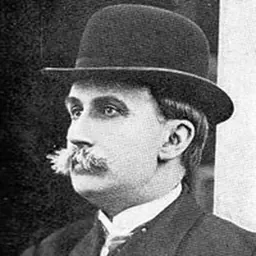
Lived 1892 – 1974 (aged 81). Ludwig Becker was a German politician, journalist, trade unionist, goldsmith and union member.
Ludwig Becker (25 October 1892 – 4 April 1974) was a German politician, member of the Communist Party of Germany, and trades unionist who participated in illegal political opposition during the Nazi years.
Life In the labour movement Ludwig Becker was born and grew up in Schwäbisch Gmünd, a midsized town in the hills to the east of Stuttgart. His father was a socialist and a Goldsmith, the trade in which he, too, was apprenticed. His apprenticeship completed, he travelled the country as a wandering journeyman goldsmith in order learn from a variety of more experienced practitioners. That was when he came into contact with the rapidly evolving Labour movement. In 1907 he joined both the Metal Workers' Union ("Deutscher Metallarbeiter-Verband" / DMV) and the Young Socialists. In 1910, when only 18 years old, he joined the Social Democratics ("Sozialdemokratische Partei Deutschlands" / SPD). A year later he relocated from Gmünd to Berlin: here he was picked out for a study course at the SPD National Party Academy where the lecturers included Rosa Luxemburg, a formidable political philosopher and an inspiring lecturer who had already become an iconic leader of the German left.
Nazi years The Nazi Party took power in January 1933 and lost no time in transforming Germany into a one-party dictatorship. The trades unions were outlawed, and replaced by the Government's own Labour Front ("Deutsche Arbeitsfront" / DAF) organisation. Attempts were made to win Becker over to the DAF, but he resisted these, concentrating for the most part on work in the metals industrial sector. He was arrested in 1938 or 1939, though it is not clear whether this was solely on account of his political activism before 1933 or because he was suspected of (since 1933) political or trades union activity more recently. They worked closely together. After the German failure to conquer the Soviet Union it became possible to contemplate a post-Nazi future. The so-called "Buchenwald Manifesto", produced in 1945, can be seen as evidence of the determination of former communist inmates and SPD inmates to work together after the war, and avoid the divisions on the political left which many believed had opened the way for the Nazi take-over during the build-up to 1933.
Years of reconstruction War ended in May 1945 and attention turned to the urgent tasks of reconstruction. Becker returned to Schwenningen, by now part of the French occupation zone (and after May 1949 part of the German Federal Republic / West Germany). His focus was on rebuilding the Communist Party and the metal workers' trades union, relaunched in 1949 as IG Metall. For several months in 1945 he served as deputy mayor of Schwenningen - still at this point a post filled by appointment rather than through election. In 1948 he became regional head of the union for South Württemberg-Hohenzollern. He also sat, elected as one of the five communist members, in the regional parliament (Landtag) for Württemberg-Hohenzollern between 1947 and 1951.
In May 1951 he was excluded from the Communist Party after he failed to back a party resolution ("These 37"). (The resolution, presumably inspired from East Berlin and Moscow, had condemned trades unions in West Germany for putting themselves "at the service ... of American imperialism and in league with the German monopolists".) Between 1953 and 1959, based in Stuttgart, he served as regional chief of IG Metall in Württemberg-Baden (later Baden-Württemberg).
In or before 1969 Ludwig Becker retired from his remaining duties with IG Metall. He died in Bad Cannstatt - by this time a district of Stuttgart - on 4 April 1974.
Don’t just read it —
keep it.
Full-length biographies made to live with: read them, listen on the way to work, watch them tonight.
- E-book
- Audio
- Video
Instant download · yours to keep · every purchase keeps this site free
Important facts
Related people
Same field, nearest in time






Contemporaries
People whose lives overlapped Ludwig Becker's

Frequently asked questions
Who was Ludwig Becker?
German politician and journalist (1892–1974)
When was Ludwig Becker born?
Ludwig Becker was born on 25 October 1892 in Schwäbisch Gmünd.
When did Ludwig Becker die?
Ludwig Becker died on 4 April 1974 in Stuttgart.
What was Ludwig Becker's occupation?
Ludwig Becker was a politician, journalist, trade unionist, goldsmith and union member.
What nationality was Ludwig Becker?
Ludwig Becker was German.
Sources & further reading
· DBpedia: Ludwig Becker (politician)
Cite this page
APA: Biography.guide. (2026). Ludwig Becker. https://biography.guide/ludwig-becker-politician/
MLA: "Ludwig Becker." Biography.guide, https://biography.guide/ludwig-becker-politician/.
Chicago: "Ludwig Becker." Biography.guide. https://biography.guide/ludwig-becker-politician/.
Data last updated: 2026-09-20 · Spot an error? Report a correction.
Page generated 2026-09-27 04:58 UTC