
Lucullus Virgil McWhorter
Farmer, amateur archaeologist and anthropologist, preserver of Native American culture, Native American Rights advocate
About Lucullus Virgil McWhorter
Lived 1860 – 1944 (aged 84). Lucullus Virgil McWhorter was an American anthropologist, rancher, farmer and native American civil rights.
Lucullus Virgil McWhorter (January 29, 1860 – October 10, 1944) was an American farmer and frontiersman who documented the historical Native American tribes in West Virginia and the modern-day Plateau Native Americans in Washington state. After living in West Virginia and Ohio, in 1903 he moved to the town of Yakima, Washington, in the central part of the state. He became a rancher and activist, learning much from his Yakama Nation neighbors and becoming an activist for them. In 1914 he was adopted as an honorary member of the Yakama, after helping over several years to defeat a federal bill that would have required them to give up much of their land in order to get any irrigation rights. They named him Hemene Ka-Wan,, meaning Old Wolf.
His published studies were anthropological, documenting the culture and history of the tribes. He became politically active as he represented the Plateau Native Americans against mistreatment by the United States federal government. He published accounts to report this mistreatment known to the public. He was considered an amateur in his day, but today his anthropology studies are deemed important enough to have a permanent home in Washington State University's special collections department. Current scholars describe his work as "significant" in his field, and helping to preserve the cultural heritage of the Native American tribes of the Columbia Basin. His papers are an "essential and valued resource", and the collection of his papers is "widely and intensively used." quoted the author, Alanna Kathleen Brown, as saying that McWhorter was an "amazingly interesting, courageous, dedicated, and insightful man." From his childhood on, Lucullus rejected a formal education and adapted his own methods of learning through his love for nature and the outdoors. He explored historical and Native American sites and began to read widely in history and the emerging field of archeology. As a teenager, he started working in his father's beef cattle business, and had this as a part of his life in his following decades.
He married Adelia A. Swisher on March 17, 1883, and together they had three children: Ovid Tullius (born 1884), Iris Oresta (born 1886), and Virgil Oneco (born 1888). His wife Adelia died in the winter of 1893.
The widower married again in 1895. In 1897, the family moved west, from Upshur County, West Virginia, to Darke County, Ohio. Here, McWhorter continued his work as a farmer and rancher; he also continued his deep study of Native American tribes. He combined wide reading and research with engaging the Native American peoples and learning about their cultures. His studies of Native American tribes of West Virginia were significant to documenting their histories; he founded the journal, The American Archaeologist, with A. C. Gruhlke and J. R. Nissley to further his research. But McWhorter had his sights set on the American West. (called North Yakima until 1918 ). He arrived in April and set up a ranch on the outskirts of North Yakima on the Yakima River, where he was located on a trail connecting the town to the nearby Yakima Indian Reservation. "Anyone from the reservation with any business in town soon found the McWhorter place a convenient spot to camp, and the eager McWhorter began to make friends almost at once among the Yakamas." McWhorter's frequent contact with the Yakama led to his championing their struggles against federal officials and white settlers.
The plight of the Yakama Native Americans had been well established by the time McWhorter arrived in Washington. In 1855 various Native American leaders in Washington State had signed treaties with territorial governor Isaac Stevens, ceding their lands to the federal government and agreeing to move into reservations. The Yakima Native American reservation was one of three established during this time. The treaty guaranteed the Yakama rights to their land; however, following publicity about discovery of gold in the area, miners soon converged on the Yakama reservation. The Yakama War ensued, from 1855 to 1858. It ended in 1858 with the defeat of the Yakama by United States forces. Seeing that the odds were against the Yakama, McWhorter quickly took action.
McWhorter befriended Yoom-Tee-Bee, Chief of the Yakama, and sought to aid the people in their fight to preserve their rights and land. Together, the two rode on horseback across the Yakama reservation talking to residents and encouraging them not to sign any documents for US government officials. In 1913, McWhorter published a pamphlet, "The Crime Against the Yakamas," detailing the long history of abuse of the Yakama at the hands of the United States government.
Chief Yoom-Tee-Bee died in 1910 but, as a result of his and McWhorter's efforts, the Jones bill died in Congress in 1914. McWhorter was adopted as an honorary member by the Yakama tribe, being given the name Hemene Ka-Wan, meaning Old Wolf. McWhorter's advocacy for Native American rights against the oppression of the US government was a lifelong mission. It contributed to his passion for recording Native American history as told from a Native American perspective.
McWhorter and the Nez Perce Native Americans In 1907 McWhorter met Hemene Mox Mox, or Yellow Wolf, a Nez Perce man who stopped by his ranch near the Yakima River. After learning of Yellow Wolf's experiences as a warrior and veteran of the Nez Perce War of 1877, McWhorter befriended him. McWhorter saw the need to record Nez Perce accounts of their history. "To hear Yellow Wolf," he wrote, "was to be impressed by the unquestionable candor of his conviction that he and his associates were fully justified in all their actions".
McWhorter wanted to present the Nez Perce perspective to help preserve their cultural identity. The Nez Perce had gone through much change since the signing of the Walla Walla treaties on June 11, 1855: "It had taken the commissioners less than a month to acquire over thirty million acres of land in three future states...and added a fresh layer to the shifting sands of Native American identity along the Columbia River". As recounted by McWhorter, Yellow Wolf's story was the anthem of all Nez Perce who fought for their way of life and lost. He depicted the "non-treaty" Nez Perce not as savages, but as a strong people who were resisting American oppressors. In doing so, McWhorter challenged the stereotype that had long been perpetuated by Native American histories told through white eyes.
Later McWhorter worked to complete his "Field History" of the Nez Perce, which was published posthumously in 1951 as Hear Me, My Chiefs! Nez Perce History and Legend. His final piece of work covered the history of the Nez Perce in Washington State's Palouse region and the events following the end of the war of 1877. "On his deathbed, McWhorter made a request to his son, Virgil...to see his still untitled Field History through to publication." In the correspondence between them that followed their meeting, Garcia wrote several thousand pages about life in Montana and among the Native American tribes there. From this material, he published a book, Tough Trip Through Paradise. In it he provided more details about Native American encounters with the 7th US Cavalry, which hunted Chief Joseph and his followers. Garcia's work is of sufficient historical significance to be kept by the Montana Historical Society. He might not have written his account if he had not developed the friendship with McWhorter.
Historical significance McWhorter's combined a deep interest in history with advocacy of Native American rights. His curiosity and openness allowed him to befriend Native Americans. He listened to many firsthand accounts of Native American history and legends. McWhorter sought to write histories about peoples with whom he had personal relations.
In reviewing a new 1997 biography of him, Montana State University professor Alanna Kathleen Brown wrote,
Works by McWhorter
The Crime Against the Yakimas, (1913) The Border Settlers of Northwestern Virginia, from 1768 to 1795: Embracing the Life of Jesse Hughes and Other Noted Scouts of the Great Woods of the Trans-Allegheny, With notes and illustrative anecdotes, Hamilton, Ohio: Republic Publishing Company, 1915. (Many reprints); scanned copy on Internet Archive "Tragedy of the Wahk-Shum: The Death of Andrew J. Bolon, Yakima Indian Agent, As Told by Su-El-Lil, Eyewitness; Also, the Suicide of General George A. Custer" (published 1934, with later reprints, 47 pages) "The Discards" (1920, 34 pages) Yellow Wolf: His Own Story (1944) Hear Me, My Chiefs! (1951)
McWhorter also acted as an editor, collaborating with Mourning Dove, considered the first Native American woman to write a novel. She also published a collection of traditional folk tales of her people.
Cogewea, the Half-Blood (1927) By Mourning Dove. McWhorter served as editor and made contributions to the book. Coyote Stories By Mourning Dove (Caldwell, Idaho: The Caxton Printers, Ltd, 1933). McWhorter served as editor and made contributions to the book.
Don’t just read it —
keep it.
Full-length biographies made to live with: read them, listen on the way to work, watch them tonight.
- E-book
- Audio
- Video
Instant download · yours to keep · every purchase keeps this site free
Important facts
People in Lucullus Virgil McWhorter's life
Named in this biography and alive at the same time
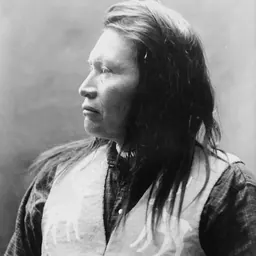
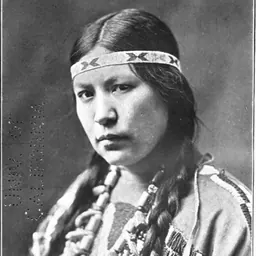
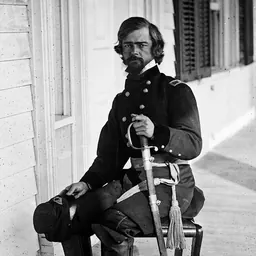

Related people
Same field, nearest in time

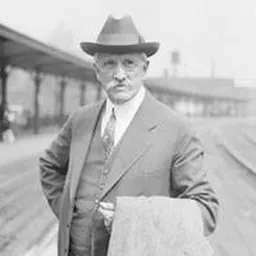



Contemporaries
People whose lives overlapped Lucullus Virgil McWhorter's


Frequently asked questions
Who was Lucullus Virgil McWhorter?
Farmer, amateur archaeologist and anthropologist, preserver of Native American culture, Native American Rights advocate (1860-1944)
When was Lucullus Virgil McWhorter born?
Lucullus Virgil McWhorter was born on 29 January 1860 in Harrison County.
When did Lucullus Virgil McWhorter die?
Lucullus Virgil McWhorter died on 10 October 1944.
What was Lucullus Virgil McWhorter's occupation?
Lucullus Virgil McWhorter was an anthropologist, rancher, farmer and native American civil rights.
What nationality was Lucullus Virgil McWhorter?
Lucullus Virgil McWhorter was American.
Sources & further reading
· Wikipedia: Lucullus Virgil McWhorter
· DBpedia: Lucullus Virgil McWhorter
Cite this page
APA: Biography.guide. (2026). Lucullus Virgil McWhorter. https://biography.guide/lucullus-virgil-mcwhorter/
MLA: "Lucullus Virgil McWhorter." Biography.guide, https://biography.guide/lucullus-virgil-mcwhorter/.
Chicago: "Lucullus Virgil McWhorter." Biography.guide. https://biography.guide/lucullus-virgil-mcwhorter/.
Data last updated: 2026-09-20 · Spot an error? Report a correction.
Page generated 2026-09-27 05:03 UTC