
About Lucien Aimar
Born 1941. Lucien Aimar is a French sport cyclist.
Lucien Aimar (; born 28 April 1941) is a French cyclist, who won the Tour de France in 1966 and the national road championship in 1968. He is now a race organizer.
Amateur career Lucien Aimar came second in the Tour de l'Avenir in 1964, 42 seconds behind the Italian, Felice Gimondi. But for a one-minute penalty for an incident involving a Belgian rider, Aimar would have won. Later that year he rode in the individual road race at the 1964 Summer Olympics in Tokyo.
Professional career
1965 Aimar turned professional in 1965 for Ford-Gitane, a team led by Jacques Anquetil. He made sufficient impression for the manager, Raphaël Géminiani, to pick him for the Tour de France in his first season. Aimar abandoned the race while climbing the Col d'Aubisque in the Pyrenees on the ninth stage.
1966 Aimar won Genoa-Nice at the start of the season, came second on the Flèche Wallonne and won the Tour de France. His victory was based on an attack on the Aubisque, where he had pulled out the previous year, and on another attack in Turin. Each was followed by fast descending, at which he was talented. He also benefited from the support of Jacques Anquetil, riding his last Tour de France. Anquetil ensured that his team would ride in Aimar's support and then left the race. Aimar finished 1:17 ahead of the Dutchman, Jan Janssen and Anquetil's French rival, Raymond Poulidor. His season ended with ninth place in the world championship on the Nürburgring in West Germany. His ride was criticised, however, for help that he gave to the German, Rudi Altig. Aimar chased a breakaway group that included Jacques Anquetil, his partner in the French team, and took Altig with him. Altig won the title and Anquetil came second.
1967 In 1967, Aimar's and Anquetil's team became Bic, sponsored by a company making ballpoint pens, cigarette lighters and razors. Aimar won the Four Days of Dunkirk, the hill climb of Mont Faron and came seventh in the Giro d'Italia after sacrificing his chances for Anquetil. Aimar rode the Tour de France for France, the organizers having started a two-year experiment with national teams. Aimar was joint leader with the eventual winner, Roger Pingeon. Aimar won the eighth stage at the top of the Ballon d'Alsace, then rode for Pingeon and finished sixth.
Aimar came second in the national road championship at Felletin in the Creuse, finishing behind Désiré Letort. Letort was later disqualified for doping.
1968 The Tour de France again opted for national rather than sponsored teams. Aimar chose to lead the French 'B' team rather than be a support rider in the 'A' team. He finished seventh, coming second behind Roger Pingeon on stage two, in the Chartreuse. The same two riders broke away in the national championship on a demanding circuit at Aubenas (Ardèche). Aimar beat him in the sprint, collecting the blue, white and red jersey of national champion that he had refused to wear the previous year in solidarity with Désiré Letort.
1969 Aimar had trouble finding his form in 1969, a year already difficult because a one-month suspension for doping denied him a start in the Vuelta a España. He lost his national champion's jersey to Desire Letort and then rode a disastrous Tour de France, suffering in the Alps and finishing 30th. The manager, Géminiani, was so disillusioned with his riders that he didn't bother following the race any further once it had reached his home in Clermont-Ferrand.
1970 Aimar left Bic, which had a new leader in Luis Ocaña, a Spaniard long resident in France. He joined the new Sonolor-Lejeune team, run by Jean Stablinski with Lucien Van Impe and Bernard Guyot as leaders. Aimar won the Critérium de la Polymultipliée, then came 17th in the Tour de France in support of Van Impe. He finished his season with second place in Bordeaux–Paris behind the specialist Herman Van Springel.
1971 Aimar stayed with Sonolor, but with the team leadership confirmed in Van Impe, who finished the Tour de France third, winning the climbers' competition. Aimar was ninth, his best place since 1968.
1972 His career in decline, Aimar left Sonolor to join a new German team, Rokado, alongside his compatriots Gilbert Bellone and Jean Graczyk and the leaders, Rolf Wolfshohl and Gerben Karstens. Aimar finished the Tour, his eighth in succession, 17th.
1973 For his last season, Aimar rejoined Raphaël Géminiani, who had persuaded a nightclub dancer called Miriam de Kova to sponsor a team, De Kova–Lejeune, for the publicity it would give her. The team made little impression other than the pink jerseys it wore. The team provided the last five in that year's Tour de France, in which Aimar finished 17th. After team's money ran out at the end of the race, Aimar stopped racing to become a technical adviser for cycling in Provence-Côte d'Azur and then organizer of the Tour Méditerranéen.
Major results Source:
1963 8th Overall Tour de l'Avenir 1st Stage 8 1964 2nd Overall Tour de l'Avenir 1965 3rd Paris–Camembert 4th Overall Critérium du Dauphiné Libéré 9th Overall Circuit du Morbihan 10th Circuit des Boucles de la Seine 1966
1st Genoa–Nice 2nd Overall Eibarko Bizikleta 2nd La Flèche Wallonne 3rd Overall Escalada a Montjuïc 3rd Circuit de l'Aulne 4th Overall Critérium National de la Route 5th Overall Critérium du Dauphiné Libéré
5th Circuit d'Auvergne 7th Critérium des As 8th Tour de l'Hérault 9th Road race, UCI Road World Championships 9th Circuit des Boucles de la Seine 9th Grand Prix de Cannes 1967
1st Mont Faron Hill Climb 2nd Road race, National Road Championships 2nd Manx Trophy 4th Overall Paris–Nice 5th Paris–Tours 6th Overall Tour de France 1st Stage 8 6th Circuit des Boucles de la Seine 7th Overall Giro d'Italia 7th Grand Prix d'Isbergues 7th Polymultipliée 8th Tour de l'Hérault 1968
7th Overall Tour de France 7th Overall Paris–Nice 7th Overall A Travers Lausanne 7th Trofeo Baracchi (with Charly Grosskost) 9th Overall Vuelta a España 9th Critérium National de la Route 10th Road race, UCI Road World Championships 1969 4th Baden-Baden (with Bernard Guyot) 5th Overall Tour de l'Oise 5th Overall Setmana Catalana de Ciclisme 1970 1st Polymultipliée 1st Stage 5 Grand Prix du Midi Libre 2nd Critérium National de la Route 2nd Bordeaux–Paris 3rd Critérium des As 5th Overall Paris–Nice 8th Genoa–Nice 8th Mont Faron Hill Climb 1971 3rd Rund um den Henninger Turm 6th Overall Paris–Nice 9th Overall Tour de France 9th Grand Prix d'Isbergues 9th Bruxelles–Meulebeke 1972 1st Stage 4b (TTT) Paris–Nice 9th Overall Four Days of Dunkirk 10th Overall Volta a Catalunya 1973 1st Stage 5a Four Days of Dunkirk 8th Bordeaux–Paris
Grand Tour general classification results timeline
+ Legend — Did not compete DNF Did not finish
Don’t just read it —
keep it.
Full-length biographies made to live with: read them, listen on the way to work, watch them tonight.
- E-book
- Audio
- Video
Instant download · yours to keep · every purchase keeps this site free
Important facts
People in Lucien Aimar's life
Named in this biography and alive at the same time
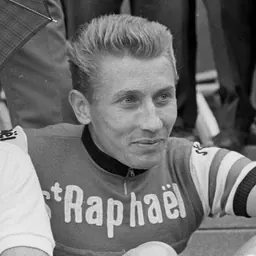

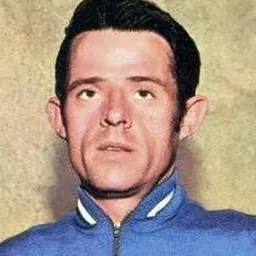
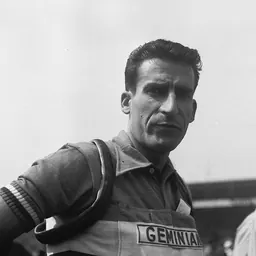


Related people
Same field, nearest in time
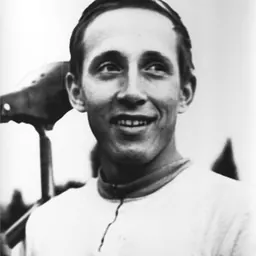


Contemporaries
People whose lives overlapped Lucien Aimar's


Frequently asked questions
Who is Lucien Aimar?
French racing cyclist
When was Lucien Aimar born?
Lucien Aimar was born on 28 April 1941 in Hyères.
What is Lucien Aimar's occupation?
Lucien Aimar is a sport cyclist.
What nationality is Lucien Aimar?
Lucien Aimar is French.
Sources & further reading
Cite this page
APA: Biography.guide. (2026). Lucien Aimar. https://biography.guide/lucien-aimar/
MLA: "Lucien Aimar." Biography.guide, https://biography.guide/lucien-aimar/.
Chicago: "Lucien Aimar." Biography.guide. https://biography.guide/lucien-aimar/.
Data last updated: 2026-09-20 · Spot an error? Report a correction.
Page generated 2026-09-27 05:27 UTC