
Lu Chao-Yang
Chinese quantum physicist
About Lu Chao-Yang
Born 1982. Lu Chao-Yang is a quantum physicist.
Early life and education Born in China's Zhejiang province in 1982, Lu grew up in a rural part of Jinhua and attended Dongyang High School. He decided to study physics at the University of Science and Technology of China (USTC) after hearing a lecture by Pan Jianwei about quantum teleportation.
Lu began working with Pan during his third undergraduate year at USTC, after the two met at a dinner party.
In 2011, after earning his Ph.D from Cambridge, Lu returned to USTC as a professor.
Multiphoton entanglement
Quantum entanglement is one of the strangest prediction of quantum physics; Einstein called it dismissively "spooky action at a distance" (spukhafte Fernwirkung). Quantum particles are said to be entangled when their properties are so completely correlated that, even if the particles are far apart, measuring one gives information about its entangled partners.
During his early years at USTC, Lu focused on entangled photons. For example, he used four entangled photons to demonstrate Shor's factoring algorithm and in 2007 led the first team to entangle six photons. Anton Zeilinger, whose work on photon entanglement won the 2022 Nobel Prize in Physics, has called Lu "a wizard of entangled photons."
To teleport two properties required hyper-entangling two photons; to teleport three properties would require controlling ten photons.
Lu was closely involved in the project that designed and launched China's Micius Satellite. The satellite, launched in 2017, uses entangled photons to enable quantum key distribution over global distances. The satellite is also used for quantum experiments in space.
Single-photon sources Quantum computing, when done with photons as "qubits," requires reliable single-photon sources. The ideal is "an on-demand, deterministic, single-photon source delivering light pulses in a well-defined polarization and spatiotemporal mode, and containing exactly one photon."
During his graduate-school years at Cambridge, Lu worked on developing quantum dots as single-photon sources, using resonance fluorescence to generate spin-selective photons. When he returned to USTC in 2011, he set up a new laboratory to work with such solid-state quantum light sources. Much of that work focused on improving the reliability and output of single photons generated by quantum dots. described in Nature Photonics as "groundbreaking research" and "a milestone achievement...a single-photon source that emits polarized single photons with an efficiency of greater than 50%, while approaching near-unity indistinguishability."
In 2020, Lu was working to improve the scalability of quantum-dot photon sources to use them on boson-sampling for quantum computing. Describing the difference between Jiuzhang and Google's Sycamore, Scientific American explained, "Sycamore uses superconducting loops of metal to form qubits; in Jiŭzhāng, the photons themselves are the qubits."
In 2020, a team of Chinese authors led by Lu together with Pan Jianwei Describing their results, Philip Ball in Nature reported that the team "could find solutions to the boson-sampling problem in 200 seconds. They estimate these would take 2.5 billion years to calculate on China’s TaihuLight supercomputer — a quantum advantage of around 10^14." In 2026, according to the South China Morning Post, USTC scientists reported that their current version Jiuzhang 4.0 "completed a Gaussian boson sampling task in just 25 microseconds – a calculation they estimated would take the world’s most powerful supercomputer, El Capitan in the United States, more than 10^42 years to finish."
Lu has chided colleagues for "overhyping" quantum computers, comparing the problem of controlling qubits to trying to make 10 kittens stand in a line. China Daily quotes him as saying, "Building a quantum computer is a race between humans and nature, not between countries."
Recognition 2015 Physics World Breakthrough of the Year Prize (with Pan Jianwei) for "being the first to achieve the simultaneous quantum teleportation of two inherent properties of a fundamental particle – the photon." 2017 Fresnel Prize (European Physical Society) for "outstanding achievement in quantum light sources, quantum teleportation and optical quantum computing" 2018 Newcomb Cleveland Prize from the American Association for the Advancement of Science as coauthor of the previous year's outstanding scientific paper published in Science, "Satellite-based entanglement distribution over 1200 kilometers" 2020 Adolph Lomb Medal for "significant contributions to optical quantum information technologies, especially on high-performance single-photon sources, quantum teleportation and optical quantum computing" 2021 APS Rolf Landauer and Charles H. Bennett Award in Quantum Computing for "significant contributions to optical quantum information sciences, especially on solid-state quantum light sources, quantum teleportation, and optical quantum computing." 2021 James P. Gordon Memorial Speakership honoring 2020 paper "Quantum Computational Advantage Using Photons" 2026 Quantum Electronics Award of the IEEE Photonics Society "For pioneering work on single photon sources and optical quantum computing"
Don’t just read it —
keep it.
Full-length biographies made to live with: read them, listen on the way to work, watch them tonight.
- E-book
- Audio
- Video
Instant download · yours to keep · every purchase keeps this site free
Important facts
People in Lu Chao-Yang's life
Named in this biography and alive at the same time
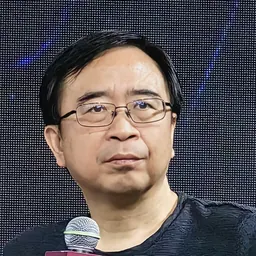


Related people
Same field, nearest in time



Contemporaries
People whose lives overlapped Lu Chao-Yang's


Frequently asked questions
Who is Lu Chao-Yang?
Chinese quantum physicist
When was Lu Chao-Yang born?
Lu Chao-Yang was born in 1982.
What is Lu Chao-Yang's occupation?
Lu Chao-Yang is a quantum physicist.
Sources & further reading
Cite this page
APA: Biography.guide. (2026). Lu Chao-Yang. https://biography.guide/lu-chao-yang/
MLA: "Lu Chao-Yang." Biography.guide, https://biography.guide/lu-chao-yang/.
Chicago: "Lu Chao-Yang." Biography.guide. https://biography.guide/lu-chao-yang/.
Data last updated: 2026-09-20 · Spot an error? Report a correction.
Page generated 2026-09-27 05:32 UTC