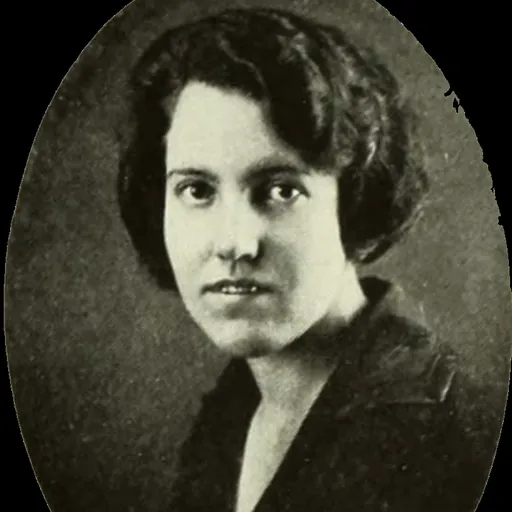
About Louise Emerson Ronnebeck
Lived 1901 – 1980 (aged 78). Louise Emerson Ronnebeck was an American painter and muralist.
Louise Emerson Ronnebeck (August 25, 1901 – February 17, 1980) was an American painter now best known for her work as a muralist. She won and completed two commissions for the Section of Painting and Sculpture. Her body of work included a significant number of commissioned frescoes as well as easel paintings, few of which are known to have survived.
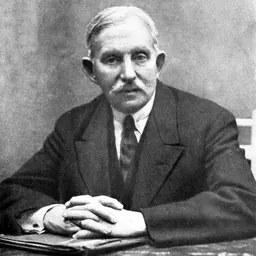
Early life Mary Louise Harrington Emerson was born in 1901 in Philadelphia. Louise was the third daughter of Mary Crawford Suplee and Harrington Emerson (1853–1931). Her father was an efficiency engineer who established the Emerson Institute in New York City in 1900. Contrary to frequent publication, Louise Emerson was not the great-grand-niece of Ralph Waldo Emerson.
In 1922, Louise Emerson graduated from Barnard College. She went on to study at the Art Students League of New York for three years. One of her teachers at the League was Kenneth Hayes Miller (1876–1952). His students included Reginald Marsh, Edward Laning, and Isabel Bishop. Mabel and Tony Luhan attended. Tony was dressed in formal Indian attire, i.e., ribbons braided into his waist-length hair, and he was wrapped in a formal blanket. Emerson had mixed emotions about Tony's attendance. Since Mabel and Tony were instrumental in Rönnebeck and Emerson's courtship, she wanted them to be present on this special day. On the other hand, according to family lore, she did comment, "When everyone filed into the church, no one paid any attention to the bride because there was this American Indian sitting there with the ceremonial ribbons in his braids".
Rönnebeck and Emerson subsequently set off on what they termed an "extended wedding trip" of the West that included stops in Omaha, Nebraska, Santa Fe, New Mexico, and Los Angeles, California. Arnold Rönnebeck executed commissions along the way. They finally settled in Denver, Colorado, where Arnold became director of the Denver Art Museum. The couple became founding members of the Denver Artists Guild, which held its inaugural exhibition in 1928. Louise Emerson continued to use her maiden name professionally until approximately 1931. After that time, she began to sign her paintings "Louise Emerson Ronnebeck" or "Louise Ronnebeck".
The couple had two children, Arnold, born in 1927, and Ursula, born in 1929.
New Deal murals During the Great Depression, Emerson actively sought commissions by submitting proposals through the Treasury Department's Section of Painting and Sculpture, later renamed the Section of Fine Arts. Many feared that if the Depression continued for very long, a generation of artists would be lost and a fatal blow would be dealt to American culture.
Between 1937 and 1944, Emerson entered 16 competitions for mural commissions including the Department of Justice Building, Washington, D.C. (1936, 1941), Fort Scott, Kansas (1937), Phoenix, Arizona (1937), Worland, Wyoming (1938), Dallas, Texas (1940), Grand Junction and Littleton, Colorado (1940), Social Security Building, Washington, D.C., (1940 and 1942), Amarillo, Texas (1941), and Los Angeles, California (1944). She won two commissions for post office murals, both funded by the Treasury Department Section of Painting and Sculpture.
In preparation for the project, Emerson researched Wyoming history and consulted with the Worland postmaster. The approved design depicted a determined-looking pioneer farming family in a Conestoga wagon pulled by oxen heading directly toward the viewer. In the background/sky are Indians riding horses chasing buffalo, executed in a translucent cloud-like manner. The Indians and the pioneer farming family were both historically dependent on the land and they are shown being displaced by the new, thriving and growing oil industry. The mural has since been moved and installed in the downtown Casper, Wyoming Post Office in the Dick Cheney Federal Building.
Emerson's second Section mural commission was designed for the post office in Grand Junction, Colorado. The Harvest (7'x 9' oil on crescent shaped canvas) was installed in the joint post office and courthouse in 1940. The Harvest depicts a young man and woman working together harvesting peaches, with a water wheel in the background, symbolizing "the richness that came to the land following the introduction of irrigation".
In Engendering Culture: Manhood and Womanhood in New Deal Public Art and Theatre, Barbara Melosh describes this frequently used Section theme as the "comradely ideal". She writes, "[Louise] Ronnebeck invokes the comradely ideal in the image of shared labor, and she emphasizes the physicality of work in the man's muscled arms and the woman's sturdy figure". Similar to her Wyoming mural, the man and the woman are equals, working towards a common goal. The mural depicts the Ute Indians leaving the valley on the right side, and the white settlers pushing them out from the left. The theme of displacement is effective and evocative of the time and the changes that had occurred and continued to occur in the West. Emerson's use of family, work, and local landscape reflects themes often found in American scene artworks of the 1930s.
The Harvest mural had a life of mystery. By 1973, the mural was dirty and dull. It was shipped to Washington DC for restoration and subsequently forgotten. Until 1991, its whereabouts were unknown. The building manager of the Aspinall Federal Building in Grand Junction had encountered frequent references to the mural but could not locate it. Through perseverance and dogged detective work, he finally located it in New York, had it restored, and returned it to Grand Junction. In January 1992, Emerson's son and daughter, who had modeled for the mural over 50 years earlier, unveiled it in a ceremony in Grand Junction's Wayne N. Aspinall Federal Building and Courthouse, where it remains today.
Denver Emerson worked in tempera and oil, but fresco was her preferred medium. Besides her Section murals, Emerson was commissioned to execute many murals and frescoes in the Denver area, for locations including, Kent School for Girls (1933), Morey Junior High School (1934) (still extant but in deplorable condition), the City and County Building (1935), the Church of the Holy Redeemer (1938), the Bamboo Lounge at the Cosmopolitan Hotel (1938) and the Robert W. Speer Memorial Hospital for Children (1940) (still extant, also in deplorable condition). Unfortunately, since frescoes are part of the architectural structure, many of them were lost when the buildings were torn down.
In 1942, the Denver Defense Council called for volunteers to work in areas for which they were best suited. Emerson volunteered to paint a mural for Denver's new USO Center and spent eight hours a day for three months painting a mural for the center. She pictured the peacetime pursuits of the then 26 United Nations countries that were then fighting the war. For this work, the Governor of Colorado named her civilian "Hero of the Week". Her husband, artist Arnold Rönnebeck, died on November 14, 1947. Her last public mural in Colorado was an abstract fresco for the lobby of Weld County Hospital in Greeley, Colorado in 1952.
In 1954, with both of her children married, Emerson moved to Bermuda and taught art at the Bermuda High School for Girls from 1955 to 1959. Her last mural was executed for St. Brendan's Hospital in 1966. Unfortunately, this mural was destroyed sometime in the 1980s when the hospital was renovated.
In 1973, Emerson left Bermuda and returned to Denver, where she remained until her death in 1980.
Don’t just read it —
keep it.
Full-length biographies made to live with: read them, listen on the way to work, watch them tonight.
- E-book
- Audio
- Video
Instant download · yours to keep · every purchase keeps this site free
Important facts
People in Louise Emerson Ronnebeck's life
Named in this biography and alive at the same time




Related people
Same field, nearest in time



Contemporaries
People whose lives overlapped Louise Emerson Ronnebeck's



Frequently asked questions
Who was Louise Emerson Ronnebeck?
American artist (1901-1980)
When was Louise Emerson Ronnebeck born?
Louise Emerson Ronnebeck was born on 25 August 1901 in Philadelphia.
When did Louise Emerson Ronnebeck die?
Louise Emerson Ronnebeck died on 17 February 1980 in Denver.
What was Louise Emerson Ronnebeck's occupation?
Louise Emerson Ronnebeck was a painter and muralist.
What nationality was Louise Emerson Ronnebeck?
Louise Emerson Ronnebeck was American.
Sources & further reading
· Wikipedia: Louise Emerson Ronnebeck
· DBpedia: Louise Emerson Ronnebeck
Cite this page
APA: Biography.guide. (2026). Louise Emerson Ronnebeck. https://biography.guide/louise-emerson-ronnebeck/
MLA: "Louise Emerson Ronnebeck." Biography.guide, https://biography.guide/louise-emerson-ronnebeck/.
Chicago: "Louise Emerson Ronnebeck." Biography.guide. https://biography.guide/louise-emerson-ronnebeck/.
Data last updated: 2026-09-23 · Spot an error? Report a correction.
Portrait: Wikimedia Commons · author & licence
Page generated 2026-09-27 05:06 UTC