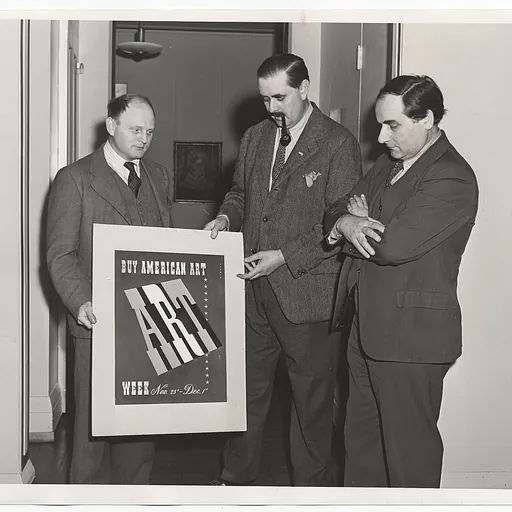
About Reginald Marsh
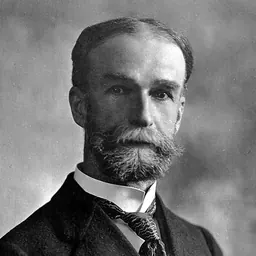
Lived 1898 – 1954 (aged 56). Reginald Marsh was an American painter, printmaker, illustrator, comics artist, graphic artist and draftsperson.
Reginald Marsh (March 14, 1898 – July 3, 1954) was an American painter, born in Paris, most notable for his depictions of life in New York City in the 1920s and 1930s. Crowded Coney Island beach scenes, popular entertainments such as vaudeville and burlesque, women, and jobless men on the Bowery are subjects that reappear throughout his work. He painted in egg tempera and in oils, and produced many watercolors, ink and ink wash drawings, and prints.
Biography
Childhood and education
Reginald Marsh was born in an apartment in Paris above the Café du Dome. He was the second son born to American parents who were both artists. His mother, Alice Randall was a miniaturist painter and his father, Frederick Dana Marsh, was a muralist and one of the earliest American painters to depict modern industry. The family was well off; Marsh's paternal grandfather had made a fortune in the meat packing business.
Marsh attended the Lawrenceville School and graduated in 1920 from Yale University. At Yale Art School he worked as the star illustrator and cartoonist for campus humor magazine The Yale Record. Marsh was noted to have fully enjoyed his time at Yale. He moved to New York after graduation, where his ambition was to find work as a freelance illustrator. In 1922, he was hired to sketch vaudeville and burlesque performers for a regular New York Daily News feature, and when The New Yorker began publication in 1925, Marsh and fellow Yale Record alum Peter Arno were among the magazine's first cartoonists. Although not primarily remembered as a cartoonist, he was a prolific and thoughtful contributor to The New Yorker from 1925 to 1944. He also created illustrations for the New Masses (an American Marxist journal published from the 1920s to the 1940s).
Training and influences The Trapezist, The New Yorker magazine cover, April 27, 1935. A casual interest in learning to paint led Marsh, in 1921, to begin taking classes at the Art Students League of New York, where his first teacher was John Sloan. By 1923 Marsh began to paint seriously. In this year he also married Betty Burroughs, another student at the college and daughter to artist Bryson Burroughs. The marriage ended in divorce in 1933. In 1925, Marsh visited Paris for the first time since he had lived there as a child and he fell in love with what the city had to offer him. Although Marsh had appreciated the drawings of Raphael, Leonardo da Vinci and Michelangelo since he was a child—his father's studio was full of reproductions of the old masters' work —the famous paintings that he saw at the Louvre and other museums stimulated in him a new fascination with those painters.
While exploring the works of European painters such as Titian, Tintoretto, and Rubens, Marsh met Thomas Hart Benton in one of the galleries in France. Benton, known today as a social realist, and regionalist painter, was also a great student of the Baroque masters. The resemblance Marsh saw between Tintoretto's famous works and Benton's motivated Marsh to try to paint in a similar way.
Marsh began to work with John Steuart Curry after his training with Miller. Both Marsh and Curry took lessons from Jacques Maroger, whom Marsh met in New York City in 1940. Maroger, who was a former restorer at the Louvre, believed he had discovered the secrets of the old masters and was well known for his advocacy of a painting medium made by cooking white lead in linseed oil. Maroger provided a body of material documenting his work for Marsh and Curry to study, and they adopted his ideas.
Marsh at work
Marsh's etchings were his first work as an artist. In the early 1920s, he also made several linocuts, and later produced lithographs and engravings. He kept careful watch of the technique he used for his prints, noting the temperature of the room, the age of the bath that his plates were soaked in, the composition, and the length of time the plate was etched. When making prints of the etchings Marsh recorded how long the paper soaked for, the heating of the plate, and the nature of the ink used. Marsh enjoyed experimentation with all his artworks and was therefore renowned for his unique techniques. Marsh's style can best be described as social realism. His work depicted the Great Depression and a range of social classes whose division was accentuated by the economic crash. His figures are generally treated as types. "What interested Marsh was not the individuals in a crowd, but the crowd itself ... In their density and picturesqueness, they recall the crowds in the movies of Preston Sturges or Frank Capra".
Marsh's main attractions were the burlesque stage, the hobos on the Bowery, crowds on city streets and at Coney Island, and women. In the early 1930s he took up photography as another means of note taking.
Burlesque and the Bowery George C. Tilyou's Steeplechase Park (1936), Hirshhorn Museum The drawings of burlesque and vaudeville acts Marsh made in the 1920s for the New York Daily News are among the first of his many images of popular theater. Such entertainments flourished throughout the country and were available all over New York City. The burlesque that Marsh captured can be described as raunchy and vulgar, but also comedic and satiric. Marsh's drawings depict chorus girls, clowns, theater goers and strippers. Burlesque was "the theater of the common man; it expressed the humor, and fantasies of the poor, the old, and the ill-favored." Marsh's Bowery scenes depict people who had a crisis thrust upon them, which is why his work shows a loss of human integrity and control in all aspects. His etching Bread Line—No One Has Starved (1932) depicts a row of men in a frieze-like arrangement that emphasizes their immobility. (The print's title mocks a complacent remark made by President Hoover.)
Coney Island and sea ports Marsh liked to venture to Coney Island to paint, especially in the summer time. There he began to paint massed beached bodies. Marsh emphasizes the bold muscles and build of his characters, which relate to the heroic scale of the older European paintings. Marsh said "I like to go to Coney Island because of the sea, the open air, and the crowds—crowds of people in all directions, in all positions, without clothing, moving—like the great compositions of Michelangelo and Rubens." Marsh's work shows this exploitation by portraying men and women in the same paintings. The women may be half clothed or fully naked, and are purposeful and strong; the men are voyeurs, often less imposing than the women. According to art historian Marilyn Cohen, "[Marsh's] world is filled with display: movies, burlesque, the beach, and all forms of public exhibition. Men and women are both spectators and performers within a heavily sexualized world. And Marsh was clearly fascinated by both aspects of that world—almost always presenting its two sides in the same image."
Later life His work was part of the art competitions at the 1932 Summer Olympics and the 1936 Summer Olympics.
During the 1940s and for many years, Marsh became an important teacher at the Art Students League of New York, which ran a summer camp where Marsh's students included Roy Lichtenstein. Lichtenstein was influenced by Marsh's subject matter in his work. Also in the '40s, Marsh began making drawings for magazines such as Esquire, Fortune, and Life. A degree of mannerism is apparent in his later paintings, in which wraithlike figures "float in a watery netherworld" in a deeper pictorial space than that of his compositions of the 1930s.
Shortly before his death he received the Gold Medal for Graphic Arts awarded by the American Academy and the National Institute for Arts and Letters. in Dorset, Vermont, on July 3, 1954.
Legacy Many prints and unpublished sketches were found in his estate after he died. Marsh had kept good records, often daily, of his work, and thus organizing and publishing these works was made easy. A set of prints that were acquired by William Benton from Marsh's wife are now all in the William Benton Museum of Art, the New York Public Library, and the Middendorf Gallery in Washington, D.C. Savoy Ballroom, Detroit Institute of Arts, 1931 Breadline, Smithsonian Institution, 1930 Striptease at New Gotham, William Benton Museum of Art, 1935 Steeplechase, Collection of Edward Laning, 1954 The Bowl, The Brooklyn Museum, 1933 Coney Island (Russia declares war on Japan), Collection of Marjorie and Charles Benton Down at Jimmy Kelly's, The Chrysler Museum, 1936 Jelkye Trial Series, Boca Raton Museum of Art, 1951
Exhibitions 1938, Solo Exhibition, Frank K. M. Rehn Galleries, New York 1957, 70 Photographers Look at New York, Museum of Modern Art 1997, Reginald Marsh at D.C Moore, New York City 2003, April 18 – May 25, New York City Drawings, Seraphin Galleries, Philadelphia 2006, February 19 – May 14, Reginald Marsh, Nassau County Museum of Art, New York 2013, June 21 – September 1, Swing Time: Reginald Marsh and Thirties New York, New-York Historical Society, New York
Don’t just read it —
keep it.
Full-length biographies made to live with: read them, listen on the way to work, watch them tonight.
- E-book
- Audio
- Video
Instant download · yours to keep · every purchase keeps this site free
Important facts
People in Reginald Marsh's life
Named in this biography and alive at the same time





Related people
Same field, nearest in time


Contemporaries
People whose lives overlapped Reginald Marsh's



Frequently asked questions
Who was Reginald Marsh?
American painter (1898–1954)
When was Reginald Marsh born?
Reginald Marsh was born on 14 March 1898 in Paris.
When did Reginald Marsh die?
Reginald Marsh died on 3 July 1954 in Dorset.
What was Reginald Marsh's occupation?
Reginald Marsh was a painter, printmaker, illustrator, comics artist, graphic artist and draftsperson.
What nationality was Reginald Marsh?
Reginald Marsh was American.
Sources & further reading
· DBpedia: Reginald Marsh (artist)
Cite this page
APA: Biography.guide. (2026). Reginald Marsh. https://biography.guide/reginald-marsh-painter/
MLA: "Reginald Marsh." Biography.guide, https://biography.guide/reginald-marsh-painter/.
Chicago: "Reginald Marsh." Biography.guide. https://biography.guide/reginald-marsh-painter/.
Data last updated: 2026-09-20 · Spot an error? Report a correction.
Portrait: Wikimedia Commons · author & licence
Page generated 2026-09-27 04:58 UTC