
Harrington Emerson
American efficiency engineer and business theorist
About Harrington Emerson
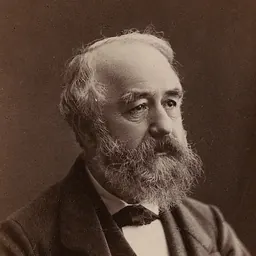
Lived 1853 – 1931 (aged 78). Harrington Emerson was an American engineer, businessperson and business consultant.
Harrington Emerson (August 2, 1853 – September 2, 1931) was an American efficiency engineer and business theorist, who founded the management consultancy firm Emerson Institute in New York City in 1900. Known for his pioneering contributions to scientific management, Emerson may have done more than anyone else to popularize the topic: His public testimony in 1910 to the Interstate Commerce Commission that the railroads could save $1,000,000 a day started a nationwide interest in the subject of "efficiency".
Biography Emerson was born in Trenton, New Jersey to Edwin Emerson, a Professor of Political science, and Mary Louisa (Ingham) Emerson, daughter of Samuel D. Ingham, a U.S. Congressman and U.S. Treasury Secretary under President Andrew Jackson. Emerson attended private schools in Europe, and from 1872 to 1875 studied engineering at the Technical University of Munich.
The cause of starting Emerson's "betterment work" as it was officially called, having been a strike, his first and most important aim was to establish a basis for permanent harmony by introducing an "individual effort and bonus system." Increased supervision of the men was to be undertaken, and for good work special rewards were to be given. Accordingly, time studies were made (about 60,000 by March, 1907), tasks were set, and bonuses offered. There were several distinguishing features which marked this phase of scientific management as it was introduced on the Santa Fe: First, extreme emphasis was laid on the individual character of the relations of men and management: "The schedule is a moral contract or agreement with the men as to a particular machine operation, rate of wages and time. Any change in men [etc.] calls for a new schedule." Second, there was a lack of insistence on the selection of unusual men: "The standard time set is reasonable, and one that can be reached without extraordinary effort; is, in fact, such time as a good foreman would demand." And third, bonuses were paid to foremen. Thus the Santa Fe management sought to make of its employees industrious, well paid, and loyal workmen.
He calls his system "efficiency" rather than "scientific management." He opposed functional management with its numerous heads, and substitutes for it the "line and staff" idea, under which there is but one boss (the line). The functional experts (or staff) whom Emerson employs are not executive officers, but simply advise the single responsible authority; and it is the latter who puts all plans into practice through command over his "line" subordinates. The idea is to avoid creating too many bosses, and yet operate under expert advice. Emerson uses a wage system which bases remuneration partly upon the "efficiency per cent" of the employee. Standard times are set on the basis of time study analysis, and the workman who just completes the same in the allotted time is credited with 100 per cent efficiency.
Efficiency may thus be reckoned as below, above, or at 100 per cent. Although everyone receives his day rate, which is supposed to be a normal compensation when compared with prevailing wages, a man who cannot attain 66.7 per cent efficiency in the long run is regarded as subnormal and is in danger of discharge. At 67 per cent a small bonus is paid, which grows in size until at 90 per cent efficiency it reaches 10 per cent. Above this point one per cent in bonus is added for each additional one per cent gain in efficiency.
In regard to his general thought, Emerson has received stimuli from many sources; but as concerns the application of efficiency to industrial plants, there is good ground for believing that he is much more deeply indebted to Taylor than to any other. Indeed, men well acquainted with both have told us that Emerson was once accustomed to refer to Taylor as the source of his ideas: Taylor he regarded as trying to do too much, as being in advance of his time; it was he, Emerson, who, by rendering lofty projects more practical, was able to achieve results. His statement that the railroads could save $1,000,000 a day by introducing efficiency methods was the keynote which started the nationwide interest in the subject. His books, Efficiency (a reprint in 1911 of periodical contributions of 1908 and 1909), and The Twelve Principles of Efficiency (1912), taken with his magazine articles and addresses, have perhaps done more than anything else to make "efficiency" a household word.
Publications Emerson, Harrington. The engineer and the road to the gold fields 1899 Emerson, Harrington. Efficiency as a Basis for Operation and Wages. Engineering Magazine, 1909. Emerson, Harrington. The twelve principles of efficiency. Engineering Magazine, 1912. Emerson, Harrington. In memoriam to those who perished in the disaster to the Titanic April 14th and 15th, 1912 : an address to the Club of Printing House Craftsmen of New York, delivered April 18th, at the hour of the landing of the survivors. New York : Emerson. 1912 Emerson, Harrington. The railroad situation; why 30 per cent rate increase is not enough. New York, The Emerson Engineers. 1920
Articles, a selection Harrison Emerson (1905) "Shop betterment and the individual effort method of profit-sharing" in: International Railway Journal Vol. 13. p. 61.
Don’t just read it —
keep it.
Full-length biographies made to live with: read them, listen on the way to work, watch them tonight.
- E-book
- Audio
- Video
Instant download · yours to keep · every purchase keeps this site free
Important facts
People in Harrington Emerson's life
Named in this biography and alive at the same time

Related people
Same field, nearest in time

Contemporaries
People whose lives overlapped Harrington Emerson's





Frequently asked questions
Who was Harrington Emerson?
American efficiency engineer and business theorist (1853–1931)
When was Harrington Emerson born?
Harrington Emerson was born on 2 August 1853 in Trenton.
When did Harrington Emerson die?
Harrington Emerson died on 2 September 1931 in New York City.
What was Harrington Emerson's occupation?
Harrington Emerson was an engineer, businessperson and business consultant.
What nationality was Harrington Emerson?
Harrington Emerson was American.
Sources & further reading
· Wikipedia: Harrington Emerson
Cite this page
APA: Biography.guide. (2026). Harrington Emerson. https://biography.guide/harrington-emerson/
MLA: "Harrington Emerson." Biography.guide, https://biography.guide/harrington-emerson/.
Chicago: "Harrington Emerson." Biography.guide. https://biography.guide/harrington-emerson/.
Data last updated: 2026-09-20 · Spot an error? Report a correction.
Page generated 2026-09-27 05:26 UTC