
About Louis Laybourne Smith
Lived 1880 – 1965 (aged 85). Louis Laybourne Smith was an Australian architect and registrar (education).
Louis Edouard Laybourne Smith (1 April 1880 – 13 September 1965) was an Australian architect and educator in South Australia. Born in the Adelaide inner-southern suburb of Unley, he became interested in engineering and architecture while in the goldfields of Western Australia and later studied mechanical engineering at the School of Mines, serving an apprenticeship under architect Edward Davies. After graduating he accepted a position as a lecturer at the school, and was responsible for developing the first formal architecture course in the State in 1904. Between 1905 and 1914, he served as registrar at the school before leaving to join his long-time friend, Walter Bagot, at the architectural firm of Woods, Bagot and Jory. He remained with the firm until his death in 1965, and over the years was involved in a number of significant projects, including the South Australian National War Memorial and the original Australian Mutual Provident building on King William Street.
Along with his teaching and professional duties, Laybourne Smith was a member of the South Australian Institute of Architects, the Federal Council of the Australian Institute of Architects, and the Australian Institute of Architects, as well as being on numerous committees and advising the State Government in the formation of both the State Building Act of 1923 and the 1939 Architects Act (which brought the Architects Board of South Australia into existence).
During his life Laybourne Smith received a number of awards and honours, including Life Fellowship to the Royal Australian Institute of Architects and the Royal Institute of British Architects, the Royal Australian Institute of Architects Gold Medal, and was invested as a Companion of the Order of St Michael and St George. Today, the architectural school which he founded (now part of the University of South Australia) bears his name—the Louis Laybourne Smith School of Architecture.
Early life and education
Louis Laybourne Smith was born to Joseph and Annie Laybourne Smith on 1 April 1880, in Unley, South Australia. His parents had emigrated to Australia so that his father could take up a post as a chemist with F. H. Faulding & Co. However, it appears that Joseph Laybourne Smith found dentistry more to his liking, for he went on to gain qualifications in the field through the Australian College of Dentistry. Both Laybourne Smith's primary and secondary education were obtained at the nearby Windham and Way colleges; his education was interrupted in the mid-1890s when his parents decided to move to the goldfields of Coolgardie and Kalgoorlie in Western Australia.
According to Laybourne Smith, he became interested in machinery while in the goldfields. His parents decided to direct him towards architecture, as it "was the nearest thing to white-collar engineering work that they could think of". He was articled to A.A.E. Dancker for a period As a result, Laybourne Smith undertook to complete a mechanical engineering course part-time at the School of Mines, and (in order to pursue his interest in architecture) he was articled to Edward Davies from 1901.
He proved to be an excellent student, winning scholarships in both his second and third years, and was the first person to finish the course within the proscribed four years. He completed his apprenticeship with Davies in 1904, and was admitted as an Associate to the South Australian Institute of Architects,
After graduating at the School of Mines, Laybourne Smith continued his studies at the University of Adelaide, completing a Bachelor of Science in 1911. This was surrendered in 1914 for a Bachelor of Engineering.
Teaching career
In 1903, Laybourne Smith was invited to lecture in mechanical engineering at the School of Mines—a position which Page states that Laybourne Smith was "delighted" to accept. He was thereafter elected as the school's registrar in 1905, After being approached in 1906 by the Council of the School of Mines, Laybourne Smith teamed with Walter Bagot to develop a new architecture course.
While the School of Mines no longer exists, the school of architecture founded by Laybourne Smith is now part of the University of South Australia, and since 1963 the Louis Laybourne Smith School of Architecture and Building has borne his name as its founder.
Upon leaving his full-time position at the School of Mines, Laybourne Smith acted as a "stand-in" for Walter Bagot at Bagot's architectural firm, Woods, Bagot and Jory, while Bagot was overseas. Edward Woods died in 1913, and three years later Laybourne Smith became a full partner in the newly named Woods, Bagot, Jory & Laybourne Smith. Laybourne Smith was to remain with the firm until his death in 1965.
Laybourne Smith's friendship with Walter Bagot had spanned many years prior to the partnership, but their respective working methods was "so different that they seemed unlikely partners". While Baggot was "notorious" for the attention he gave to minor details in designs, Laybourne Smith was described as being just as happy to develop a sketch and to pass it on to the draftsmen to "work up" (although this does not represent a lack of attention, as his designs were "sketched in tiny, neat detail"). and from there he graduated to work on a number of notable buildings within South Australia and interstate. Both the firm in general and Laybourne Smith in particular were traditionalists in their designs, to the point where Page reports that Laybourne Smith took as a compliment a description of one of his works in 1965 as "striped pants and all". This traditionalism was particularly evident in their work for the University of Adelaide. Between 1910 and 1945, the firm served as architects to the University of Adelaide, The result included a number of buildings that were designed by Laybourne Smith in a "Georgian revival" style, including the original heritage listed Student Union building and the main building of the Waite Agricultural Research Institute, which is also heritage listed and has been described as being "reministent of the great English country houses". Similarly, Laybourne Smith applied traditional designs to a number of ecclesiastical projects. These include St Cuthbert's Anglican Church in North Adelaide, which is heritage listed as an example of Gothic Revival architecture; and the romanesque St. Dominic's Chapel at the Cabra Dominican College in Cumberland Park.
His background in engineering was put to good use on a number of projects. In particular, the John Martins store on Rundle Street (now Rundle Mall), was constructed by raising the top floor of the building on hydraulic jacks, building two new floors underneath while the remainder of the store continued to operate normally.
Other works by Laybourne Smith include the facade on the Balfours Cafe in Rundle Mall (heritage listed in part due to the innovative "building envelope", which is "independent of the internal structure"), the Repatriation General Hospital in Daw Park (developed by Laybourne Smith from sketch plans produced by Melbourne firm Stephenson & Turner), and the South Australian National War Memorial. This last structure represents a collaboration between Laybourne Smith, Walter Bagot, and Sydney-based sculptor Rayner Hoff. Although Walter Bagot produced the original design for the architectural competition in 1924, his design was, (along with the other entrants), deemed to be "unsuitable". After the entries were destroyed by fire late that year, Laybourne Smith, working with artist Rayner Hoff, was able to redraw the design largely from memory in order to enter the subsequent 1926 competition. In doing so they built upon Bagot's work, making the memorial "grander" in its scope—and this proved to be sufficient for the firm to be awarded the commission.
Although Laybourne Smith continued to be involved in teaching and architectural design, he was also involved in professional organisations and committees. He was admitted to the South Australian Institute of Architects (SAIA) as an associate in 1904, made a fellow in 1907, elected to the council in 1909, and served two terms as President (1921–1923 and 1935–1937). Between 1991 and 1922, he served as president of this body. and he was largely responsible for the framing of the 1939 Architects Act, (which provided for the formal registration of architects in South Australia).
Furthermore, he had a substantial impact on the development of architecture as a professional body through his involvement in the Architects Act of 1931 and the formation of a national body for architects.
Laybourne Smith was a Life Fellow with both the Royal Australian Institute of Architects, (awarded in 1944), and a Fellow (1939) and Life Fellow (1944) of the Royal Institute of British Architects.
Laybourne Smith "consistently overworked"; When his firm announced a retirement scheme he declared that he had no intention of retiring, and such proved to be the case—he died at his desk on 13 September 1965 at the age of 85.
Don’t just read it —
keep it.
Full-length biographies made to live with: read them, listen on the way to work, watch them tonight.
- E-book
- Audio
- Video
Instant download · yours to keep · every purchase keeps this site free
Important facts
People in Louis Laybourne Smith's life
Named in this biography and alive at the same time

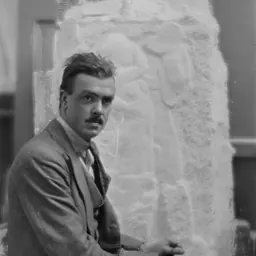


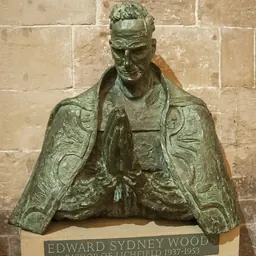

Related people
Same field, nearest in time

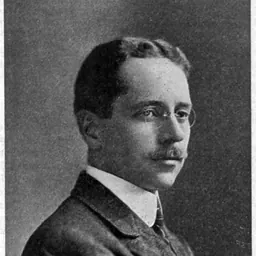
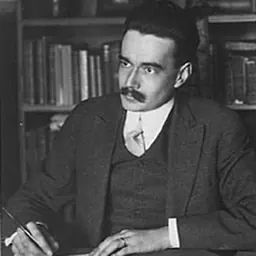

Contemporaries
People whose lives overlapped Louis Laybourne Smith's



Frequently asked questions
Who was Louis Laybourne Smith?
Australian architect
When was Louis Laybourne Smith born?
Louis Laybourne Smith was born on 1 April 1880 in Unley.
When did Louis Laybourne Smith die?
Louis Laybourne Smith died on 13 September 1965 in Adelaide.
What was Louis Laybourne Smith's occupation?
Louis Laybourne Smith was an architect and registrar (education).
What nationality was Louis Laybourne Smith?
Louis Laybourne Smith was Australian.
Sources & further reading
· Wikipedia: Louis Laybourne Smith
· DBpedia: Louis Laybourne Smith
Cite this page
APA: Biography.guide. (2026). Louis Laybourne Smith. https://biography.guide/louis-laybourne-smith/
MLA: "Louis Laybourne Smith." Biography.guide, https://biography.guide/louis-laybourne-smith/.
Chicago: "Louis Laybourne Smith." Biography.guide. https://biography.guide/louis-laybourne-smith/.
Data last updated: 2026-09-25 · Spot an error? Report a correction.
Page generated 2026-09-27 05:12 UTC