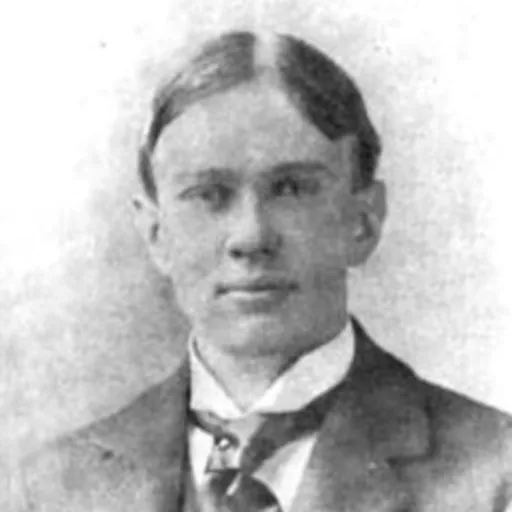
About Louis How
Lived 1873 – 1947 (aged 73–74). Louis How was an American poet, biographer, writer and translator.
Louis How (1873–1947) was a prolific American poet and a biographer of his grandfather, James Buchanan Eads, who built the Eads Bridge crossing the Mississippi River at St. Louis.
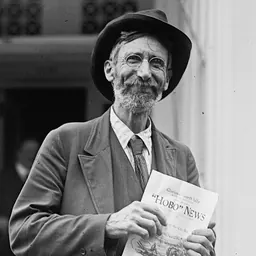
Biography Louis How was born in St. Louis on February 14, 1873. He had one brother, James Eads How. Not only was their grandfather a wealthy engineer and contractor, but their father, James Flintham How, was a vice-president and the General Manager of the Wabash Railroad. Thus they were the heirs of one of St. Louis's most wealthy families. While his brother chose to live as a hobo and spent his efforts trying to help the homeless, Louis How graduated from Harvard University in 1895, then "became an artist and took to the gay bohemian life".
While How certainly wrote from a position of knowledge and authority when he created the biography of his grandfather, the biography was criticized in a review from MIT.
Before his poetry was first published, How had compiled a manuscript anthology of American poetry, but never published it. His manuscript was responsible for a revival of interest in early American poet Frederick Goddard Tuckerman.
How died from heart disease at his summer home in Gloucester, Massachusetts on October 3, 1947.
Works James B. Eads. Boston: Houghton Mifflin and Co. (c.1900) The Penitentes of San Rafael. Indianapolis: The Bowen-Merrill Co. (1900).
Poetry Lyrics and Sonnets. Boston: Sherman, French (1911). The Youth Replies. (1912) Barricades. Boston: Sherman, French (1914). A Hidden Well: Lyrics and Sonnets. (1916) Nursery Rhymes of New York City. (1919) Ruin and Gold. London: Chapman & Hall (1924). Narcissus and Other Poems. New York: Harbor Press (1928). Illustrated by Walter Dorwin Teague. The Other Don Juan. New York: Harbor Press (1932). Illustrated by Steele Savage. The Years Relent. Harbor Press. (1936) Regional Rhymes of New York City. New York: Harbor Press (1937). Illustrated by Ilse Bischoff. An Evening with Ninon, A Didactic Poem containing a translation of Racine's Bernice. New York: Harbor Press (1941). Illustrated by Boris Artzybasheff.
Translations The life of Lazarillo de Tormes and his fortunes and adversities, done out of the Castilian from R. Foulché-Delbosc's restitution of the editio princeps. New York: M. Kennerley (1917) Caesar or Nothing, by Pío Baroja. (1919) The Comedy of Dante Alighieri, Florentine by Birth but Not in Conduct. (1934–1940). Illustrated by Boris Artzybasheff.
Don’t just read it —
keep it.
Full-length biographies made to live with: read them, listen on the way to work, watch them tonight.
- E-book
- Audio
- Video
Instant download · yours to keep · every purchase keeps this site free
Important facts
People in Louis How's life
Named in this biography and alive at the same time




Related people
Same field, nearest in time

Contemporaries
People whose lives overlapped Louis How's



Frequently asked questions
Who was Louis How?
American writer (1873–1947)
When was Louis How born?
Louis How was born in 1873 in St. Louis.
When did Louis How die?
Louis How died in 1947 in Gloucester.
What was Louis How's occupation?
Louis How was a poet, biographer, writer and translator.
What nationality was Louis How?
Louis How was American.
Sources & further reading
Cite this page
APA: Biography.guide. (2026). Louis How. https://biography.guide/louis-how/
MLA: "Louis How." Biography.guide, https://biography.guide/louis-how/.
Chicago: "Louis How." Biography.guide. https://biography.guide/louis-how/.
Data last updated: 2026-09-20 · Spot an error? Report a correction.
Portrait: Wikimedia Commons · author & licence
Page generated 2026-09-27 04:58 UTC