
About James Buchanan Eads
Lived 1820 – 1887 (aged 66). James Buchanan Eads was an American civil engineer, engineer, inventor and writer.
James Buchanan Eads (May 23, 1820 – March 8, 1887) was an American civil engineer and inventor. He held more than 50 patents and was known internationally. He designed and built the Eads Bridge over the Mississippi River in St. Louis, which was designated a National Historic Landmark.
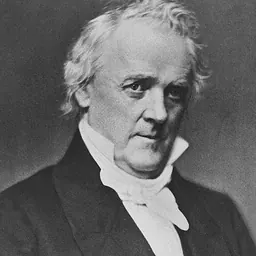
Early life and education Eads was born in Lawrenceburg, Indiana, and named for his mother's cousin, future President of the United States James Buchanan. Eads' father, Thomas C. Eads, pursued a fortune to no avail and the family moved several times. Eads grew up in St. Louis, Missouri. The family lost all of their possessions in a steamboat fire as they landed in St. Louis in 1833.
Martha moved in with Eads' parents in LeClaire, Iowa while Eads stayed behind in St. Louis to set up a glass works. Although their living arrangement was supposed to be temporary, the failure of his glass business made it permanent. Eads had many debts to pay off from the failed business and he went back to working in salvage.
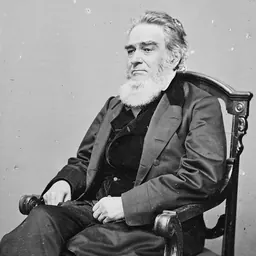
Civil War In 1861, after the outbreak of the American Civil War, Eads was called to Washington at the prompting of his friend, Attorney General Edward Bates, to consult on the defense of the Mississippi River. Soon afterward, he was contracted to construct the City-class ironclads for the United States Navy, and produced seven such ships within five months: St. Louis, Cairo, Carondelet, , Louisville, Mound City, and Pittsburgh. He also converted the river steamer New Era into the ironclad Essex. The river ironclads were a vital element in the highly successful Federal offensive into Tennessee, Kentucky and upper Mississippi (February–June, 1862). Eads corresponded frequently with Navy officers of the Western Flotilla, and used their "combat lessons learned" to improve vessels during post-combat repairs, and incorporate improvements into succeeding generations of gunboats. By the end of the war he would build more than 30 river ironclads.
The last were so hardy that the Navy sent them into service in the Gulf of Mexico, where they supported the successful Federal attack on the Confederate port city of Mobile. All senior officers in the Western Theater, including Grant and Sherman, agreed that Eads and his vessels had been vital to early victory in the West. The first four gunboats were built at the Eads' Union Marine Works in Carondelet, Missouri. The next three were built under Eads' contract at the Mound City (Illinois) Marine Railway and Shipyard. Eads' vessels were the first United States ironclads to enter combat. On January 11, 1862 the Eads-built ironclads St. Louis and Essex fought the Confederate gunboats CSS General Polk, CSS Ivy, and CSS Jackson at Lucas Bend, on the Mississippi River. Subsequently, on February 6, 1862, Eads' ironclads captured Fort Henry on the Tennessee River. This was over a month before the combat actions of the ironclads CSS Virginia and USS Monitor during the March 8–9, 1862 Battle of Hampton Roads.
During the war, Eads wrote a check to the War Department for $1,000 to help homeless Confederates and Union sympathizers. After the war, he held a fair to raise money for the thousands of homeless refugees in St. Louis. which allowed steamboat traffic to continue using the river during construction. The bridge is still in use today, carrying both automobile and light rail traffic over the river.
Mississippi River designs
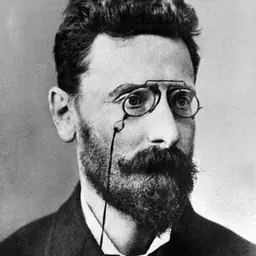
The Mississippi in the 100-mile-plus stretch between the port of New Orleans, Louisiana and the Gulf of Mexico frequently suffered from silting up of its outlets, stranding ships or making parts of the river unnavigable for a period of time. Eads solved the problem with a wooden jetty system that narrowed the main outlet of the river, causing the river to speed up and cut its channel deeper, allowing year-round navigation. Eads offered to build the jetties first, and charge the government later. If he was successful, and the jetties caused the river to cut a channel 30 feet deep for 20 years, the government agreed to pay him $8 million. The jetty system was installed in 1876 and the channel was cleared in February 1877. Journalist Joseph Pulitzer, who had known Eads for five years, invested $20,000 in this project. In 1879 the Eads design of jettys at the mouth of the Mississippi River proved to be successful. A flood in 1890 brought calls for a similar system for the entire Mississippi Valley. A jetty system would prevent the floods by deepening the main channel. However, there were concerns about the ability of water moving through a jetty system to cut out the rock and clay on the river bottom. The development of navigable channels at the mouth of the Mississippi River made Eads famous.
In 1982, the American Society of Civil Engineers designated the south pass jetties as a National Historic Civil Engineering Landmark.
Other work
Eads designed a gigantic railway system intended for construction at the Isthmus of Tehuantepec, which would carry ocean-going ships across the isthmus from the Gulf of Mexico to the Pacific Ocean; this attracted some interest but was never constructed.
In 1884 he became the first U.S. citizen awarded the Albert Medal of the Royal Society of the Arts.
Later life and death
Although he came from a humble background, Eads' accomplishments throughout his life earned him wealth and renown. He was so revered that Scientific American proposed that he run for president of the United States.
Each year the Academy of Science of St. Louis awards the James B. Eads Award recognizing a distinguished individual for outstanding achievement in science and technology.
Eads is recognized with a star on the St. Louis Walk of Fame.
In 1927, the deans of America's engineering colleges vote Eads one of the top five engineers of all time, an accolade he shared with Leonardo da Vinci, James Watt, Ferdinand de Lesseps, and Thomas A. Edison.
Eads Bridge was designated a National Historic Landmark by the Department of the Interior in 1964 and on October 21, 1974 was listed as a National Historic Civil Engineering Landmark by the American Society of Civil Engineers. It was also awarded a Special Award of Recognition by the American Institute of Steel Construction in 1974 on the 100th anniversary of its entry into service. Eads also designed the jetties of the south pass of the Mississippi River, which were designated as National Historic Civil Engineering Landmarks in 1982.
Don’t just read it —
keep it.
Full-length biographies made to live with: read them, listen on the way to work, watch them tonight.
- E-book
- Audio
- Video
Instant download · yours to keep · every purchase keeps this site free
Important facts
People in James Buchanan Eads's life
Named in this biography and alive at the same time


Related people
Same field, nearest in time



Contemporaries
People whose lives overlapped James Buchanan Eads's




Frequently asked questions
Who was James Buchanan Eads?
American civil engineer (1820–1887)
When was James Buchanan Eads born?
James Buchanan Eads was born on 23 May 1820 in Lawrenceburg.
When did James Buchanan Eads die?
James Buchanan Eads died on 8 March 1887 in Nassau.
What was James Buchanan Eads's occupation?
James Buchanan Eads was a civil engineer, engineer, inventor and writer.
What nationality was James Buchanan Eads?
James Buchanan Eads was American.
Sources & further reading
· Wikipedia: James Buchanan Eads
· DBpedia: James Buchanan Eads
Cite this page
APA: Biography.guide. (2026). James Buchanan Eads. https://biography.guide/james-buchanan-eads/
MLA: "James Buchanan Eads." Biography.guide, https://biography.guide/james-buchanan-eads/.
Chicago: "James Buchanan Eads." Biography.guide. https://biography.guide/james-buchanan-eads/.
Data last updated: 2026-09-22 · Spot an error? Report a correction.
Page generated 2026-09-27 05:28 UTC