
About Louis François Antoine Arbogast
Lived 1759 – 1803 (aged 43). Louis François Antoine Arbogast was a French mathematician and politician.
Louis François Antoine Arbogast (4 October 1759 – 8 In 1800, he published a calculus treatise where the first known statement of what is currently known as Faà di Bruno's formula appears, 55 years before the first published paper of Francesco Faà di Bruno on that topic.
Biography
He was professor of mathematics at the Collège de Colmar and entered a mathematical competition run by the Saint Petersburg Academy. His entry was to bring him fame and an important place in the history of the development of the calculus. Arbogast submitted an essay to the Saint Petersburg Academy in which he came down firmly on the side of Euler. In fact he went much further than Euler in the type of arbitrary functions introduced by integrating partial differential equations, claiming that the functions could be discontinuous not only in the limited sense claimed by Euler, but discontinuous in a more general sense that he defined that allowed piecewise functions consisting of portions of different curves. Arbogast won the prize with his essay, and his notion of discontinuous function became important in Cauchy's more rigorous approach to analysis.
In 1789 he submitted in Strasbourg a major report on the differential and integral calculus to the Académie des Sciences in Paris which was never published. In the Preface of a later work he described the ideas that prompted him to write the major report of 1789. Essentially he realised that there were no rigorous methods to show convergence of series. In addition to his mathematics post, he was appointed as professor of physics at the Collège Royal in Strasbourg and from April 1791 he served as its rector until October 1791 when he was appointed rector of the University of Strasbourg; in 1794 he was appointed Professor of Calculus at the École centrale des travaux publics et militarisée (soon to become École Polytechnique) but he taught at the École préparatoire.
His contributions to mathematics show him as a philosophical thinker. As well as introducing discontinuous functions, he described calculus with operational symbols. The formal algebraic manipulation of series investigated by Lagrange and Laplace in the 1770s was put in the form of operational calculus by Arbogast in 1800. He coined the term factorial for a product of a finite number of terms in arithmetic progression.
Don’t just read it —
keep it.
Full-length biographies made to live with: read them, listen on the way to work, watch them tonight.
- E-book
- Audio
- Video
Instant download · yours to keep · every purchase keeps this site free
Important facts
People in Louis François Antoine Arbogast's life
Named in this biography and alive at the same time

Related people
Same field, nearest in time
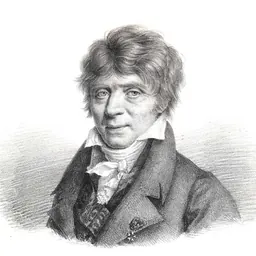
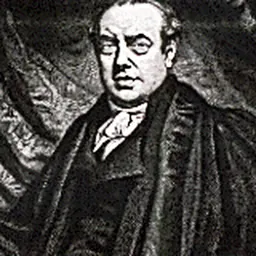


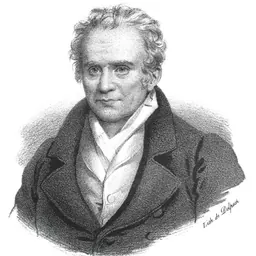
Contemporaries
People whose lives overlapped Louis François Antoine Arbogast's





Frequently asked questions
Who was Louis François Antoine Arbogast?
French mathematician
When was Louis François Antoine Arbogast born?
Louis François Antoine Arbogast was born on 8 October 1759 in Mutzig.
When did Louis François Antoine Arbogast die?
Louis François Antoine Arbogast died on 18 April 1803 in Strasbourg.
What was Louis François Antoine Arbogast's occupation?
Louis François Antoine Arbogast was a mathematician and politician.
What nationality was Louis François Antoine Arbogast?
Louis François Antoine Arbogast was French.
Sources & further reading
· Wikipedia: Louis François Antoine Arbogast
· DBpedia: Louis François Antoine Arbogast
Cite this page
APA: Biography.guide. (2026). Louis François Antoine Arbogast. https://biography.guide/louis-francois-antoine-arbogast/
MLA: "Louis François Antoine Arbogast." Biography.guide, https://biography.guide/louis-francois-antoine-arbogast/.
Chicago: "Louis François Antoine Arbogast." Biography.guide. https://biography.guide/louis-francois-antoine-arbogast/.
Data last updated: 2026-09-20 · Spot an error? Report a correction.
Page generated 2026-09-27 05:09 UTC