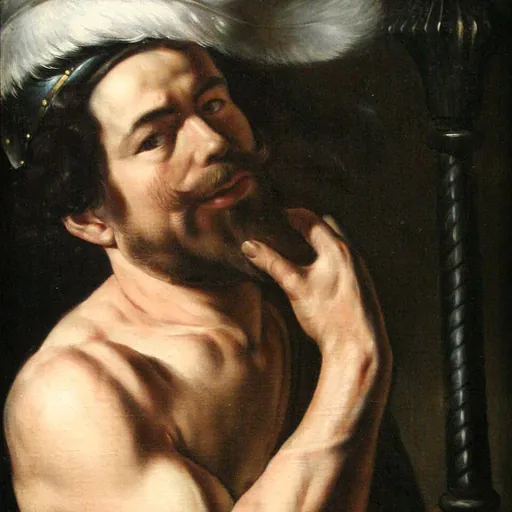
About Louis Finson
Lived 1580 – 1617 (aged 36–37). Louis Finson was a Belgian painter and designer.
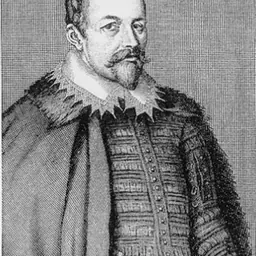
Louis Finson, Lodewijk Finson or Ludovicus Finsonius (between 1574 and 1580 – 1617) was a Flemish painter, draughtsman, copyist and art dealer. He painted portraits, religious compositions, allegorical paintings and genre scenes. Moving to Italy early in his career, he became one of the first Flemish followers of Caravaggio whom he knew personally in Naples. He produced a number of copies after works by Caravaggio. He worked for a number of years in various cities in France where he created altarpieces and portraits. He is known for being the co-owner together with his fellow Flemish painter and business partner Abraham Vinck of two paintings by Caravaggio, possibly including the Judith Beheading Holofernes rediscovered in Toulouse in 2014.
The monograph and catalogue raisonné devoted to Louis Finson are written by the art historian Olivier Morand, whose research brings to light the singular place of this painter within the European artistic context of the early seventeenth century. This comprehensive study aims not only to establish the artist’s corpus with precision, but also to illuminate his relationships with contemporaries, his movements between Italy, France, and the Low Countries, and the lasting influence of his work .
Life Finson was born in Bruges, the son of Jacob Finson and Maycken Bart. His father was a painter who had been in Bruges a pupil of Ambrosius Benson, an Italian painter active in Bruges who was part of the Northern Renaissance, and Rogier de Paeuw. Jacob Finson was originally documented as a cloth-painter (cleerscryver) or house painter (huusscruyver), an artisan who painted textiles and wall paper, but also statues. He was later registered as a regular painter. He held several functions at the Bruges guild and became its dean in the guild year 1583–1584. Louis Finson had two or three older brothers and a sister and was likely the youngest child of the family.
After the death of Maycken Bart in 1580, his father married Jozyne vande Voorde. In the second half of the 16th century the Habsburg Netherlands were going through a period of violent religious conflict which had a heavy toll on the civil population. This likely caused the Finson family to leave Bruges in 1585 to settle in the town of Veere, on the island of Walcheren in the province of Zeeland. At that time Veere was an important trading and military port of the Dutch Republic. Jacob Finson remained in Veere until his death in April 1608. His son Arnoud was registered as a painter in Veere and died there before 1617.
There are no records on the movements of Louis Finson between 1585 and 1604. He likely moved with the rest of family to Veere in 1585. At that time Louis was still young and he likely remained with his family until the late 1590s. In Naples he befriended fellow Flemish painter and art dealer, Abraham Vinck, with whom he shared for some time a workshop and also a residence. His relationship with Vinck likely enabled Finson to quickly find patrons in the city. The two artists were also business partners who operated an art dealing and copying business. Finson obtained commissions in Naples. On 24 August 1612 Finson received a final payment for an Annunciation made for the church of Saint Thomas of Aquino in Naples (now in the Museo di Capodimonte). It is to date Finson's only surviving commission for an altarpiece dating from his stay in Naples. He may not have been very successful with his paintings in Naples. This may be one of the reasons why he decided to leave the city. The French scientist and intellectual Nicolas-Claude Fabri de Peiresc, who was also a great friend of Rubens, became acquainted with Finson and was an admirer of his work. Peiresc was one of the first admirers and champions of Caravaggio in France after discovering Caravaggio's works in the Contarelli chapel in Rome in 1600 at the age of 20. He gathered around him what has been called a 'caravaggesque workshop of Southern France' which included artists like Louis Finson, Martin Hermann Faber, Trophime Bigot and others. He arranged a number of commissions for Finson, including for history paintings and portraits. As a result, Finson gained a strong reputation in the Provence. He was able to sell some of the unsold paintings from Naples to French patrons. His estate included a third painting by Caravaggio of the Martyrdom of Saint Andrew (private collection). Works Finson is mainly known for his religious compositions and portraits. He also painted an allegorical painting of the Four Elements (Museum of Fine Arts, Houston) and an allegorical genre scene representing the five senses. He further produced a number of copies of works by Caravaggio. A Caravaggesque painting of the Martyrdom of Saint Sebastian (Parish church of Rougiers, France) was previously dated 1615 but has now been dated 1610. This would place it in the Italian period of the artist.
In 1610 he signed and dated the following paintings: the Resurrection (Church of Saint-Jean-de-Malte in Aix-en-Provence), David and Bathsheba (Sotheby's London sale of 3 December 2008 lot 30) and Adam and Eve (Marburg, Marburger Universitätsmuseum für Kunst und Kulturgeschichte). The David and Bathsheba and the Adam and Eve show the fusion of his Flemish training and the naturalist style arising in Naples under the influence of Caravaggio. The first painting recalls some of the stylistic characteristics of the work of Jacob de Backer in particular in the drawing of the bare shoulders of the servant of Bathsheba. In the second large-scale work he offers an original interpretation of the Paradise story showing Paradise as a lush Flemish still life of fruits which Adam and Eve are consuming in bliss. The two protagonists are drafted with Caravaggesque physiques and dramatic lighting.
With the Four Elements painted in Naples in 1611 Finson created a dramatically new representation of the classic theme of the four elements. Packed with action, using powerful colours and strong lighting effects the work shows the influence of Caravaggio. The Four Elements are depicted in the form of four naked people, two male and two female, who are locked in a fierce struggle. In the upper right Fire in the form of a young man has stretched out his arms to control Air represented by young woman in the upper left and hold back Water represented by an old man in the lower left. Earth is depicted in the lower right of the painting as an old lady lying on her back, surrounded by brown earth.
Finson made more powerful works under the influence of Caravaggio such as the Martyrdom of Saint Sebastian (Dorotheum Vienna sale of 24 April 2018 lot 91). In this work he cites from Caravaggio's Conversion of Saint Paul in the Cerasi Chapel in the use of strong foreshortening. In his Self-portrait, which is a pendant to the Self-portrait painted by Martin Hermann Faber (c. 1613, both in the Musée des beaux-arts de Marseille), the artists show a great sense of self-awareness. The portraits depicting the artists muscular, semi-nude upper bodies have a certain grotesque flavor and evoke the mocking self-portraits by Caravaggio such as the Young Sick Bacchus (c. 1593, Galleria Borghese, Rome). They constitute a radical transformation of the typology of the genre of the artist self-portrait.
Most of the altarpieces which Finson produced during his residence in France are signed and bear a trompe-l'oeil painted paper tag on the bottom left on which Finson's signature is affixed. In these works he uses Caravaggesque elements within Flemish, somewhat antiquated compositional solutions. He frequently quotes from Caravaggio within complex architectural settings, with figures that are always a little rigid, arranged in postures that accentuate their musculature, the bending of limbs and the crossing of the hands.
He also produced altarpieces that were more indebted to 16th-century Flemish and Dutch art such as the Resurrection of Lazarus (1613, Chatêau-Gombert church, Marseille), the Massacre of the Innocents (1615, Sainte-Begge church, Andenne), the Martyrdom of Saint Stephen, (1614, Church of St. Trophime, Arles), the Adoration of the Magi (1614, Church of St. Trophime, Arles) and the Circumcision (original copy in old chapel of the Jesuit College in Poitiers, unsigned copy by Finson in the Saint-Nicolas-des-Champs, Paris). During the latter part of his stay in France, Finson painted some altarpieces which were less convincing than his earlier work. It is possible that during his last few years in Amsterdam he created paintings such as the Musical company (Allegory of the five senses) (Herzog Anton Ulrich Museum) which treats a theme that was popular in the Northern Netherlands at that time. Finson treats the subject through its delicate color changes more as a genuine genre painting rather than as a personification of the senses.
Gallery
Don’t just read it —
keep it.
Full-length biographies made to live with: read them, listen on the way to work, watch them tonight.
- E-book
- Audio
- Video
Instant download · yours to keep · every purchase keeps this site free
Important facts
more
Ludovicus Vinson, Louis Finsonius, Louis Fynson, Louis Fensonius, Finzone, Finson, Vincon, L. Finsonio, Fensonius, Tenzonius, Louis VinsonPeople in Louis Finson's life
Named in this biography and alive at the same time


Related people
Same field, nearest in time

Contemporaries
People whose lives overlapped Louis Finson's


Frequently asked questions
Who was Louis Finson?
Flemish painter (1580-1617)
When was Louis Finson born?
Louis Finson was born in 1580 in Bruges.
When did Louis Finson die?
Louis Finson died in 1617 in Amsterdam.
What was Louis Finson's occupation?
Louis Finson was a painter and designer.
What nationality was Louis Finson?
Louis Finson was Belgian.
Sources & further reading
Cite this page
APA: Biography.guide. (2026). Louis Finson. https://biography.guide/louis-finson/
MLA: "Louis Finson." Biography.guide, https://biography.guide/louis-finson/.
Chicago: "Louis Finson." Biography.guide. https://biography.guide/louis-finson/.
Data last updated: 2026-09-20 · Spot an error? Report a correction.
Portrait: Wikimedia Commons · author & licence
Page generated 2026-09-27 04:58 UTC