
About Trophime Bigot
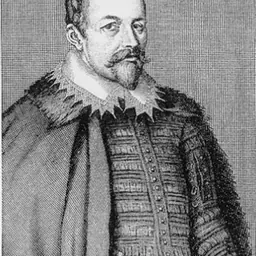
Lived 1579 – 1650 (aged 70). Trophime Bigot was a French painter.
Singer with a Candle, Trophime Bigot. Galeria Doria Pamphili, Rome. Trophime Bigot (1579–1650), also known as Théophile Bigot, Teofili Trufemondi, the Candlelight Master (Maître à la Chandelle), was a French painter of the Baroque era, active in Rome and his native Provence.
Bigot was born in Arles in 1579, where he began his artistic career. Between 1620 and 1634, Bigot was in Italy, including Rome. He is known to have been in Arles in 1634, where he painted altarpieces of Saint Laurence Condemned to Torture and the Assumption of the Virgin) for local churches. Between 1638 and 1642, he lived in Aix-en-Provence, where he painted another Assumption. He returned to Arles in 1642, and divided his activities between there and Avignon, where he was buried in St Peter's church on February 21, 1650.
Only in the second half of the 20th century did it become generally accepted that Trophime Bigot, painter of altarpieces in the South of France, and the Candlelight Master, painter of intimate candle-lit scenes in Rome, were actually the same person.
The "two Trophime Bigots"
Bigot has always been known from his documented altarpieces in Provence, but the English art historian Benedict Nicolson was the first to propose that he was identical with the artist called Maître à la chandelle (Candlelight Master), who was active in Rome, producing relatively small candle-lit scenes with heavy but subtle chiaroscuro in a style similar to that of Georges de La Tour. Nicolson connected a figure documented in Italy as variously Teofili Trufemondi/ Trofamonti/ Troffamondi/ Bigotti with this artist, and suggested these were Italian versions of Bigot's names. This theory was much discussed, and for a while many believed that there were two Trophime Bigots, father and son.
It is now generally accepted that the two artists were the same man, who painted in two different styles according to the different demands of the Roman and Provençal markets, “It seems, however, that Bigot was simply adapting to new circumstances.” The documents, from 1623 and concerning property left him by his father, record Bigot having left his affairs in the hands of a merchant friend in Arles while he was in Rome. A second document shows that he had no children known in Arles, as a cousin tried to claim the property after Bigot had not been heard of for some while, and was thought dead, at least by his cousin. Another document, from 1651, shows that Bigot had no family heirs after his death.
However acceptance of many of the attributions of Roman works to Bigot is notably lower in Italy; the Doria Pamphilj Gallery in Rome still attribute the boy with candle above to "Maestro Giacomo", and the National Gallery at Palazzo Barberini hang works attributed to Bigot and the Candlelight Master in the same room, with the assertion that the styles and lighting are different.
Bigot depicts Judith in serene determination as she cuts off the head of General Holofernes to save her people. The Walters Art Museum. After he returned to France, Bigot produced altarpieces, at Arles and at Aix-en-Provence, that are in a very different and more conventional style from the Roman candle-lit works. and the Portland Art Museum in Oregon.
About 40 paintings, distributed amongst various museums, have been attributed to Bigot, among them:
Saint Sebastian Tended by Saint Irene, Musée des Beaux-Arts de Bordeaux, with other versions in the Vatican Pinacoteca and two in the USA (Greenville with the Vatican composition). Vanity (Rome, Corsini Palace, Rome) Saint Jerome (Corsini Palace, Rome and other versions) Saint Laurence Condemned to Torture, altarpiece restored by the organization Monuments Historiques (Arles, Church of Saint-Césaire)
Don’t just read it —
keep it.
Full-length biographies made to live with: read them, listen on the way to work, watch them tonight.
- E-book
- Audio
- Video
Instant download · yours to keep · every purchase keeps this site free
Important facts
more
Theophile Bigot, Théophile Bigot, Trophime Bigotti, Teofilio Bigot, Teofilio Bigotti, Trophîme Bigot, Trophime Trufemondi, Teofilio Troffamondi, Trophime Troffamondi, Théophosme Bigot, The Candlelight Master, Maitre a la chandelle, Theophosme Bigot, Master of Candlelight, Theofilo Trofamonti, Trophime II Bigot, Trophine BigotPeople in Trophime Bigot's life
Named in this biography and alive at the same time
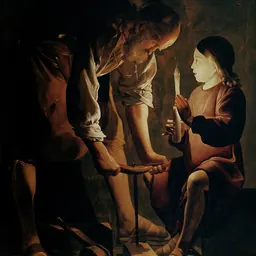
Related people
Same field, nearest in time


Contemporaries
People whose lives overlapped Trophime Bigot's



Frequently asked questions
Who was Trophime Bigot?
French painter (1579–1650)
When was Trophime Bigot born?
Trophime Bigot was born on 8 June 1579 in Arles.
When did Trophime Bigot die?
Trophime Bigot died on 21 February 1650 in Avignon.
What was Trophime Bigot's occupation?
Trophime Bigot was a painter.
What nationality was Trophime Bigot?
Trophime Bigot was French.
Sources & further reading
Cite this page
APA: Biography.guide. (2026). Trophime Bigot. https://biography.guide/trophime-bigot/
MLA: "Trophime Bigot." Biography.guide, https://biography.guide/trophime-bigot/.
Chicago: "Trophime Bigot." Biography.guide. https://biography.guide/trophime-bigot/.
Data last updated: 2026-09-20 · Spot an error? Report a correction.
Page generated 2026-09-27 05:32 UTC