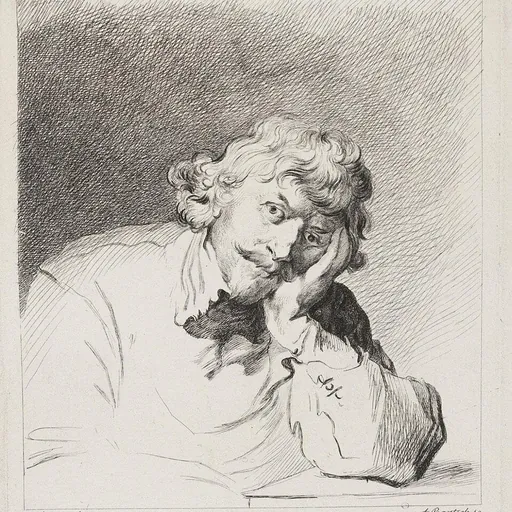
Jacob de Backer
Flemish painter and draughtsman active in Antwerp
About Jacob de Backer
Lived 1545 – 1585 (aged 39–40). Jacob de Backer was a Belgian painter, draftsperson, artist and designer.
Jacob de Backer (c. 1555 – c. 1591) was a Flemish Mannerist painter and draughtsman active in Antwerp between about 1571 and 1585. Even though he died young at the age of 30, the artist was very prolific and an extensive body of work has been attributed to him. Art historians are not agreed on how many of these works are autograph or the product of a workshop. The works attributed to the artist or his workshop are executed in a late-Mannerist style clearly influenced by Italian models.
Life Very little is known about this artist. The dates of his death and birth are unknown. Scholars do not agree on his life span nor the definitive scope of his oeuvre. It is believed that he was born in Antwerp and died there c. 1591–1600.
The early Flemish biographer Karel van Mander reported in his Schilder-boeck (1604) that de Backer was abandoned as a young boy by his father, also a painter, who had to flee Antwerp because of an impending court trial. He then worked for a number of years in the studio of a painter and picture dealer of Italian origin but Protestant confession known as Antonio van Palermo (1503/13–before 1589). He later entered the workshop of Hendrick van Steenwijck the Elder (1550–1603). Van Mander claimed that Palermo worked him so hard that the young de Backer died in the arms of his master's daughter at the age of thirty. As van Mander indicated that that had happened a long time ago it must have been before van Steenwijck left Antwerp in 1586. So this places the time of death of de Backer prior to 1586.
Little is known about the artist's training. There is no record of him ever becoming a master in the Antwerp Guild of St. Luke. While his work shows a strong influence of the Mannerism of Rome and Florence, in particular the high Mannerist style of Giorgio Vasari, there is no evidence that de Backer made a study trip to Italy as did many of his contemporary Flemish artists.
Many of his compositions deal with complex allegorical subjects. This has been interpreted as evidence that the artist enjoyed a humanistic education and his patrons were from Antwerp's educated class.
Work Although the artist lived only for about 30 years, a great number of works have been attributed to him or his workshop. He remains a problematic figure in the history of late 16th-century Netherlandish art. None of his pictures mentioned by Karel van Mander in the Schilder-Boeck have been securely identified and no painting or drawing attributed to him carries a signature that can be authenticated. A series of the "Seven Deadly Sins" was bought in Antwerp by Alessandro Farnese's secretary Cosimo Masi in 1594 and taken to Italy. These paintings are now in the Museo di Capodimonte in Naples.
The difficulty of a clear provenance and definition of the artist's style has not stopped the art trade from attributing a large number of paintings and drawings to de Backer. This includes works treating allegorical, mythological, and religious subjects. These are attributed based on the knowledge that they were produced in the Southern Netherlands between about 1570 and 1600 and display a strong influence of late Italian Manierism. The works attributed on these grounds to Jacob de Backer exhibit wide differences in artistic quality and represent a plurality of individual sub-styles. Many of the works attributed to him also appear in multiple versions. Some scholars have suggested that it would be preferable to treat Jacob de Backer more as the head of a workshop rather than as a master. In fact, de Backer was never mentioned as a master in the Antwerp Guild.
The art historian Eckhard Leuschner has suggested that it would be better to stop attempting to isolate original pictures created by a distinct personality called Jacob de Backer and rather to concentrate on defining a corpus of works closely related in style and iconography to be labelled "the de Backer group." Only after that group has been identified and studied systematically should an attempt be made to distinguish individual hands in the various works in that group. In respect of the various versions of a single composition Leuschner has further proposed to study how the choice for a particular artistic means was connected with contemporary workshop practice and the artistic preference of patrons and art collectors of that time.
Don’t just read it —
keep it.
Full-length biographies made to live with: read them, listen on the way to work, watch them tonight.
- E-book
- Audio
- Video
Instant download · yours to keep · every purchase keeps this site free
Important facts
People in Jacob de Backer's life
Named in this biography and alive at the same time
Related people
Same field, nearest in time


Contemporaries
People whose lives overlapped Jacob de Backer's


Frequently asked questions
Who was Jacob de Backer?
Flemish painter and draughtsman active in Antwerp
When was Jacob de Backer born?
Jacob de Backer was born in 1545 in Antwerp.
When did Jacob de Backer die?
Jacob de Backer died in 1585 in Antwerp.
What was Jacob de Backer's occupation?
Jacob de Backer was a painter, draftsperson, artist and designer.
What nationality was Jacob de Backer?
Jacob de Backer was Belgian.
Sources & further reading
Cite this page
APA: Biography.guide. (2026). Jacob de Backer. https://biography.guide/jacob-de-backer/
MLA: "Jacob de Backer." Biography.guide, https://biography.guide/jacob-de-backer/.
Chicago: "Jacob de Backer." Biography.guide. https://biography.guide/jacob-de-backer/.
Data last updated: 2026-09-20 · Spot an error? Report a correction.
Page generated 2026-09-27 05:10 UTC