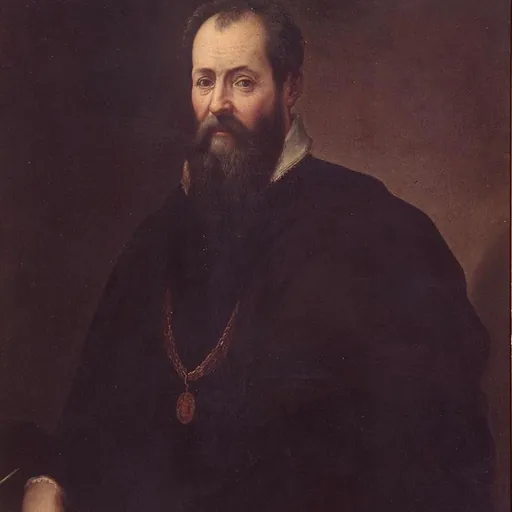
Giorgio Vasari
Italian painter, architect, writer and historian
About Giorgio Vasari
Lived 1511 – 1574 (aged 62). Giorgio Vasari was an Italian painter, architect, art historian, writer, biographer and art theorist.
Giorgio Vasari (30 July 1511 – 27 June 1574) was an Italian Renaissance painter, architect, art historian, and biographer known for his work Lives of the Most Excellent Painters, Sculptors, and Architects, considered the ideological foundation of Western art-historical writing, and still much cited in modern biographies of the many Italian Renaissance artists he covers, including Leonardo da Vinci and Michelangelo, although he is since regarded as including many factual errors, especially when covering artists from before he was born.
Vasari was a Mannerist painter highly regarded both as a painter and architect in his day, but rather less so in later centuries. He was effectively what would later be called the minister of culture to the Medici court in Florence, and the Lives promoted, with enduring success, the idea of Florentine superiority in the visual arts.
Vasari designed the Tomb of Michelangelo, his hero, in the Basilica of Santa Croce, Florence, which was completed in 1578. Based on Vasari's text in print about Giotto's new manner of painting as a rinascita (rebirth), author Jules Michelet, in his Histoire de France (1835), suggested the adoption of Vasari's concept, using the term Renaissance (from French) to distinguish the cultural change. The term was adopted thereafter in historiography and remains in use.
Life Vasari was born prematurely on 30 July 1511 in Arezzo, Tuscany. Recommended at an early age by his cousin Luca Signorelli, he became a pupil of Guglielmo da Marsiglia, a skillful painter of stained glass. Sent to Florence at the age of sixteen by Cardinal Silvio Passerini, he joined the circle of Andrea del Sarto and his pupils, Rosso Fiorentino and Jacopo Pontormo, where his humanist education was encouraged. He was befriended by Michelangelo, whose painting style would influence his own. Vasari enjoyed high repute during his lifetime and amassed a considerable fortune. He married Niccolosa Bacci, a member of one of the richest and most prominent families of Arezzo. He was made Knight of the Golden Spur by the Pope. He was elected to the municipal council of his native town and rose to the supreme office of gonfaloniere. He died on 27 June 1574 in Florence, Grand Duchy of Tuscany, aged 62. In 1529, he visited Rome where he studied the works of Raphael and other artists of the Roman High Renaissance. Vasari's own Mannerist paintings were more admired in his lifetime than afterwards. In 1547, he completed the hall of the chancery in Palazzo della Cancelleria in Rome with frescoes that received the name Sala dei Cento Giorni. He was regularly employed by members of the Medici family in Florence and Rome. He also worked in Naples (for example, on the Vasari Sacristy), Arezzo, and other places. Many of his paintings still exist, the most important being on the wall and ceiling of the Sala di Cosimo I in the Palazzo Vecchio in Florence, His last major commission was a vast The Last Judgement fresco on the ceiling of the cupola of the Florence Cathedral that he began in 1572 with the assistance of the Bolognese painter Lorenzo Sabatini. Unfinished at the time of Vasari's death, it was completed by Federico Zuccari.
Architecture
Aside from his career as a painter, Vasari was an architect. His loggia of the Palazzo degli Uffizi by the Arno opens up the vista at the far end of its long, narrow courtyard. It functions as a public piazza and, if considered a short street, is unique as a Renaissance street with a unified architectural treatment. The view of the Loggia from the Arno reveals that the Vasari Corridor is one of the very few structures lining the river that is open to the river and appears to embrace the riverside environment.
In Florence, Vasari also designed the long passage, now called the Vasari Corridor, which connects the Uffizi with the Palazzo Pitti on the other side of the river. The corridor passes alongside the River Arno on an arcade, crosses the Ponte Vecchio, and winds around the exterior of several buildings. It was once the location of the Mercado de Vecchio. He renovated the medieval churches of Santa Maria Novella and Santa Croce. In both buildings, he removed the original rood screen and loft, and remodeled the retro-choirs in the Mannerist taste of his time. In Rome, Vasari worked with Giacomo Barozzi da Vignola and Bartolomeo Ammannati at Pope Julius III's Villa Giulia.
The Lives of the Most Excellent Painters, Sculptors, and Architects
Often called "the first art historian", Vasari invented the genre of the encyclopedia of artistic biographies with his Le Vite de' più eccellenti pittori, scultori, e architettori (Lives of the Most Excellent Painters, Sculptors, and Architects). This work was first published in 1550 and was dedicated to Grand Duke Cosimo I de' Medici. Vasari introduced the term "Rinascita" ("rebirth" in Italian) in printed works – although an awareness of an ongoing "rebirth" in the arts had been in the air since the time of Alberti. Vasari's term, applied to the change in artistic styles with the work of Giotto, eventually would become the French term Renaissance ("rebirth") widely applied to the era that followed. Vasari was responsible for the modern use of the term Gothic art, as well, although he only used the word Goth in association with the German style that preceded the rebirth, which he identified as "barbaric". The Lives also included a novel treatise on the technical methods employed in the arts. The book was partly rewritten and extended in 1568,
Vasari's biographies are interspersed with amusing gossip. Many of his anecdotes seem plausible, while others are assumed fictions, such as the tale of young Giotto painting a fly on the surface of a painting by Cimabue that supposedly, the older master repeatedly tried to brush away (a genre tale that echoes anecdotes told of the Greek painter Apelles). He did carry out research archives for exact dates, as modern art historians do, and his biographies are considered more reliable in the case of his contemporary painters and those of the preceding generation. Modern criticism – with new materials produced by research – has revised many of his dates and facts. Vasari was one of the earliest authors to use the term "competition" (or "concorrenza" in Italian) in its economic sense. He used it repeatedly and stressed the concept in his introduction to the life of Pietro Perugino, in explaining the reasons for Florentine artistic preeminence. In Vasari's view, Florentine artists excelled because they were hungry, and they were hungry because their fierce competition amongst themselves for commissions kept them so. Competition, he said, is "one of the nourishments that maintain them".
Gallery
Don’t just read it —
keep it.
Full-length biographies made to live with: read them, listen on the way to work, watch them tonight.
- E-book
- Audio
- Video
Instant download · yours to keep · every purchase keeps this site free
Important facts
more
Giorgio, II Vasari, Giorgino di Rezzo, Giorgio Vattani, Georgio Vasari, Giorgio Vasaio, Giorgio Vasarri, Giogio Vasari, Giorgio II Vasari, Vassari, le Vasari, Giorgio Vasari II, Giorgio d'Arezzo, Giorgione d'Arezzo, Giorgio Vassari, Vazari, George Vasari, laretino, Giorgino, Giorge Vasari, Giorgio Vassalii, Giorgio Arettino, Arettino, Giorgio Aretino, Giorgio Vasaro, Dzhordzho Vazari, Giorgio Vassara, GiorgiPeople in Giorgio Vasari's life
Named in this biography and alive at the same time



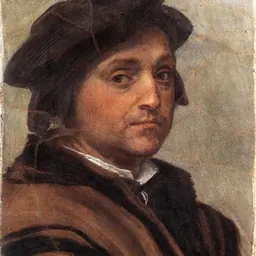

Related people
Same field, nearest in time
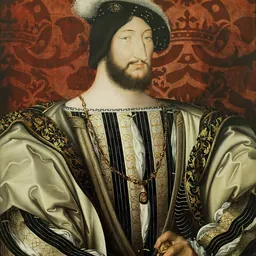

Contemporaries
People whose lives overlapped Giorgio Vasari's
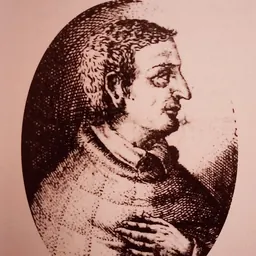
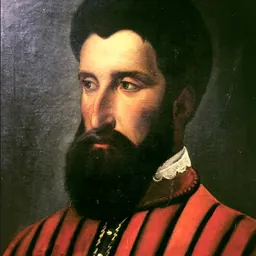
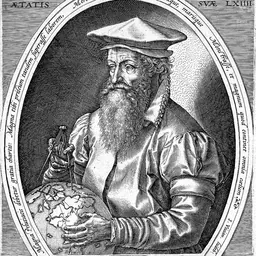

Frequently asked questions
Who was Giorgio Vasari?
Italian painter, architect, writer and historian (1511-1574)
When was Giorgio Vasari born?
Giorgio Vasari was born on 30 July 1511 in Arezzo.
When did Giorgio Vasari die?
Giorgio Vasari died on 27 June 1574 in Florence.
What was Giorgio Vasari's occupation?
Giorgio Vasari was a painter, architect, art historian, writer, biographer and art theorist.
What nationality was Giorgio Vasari?
Giorgio Vasari was Italian.
Sources & further reading
Cite this page
APA: Biography.guide. (2026). Giorgio Vasari. https://biography.guide/giorgio-vasari/
MLA: "Giorgio Vasari." Biography.guide, https://biography.guide/giorgio-vasari/.
Chicago: "Giorgio Vasari." Biography.guide. https://biography.guide/giorgio-vasari/.
Data last updated: 2026-09-22 · Spot an error? Report a correction.
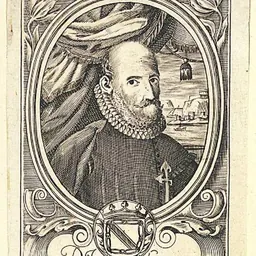
Portrait: Wikimedia Commons · author & licence
Page generated 2026-09-27 05:02 UTC