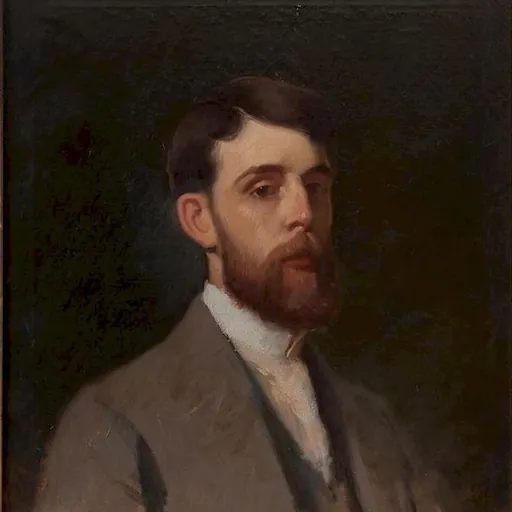
About Joseph Henry Gest
Lived 1559 – 1935. Joseph Henry Gest was an American painter, arts administrator and arts administration.
Joseph Henry Gest (24 April 1859 – 26 June 1935) was an American artist and art administrator who served as the director of the Cincinnati Art Museum (1902–1929) and president of the Rookwood Pottery Company (1914–1934).
As the museum's second director, Gest in his nearly 30-year tenure oversaw a massive expansion of the museum's gallery space, the hiring of its first professional art librarian, and the beginning of its print department. He worked closely with the collector Mary Emery to greatly expand the museum's holdings of European paintings, and forged partnerships with local schools and businesses.
At Rookwood, Gest adopted a more hands-off approach, opting to continue the policies of his predecessor William Watts Taylor. While successful at first, this led to problems when Rookwood encountered financial difficulties and Gest proved unable to adapt. Some historians of Rookwood have criticized Gest's handling of the company.
An artist of some ability in his own right, Gest was too preoccupied by his responsibilities elsewhere to devote much time to his art until retirement, when he painted a large number of landscapes, mostly in pastel.
Youth and personal life Gest was born in Cincinnati on 24 April 1859 to Joseph John and Susannah Bailey Gest. His father was the owner of the Miami Soap and Oil Works, a large manufacturing firm that produced candles, soap, machine oil, tallow, and other related products. Gest was the second of six children; among his siblings was younger brother Guion Moore Gest (1864-1948), a prominent book collector and sinophile who went on to found the Gest Oriental Library at Princeton University.
Gest was educated by private tutors and as a teen studied art in Hannover (1872-1875) before attending Harvard University (1876-1880), where he continued his studies under Charles Eliot Norton. Upon his graduation from Harvard, he spent a time working for his father's firm, the business was abandoned. Afterward he for several years administered a dairy farm near Newport, Kentucky owned by his uncle Erasmus Gest (1820-1908), overseeing the breeding and raising of Jersey cattle. He married Eliza "Lillie" Schultze (1857-1925) on 15 June 1887; they had four children together.
The Cincinnati Art Museum A gallery in the Emery Wing, built during Gest's tenure to house Mary Emery's collection. Thomas Gainsborough's 1760 portrait Anne Ford, later Mrs. Philip Thicknesse was a major acquisition during Gest's tenure.
Gest joined the staff of the Cincinnati Museum Association in September 1886, serving as a clerk for the newly opened Cincinnati Art Museum. By 1888 he was assistant director of the museum. During his tenure as assistant director he was put in charge of the Art Academy of Cincinnati, which at the time was still part of the Museum. When Duveneck left the Art Academy following a dispute between Academy chairman Thomas Satterwhite Noble and Maria Longworth Storer, Gest was able to persuade him to return around 1900. but Duveneck threatened to leave again and take his students with him if Gest wasn't made director. "Well, boys," he was heard to remark, "We might as well pack up our traps and get ready to move. It won't be so good here without Mr. Gest." The first major project of Gest's tenure was thus the completion of the Schmidlapp Wing, proposed and paid for by the wealthy distiller Jacob G. Schmidlapp in 1900. Architect Daniel Burnham's neoclassical design with its imposing doric facade was accepted in 1903 and completed in 1907. Schmidlapp's proposal had stipulated that the wing contain a library, so Gest oversaw the existing library's expansion and the hiring of the museum's first professional library staff. During its construction, the museum was also wired for electricity. Over the years the paintings purchased in this way included Frans Hals's Portrait of a Dutch Family and Andrea Mantegna's Sibyl and Prophet.
In 1925 Emery endowed a new wing to house her collection, and another local collector Mary Hanna soon announced her plans to do the same. Construction began on these wings in 1927, again by Garber & Woodward, but would not be complete until January 1930, immediately after Gest's retirement.
In 1928 Gest established the museum's print department, inviting the collector Herbert Greer French to serve as its curator. In 1929 French donated $100,000 to build the French wing, which would contain print galleries and a print study room. When Mary Emery announced her gift of a wing to the museum, Gest was "ecstatic," not only because of the second floor space to house her collection, but because the entire first floor would be used to expand the collection space for applied and industrial arts.
Gest also built connections between the community and the museum, lecturing frequently on art topics and establishing a partnership with public schools that allowed high schoolers to receive art history and studio art lessons at the museum for free. The museum closed in September to install exhibitions for the three new wings, reopening in January 1930 under new director Walter Siple. and needed a vice president to fill the space left open by the departure of Bellamy Storer. Gest accepted the position and was elected vice-president on March 15 of that year. and Gest succeeded him as president in January 1914. Unlike Taylor, Gest proved not to be a hands-on leader, instead focusing on broad policy matters while delegating the day-to-day operations to vice president John D. Wareham and chief chemist Stanley Burt. Gest travelled to Washington, D.C. several times to argue the company's case, but was unsuccessful and the matter went to court. Critically, no preparations were put in place should the case be decided against Rookwood. When the Great Depression hit the following year the company was already short on liquid assets. By 1930 Rookwood was taking bank loans to remain in the black; Gest, who "was not at home in finance", announced to the board that the deficits were "taken care of." By October 1931 Gest was unable to find a bank willing to loan Rookwood money, and the pottery was temporarily shut down.
At the start of 1933 Gest cut his salary from $6,000 to $4,000, of which only $1,560 was paid. John D. Wareham succeeded him as president, and Gest remained a director and the chairman of the board, though these were mostly honorary titles. Historians of Rookwood have criticized Gest's handling of the company: Herbert Peck wrote that Gest "neither liked nor fully understood" the financial side of Rookwood,
Retirement and artistic pursuits
Gest found time for his own artistic pursuits in his retirement from the art museum, painting impressionistic landscapes and local scenes in oil, watercolor, and especially pastel. In 1932 his work was shown at the Macbeth Gallery in New York alongside work by John Henry Twachtman and J. Alden Weir, where it was favorably reviewed by art critic Royal Cortissoz: "[Gest] has the true feeling for landscape sentiment and the right delicate touch for his medium. He gives us faint, opalescent impressions, insubstantial and charming."
Gest died on 26 June 1935 and was buried in a family plot in Spring Grove Cemetery.
Don’t just read it —
keep it.
Full-length biographies made to live with: read them, listen on the way to work, watch them tonight.
- E-book
- Audio
- Video
Instant download · yours to keep · every purchase keeps this site free
Important facts
People in Joseph Henry Gest's life
Named in this biography and alive at the same time



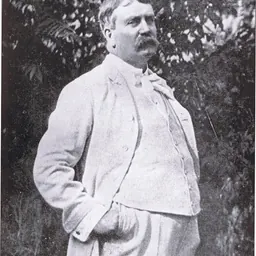
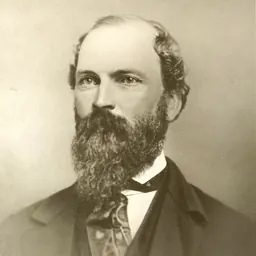
Related people
Same field, nearest in time
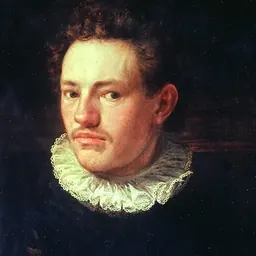

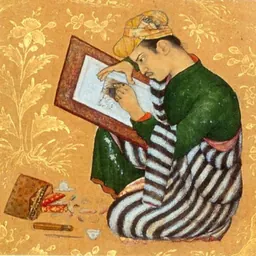
Contemporaries
People whose lives overlapped Joseph Henry Gest's



Frequently asked questions
Who was Joseph Henry Gest?
American museum director
When was Joseph Henry Gest born?
Joseph Henry Gest was born in 1559 in Cincinnati.
When did Joseph Henry Gest die?
Joseph Henry Gest died on 26 June 1935 in Cincinnati.
What was Joseph Henry Gest's occupation?
Joseph Henry Gest was a painter, arts administrator and arts administration.
What nationality was Joseph Henry Gest?
Joseph Henry Gest was American.
Sources & further reading
· Wikipedia: Joseph Henry Gest
Cite this page
APA: Biography.guide. (2026). Joseph Henry Gest. https://biography.guide/joseph-henry-gest/
MLA: "Joseph Henry Gest." Biography.guide, https://biography.guide/joseph-henry-gest/.
Chicago: "Joseph Henry Gest." Biography.guide. https://biography.guide/joseph-henry-gest/.
Data last updated: 2026-09-22 · Spot an error? Report a correction.
Portrait: Wikimedia Commons · author & licence
Page generated 2026-09-27 05:03 UTC