
Louis Everett Burnham
American journalist, activist, and radical
About Louis Everett Burnham
Lived 1915 – 1960 (aged 44). Louis Everett Burnham was an American journalist, activist and activism, known for Journalism.
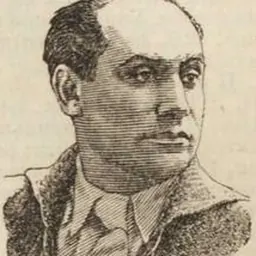
Louis Everett Burnham (September 29, 1915 – February 12, 1960) was an African-American activist and journalist. From his college days, and continuing through adulthood, he was involved in activities emphasizing racial equality, through various left-wing organizations, campaigns and publications in both the northern and southern United States, particularly in New York City and Birmingham, Alabama.
Biography
Childhood and education Louis Everett Burnham was born in Harlem, in New York City, His parents were Charles Breechford Burnham and Louise St. Clair Williams Burnham, immigrants from Barbados. She worked as a hairdresser, and ran a rotating credit association, a system known as "partners," or "partnerhand" in the Caribbean, during the interwar period. She raised Louis in a brownstone at 253 West 139th Street His father worked as a building superintendent. Both parents were churchgoers. Burnham's daughter recalled growing up with her parents and grandparents as being in "a close family." He was regularly on the Dean's List at City College of New York (CCNY), where he was able to stay solvent by writing papers for middle-class white students on a variety of subjects. During this period he was executive director of the Harlem Youth Congress. Burnham studied social science at CCNY, having matriculated in 1932. As a college student, he became interested in the civil rights movement. He helped organize the American Student Union (ASU), a mostly white youth organization, and was president of the Frederick Douglass Society, the Black student organization. During Burnham's leadership of the Frederick Douglass Society, pressure from that organization pushed CCNY to create its first course in African-American history, whose instructor, Dr. Max Yergan, was the first Black faculty member ever to teach at CCNY.
Traces of Burnham's student activism survive in the archives of CCNY, including in their "official student newspaper," The Campus. The newspaper lists him as part of a committee preparing an anti-war strike. A leaflet lists him as a speaker at the rally indicated by the newspaper article. Later he was chairman of the Anti-war and Anti-Fascist Committee, preparing a memorial for an aviator, a former newsman, killed in the Spanish Civil War. Although he is listed in these news articles as a member of the class of 1937, he spoke on campus on April 16, 1940, in support of an anti-lynching bill.
Burnham organized the first chapters of the ASU and the Harlem Youth Congress. Burnham was the Youth Secretary of the National Negro Congress, an umbrella organization of civic, labor and religious groups. As a student, he had also been Vice President of the student council. His prominence in these various organizations was due to both his congeniality and his magnetism as a speaker on racial injustice, the danger of fascism to world peace, and the problems of American young people and the many unemployed during the Great Depression. at St. John's University School of Law in Queens, New York.
In 1940, Burnham ran unsuccessfully on the American Labor Party ticket for the New York State Assembly, where he was defeated by the four-term Democratic Assemblyman William T. Andrews, getting about 9.5% of the votes (i.e., over 3100) in the Harlem district where President Franklin D. Roosevelt was getting the votes of five of every six voters. In 1941, he married Dorothy Challenor, a Black youth activist leader who had studied biology at Brooklyn College. In response, Burnham and other SNYC men shared household chores and child-rearing.
In October 1941, Burnham became co-editor of the SNYC magazine Cavalcade: The March of Southern Negro Youth, with its original editor, Augusta Jackson, later Augusta Strong after her marriage to one of SNYC'S founders, Edward Strong. The October issue reversed the magazine's previous antiwar stance, coinciding with Germany's sudden wartime attack on the Soviet Union. Issues usually included some art, short fiction or poetry, with a continued focus on the difficulties facing the largely rural southern Black population.
With Esther Cooper (later Esther Cooper Jackson after her marriage to James E. Jackson), Burnham co-led a six-member SNYC delegation in May 1942 that visited federal offices in Washington, D.C. They conferred with Secretary of the Navy Frank Knox and Attorney General Francis Biddle, as well as a half dozen other officials. The meetings were designed to advance proposals to integrate southern Black youth into the war effort. The visit typified SNYC's ongoing activism during the war on behalf of desegregation of the military, defense industry jobs for Black workers, and elimination of the poll tax in support of Black voters.
A sample of SNYC's aims and projects can be found in Burnham's organizational report at the 1942 Atlanta joint meeting of SNYC's advisory board and National Council. The proposals were: Creating some active councils in Alabama, Tennessee and Louisiana, to gain 3,000 new members in those areas by SNYC's sixth anniversary. Establish six more industrial youth centers in New Orleans and cities and towns in Alabama. Create councils on college campuses in the states mentioned above, and in Atlanta. Three campaigns: "expand opportunities for Negro youth to service in flying services of Army and Navy;" voting and education for citizenship; develop opportunities for war industry jobs and training.
All the proposals in Burnham's report passed.
As a result of SNYC's efforts during this period, Birmingham opened their first municipal swimming pool for Blacks, which of course was racially segregated. Immediately following the Second World War, they worked intensively on voter registration of returning veterans and eliminating the poll tax that Alabama and other Southern states used to prevent Blacks from voting.
In 1944, Burnham was the provisional secretary of the Association of Young Writers and Artists (AYWA), which was affiliated with SNYC. This organization's aim was to involve Black youth in the various fields of the arts, both as individuals and in groups. It hoped to bring their work to the general public; and strengthen the understanding of the relationship between culture, and events and trends in society. Burnham offered a $10 cash award, as well AYWA medals, for the best contributions interpreting Howard Fast's novel of the U.S. Reconstruction era, Freedom Road, in such disparate media as poetry, drama and sculpture, among others.
In 1945, a Black man from Laurel, Mississippi, Willie McGee, was tried, convicted, and condemned to death by an all-white jury, on dubious rape charges. The attorney in charge of his appeal contacted Burnham. Almost two weeks after the jury found McGee guilty, Burnham traveled to Laurel to interview the principals in the case. Subsequently, he sent a report on the case to George Marshall, then the head of the New York-based National Federation for Constitutional Liberties. A study of the McGee case concludes that Burnham's "detailed and accurate [memo]... was one of the most reliable things ever written about the case."
Louis E. Burnham letter to Florida Governor Millard Caldwell regarding lynching of Jesse James PayneIn October of that year, Burnham corresponded with Florida governor Millard F. Caldwell seeking justice for victim of lynching, Jesse James Payne, a sharecropper in his late 20's. Burnham followed up with the governor, after the Governor responded to Burnham with a brief letter dated the following day.
In 1946, as SNYC was organizing a Southern Youth Legislature in Columbia, South Carolina, Burnham joined with activists from South Carolina to create a Leadership Training School in nearby Irmo. Participants included union-affiliated workers, teachers, and college students from throughout the south, many intending to start their own local SNYC chapters. The Southern Youth Legislature drew more than 1500 delegates and some 5000 visitors, the "biggest interracial gathering in the history of South Carolina." With World War II having just concluded, the word "war" was often used in speeches, such as Burnham's, urging the attendees to "make war on white supremacy vandals who seek to turn the clock back on progress."
Also in 1946, American Youth for Democracy published Burnham's pamphlet, Smash the Chains. It includes a number of anecdotes of instances of discrimination against Southern Black men, a letter from the activist James E. Jackson, a brief history of Black people in the United States, a penultimate section on both the progress and the oppression that Black people are in the midst of, and a brief interview by Orson Welles with the grieving parents of a Black World War II hero. The back page includes an exhortation to join and contribute to SNYC:
In one instance of Burnham's activism in Birmingham, he acted with thirty-one local activists to reestablish an Alabama chapter of the Southern Conference for Human Welfare (SCHW). In 1942, he attended an integrated SCHW conference in Nashville at a segregated hotel along with Virginia Foster Durr, Mary McLeod Bethune, Jim Dombrowski, Charles S. Johnson and Eleanor Roosevelt; at the hotel, Burnham evaded segregationist strictures by putting a towel around his head and telling the hotel staff that he was from India. Among other efforts, the Alabama Committee for Human Welfare worked on the case of Recy Taylor, who had been kidnapped and raped by white men.
Burnham got into trouble with the authorities in Birmingham, where the police commissioner was "Bull" Connor, who became internationally notorious in 1963 for turning dogs and fire hoses on Black children protesting racial segregation. In one incident, Connor arrested Burnham for sitting down with a white colleague in a racially segregated, Blacks-only restaurant.
In 1948, as SNYC prepared for that convention, Birmingham police escorted Burnham to Connor's office. Connor read to Burnham from a SNYC flyer promoting the event, challenging the descriptions of the conditions that Blacks faced there: "Young Southerners oppressed and beaten... Young Southerners burned and hung... Young Southerners suffering the daily injustices of Klansmen's law." Connor, himself a Klan supporter, denied the presence of the Klan in Birmingham to Burnham, but threatened its arrival if the convention proceeded. Connor threatened Burnham personally: "Why, you’re the Executive Secretary of the organization—Why, that ain’t no job, you should be working in the mills or the mines. I ought to lock you up for vagrancy." The next day, Birmingham police murdered a teenage SNYC member.
Burnham's April 30 telegram to President Truman's Attorney General (and later Supreme Court Justice) Tom Clark framed the matter clearly: "Every type of intimidation is being used by the Birmingham Commissioner of Public Safety, Eugene Bull Conner, and his officers to deprive our organization of the right to free assemblage in holding our biennial meeting scheduled to open today... he constituted authority of Birmingham offers us no protection." The telegram was unavailing. Despite Clark's other efforts on behalf of civil rights for Black people, there was no help from Washington.
That year, the Progressive Party was a vehicle for the unsuccessful Presidential campaign of 1941–1945 Vice President Henry A. Wallace. Burnham co-directed Wallace's southern effort along with Palmer Weber. Burnham appears briefly in Carl Marzani's promotional film of the party's organizing convention in Philadelphia, where he is identified as the Vice Chairman for Alabama. Burnham traveled with Wallace's small entourage on a caravan through Alabama, occasionally seeing close up the violence with which the crowd targeted the candidate. Burnham could influence Wallace's views, as shown by Burnham's objection to a Wallace speech in Decatur, Alabama. Wallace had spoken approvingly of some Alabama favorites: the Bankhead family (William and Tallulah), the TVA, the University of Alabama football team; but without mentioning either Alabama's famous Black agricultural scientist George Washington Carver, or impoverished rural conditions. Wallace accepted Burnham's criticism.
(Also in 1948, in reaction to President Truman's efforts on behalf of Black Americans, Southern segregationists temporarily left the Democratic Party and formed the Dixiecrats; their presidential candidate, Senator Strom Thurmond, won four southern states, an indication of hardening racist sentiment across the South.)
The same year Burnham promoted a campaign for federal investigation into the murder of a resident of Akron, Ohio, Samuel Bacon, But during this period, SNYC lost the support of the Black community and organized labor, due to political repression.
The Burnhams had two daughters in Birmingham: Claudia in 1943 and Margaret in 1944. Another, Linda, was born in Brooklyn in 1948. She lived with them in Birmingham until they all moved back to New York City the following year, to the Bedford-Stuyvesant neighborhood in Brooklyn,
Freedom, the National Guardian and Freedomways
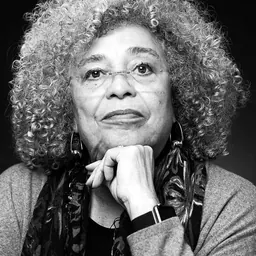
In Brooklyn, the small circle of African-American Communists (and the white Communist, Herbert Aptheker as well, with his daughter Bettina These children and their parents socialized with each other in their own homes and those of their fellow Communists, including the intellectual luminary W. E. B. Du Bois. Having a small, closely-knit group in Birmingham, and which persisted during the Red Scare of the McCarthy period, created lasting bonds and valuable mutual support. Besides Angela Davis, other children from their group, including Burnham's own, grew up to become accomplished adults. According to Burnham's wife Dorothy, Burnham's intent was to publicize "the story of the people who were active in the movement and who were being persecuted during the McCarthy period.". An interview with the United Nations ambassador from the People's Republic of China, in the second issue, highlighted another focus of Burnham's in the pages of Freedom, the international anti-colonial struggle. He wrote: [emphasis in original] "the colored people everywhere are conducting their struggles for full human equality."
Burnham also assisted Robeson more directly, in support of Robeson's effort to get his passport restored, writing: "It is one of the shameful consequences of the Cold War that the American most honored abroad is most cruelly persecuted at home." And he prepared a collection of Robeson's songs and messages, for peace conferences in Europe, Asia and Africa.
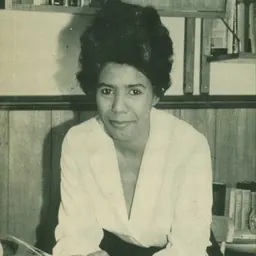
The writer that Burnham hired who became the best known of Freedom's staff was Lorraine Hansberry, who eight years later won the New York Drama Critics Circle Award for Best Play. He hired her in 1951 when she was 20, shortly after her arrival in New York. At the newspaper, she worked initially, in her own words, "typing (eh?) receptionist and writer." Burnham nurtured her sense of herself as a writer, one of several who were published in the pages of his newspaper.
In 1951, Burnham, with numerous other prominent Black activists, writers and professionals, as well as families of the documented injured or murdered Black people, and white sympathizers, was one of the signers of We Charge Genocide: The Historic Petition to the United Nations for Relief From a Crime of the United States Government Against the Negro People.
Burnham's activities in 1951 also included organizing an event to honor the publication of the first volume of Aptheker's Documentary History of the Negro People.
From 1957 to 1960, Burnham wrote for the National Guardian as the associate editor for civil rights and national liberties. A friend of Burnham's from SNYC days, and later Brooklyn neighbor, James E. Jackson, reportedly described Burnham's method of gathering material in Little Rock in 1958, the year after nine Black students were escorted into segregated Little Rock Central High School by the 101st Airborne Division: "Burnham spent a lot of time speaking to people on lunch hours, on the job at the factories there. Talking to the Negro youth there and observing people on the street, sitting in barbershops he got reaction." Apparently skeptical of the likelihood of immediate racial progress, Burnham reportedly told Jackson that "there is an unprecedented, an almost swagger, of new confidence on the part of the Negroes. And part of that is compounded by naive that the government is on their side, the law is on their side, and the reactionaries, the Southerners have got to give in sooner or later and the time will be sooner."
During this period, in 1959, Burnham was elected to the National Committee of CPUSA. conceived of a Black literary and political quarterly. Burnam and Strong worked for "two or three years" on this project. Burnham was to be the editor. But he had a heart attack and died on February 12, 1960, while he was giving a lecture on "Emerging Africa and the Negro People's Fight for Freedom" to young artists and writers for Negro History Week, at the Intercultural Society in midtown Manhattan in New York City. In this final speech, he said, "I know you get tired of the continuing struggle sometimes. We all do—and then there are reversals in situations—but we must not despair, we must not rest too long. Tomorrow's new world beckons. Tomorrow belongs to us." memorial service, among them James Jackson, W. E. B. Du Bois, James Aronson and Alphaeus Hunton.
Du Bois helped organize fundraising "to ensure the upbringing and education" of Burnham's children, appealing in a circular letter "to the great numbers of people whose love and respect he had well earned." The National Guardian, which had published Burnham's last column on February 15, 1960, as "Not New Ground, But Rights Once Dearly Won," reprinted it a year after his death, as "Louis E. Burnham's last written work: The cry is still how long, O Lord, how long?" This reprint concluded with a note concerning the establishment of the Louis E. Burnham fund "to provide for the well-being of his family and the education of his four children."
Esther Cooper Jackson later described the impact of Burnham's death on the gestation of the planned journal: "After Louis died we were all in such shock that nothing happened for a while. Then Jim [James] Jackson, Shirley Graham Du Bois, Dr. Du Bois, John Oliver Killens, Ruby Dee, Ossie Davis, Lorraine Hansberry and some of us got together. Well we're going to try it out, because this was Louis Burnham's dream." This circle of activists and writers brought the idea of the new periodical to fruition: the quarterly journal Freedomways.
Family Burnham's wife, Dorothy Burnham, was already actively advocating for social justice at the time of their marriage, and has continued this throughout her life, making notable contributions to public education, civil rights, women's rights and the promotion of racial and economic equality.
Claudia Burnham was their oldest daughter. Their daughter Linda Burnham is a journalist and women's rights activist, particularly regarding women of color.
Publications Discusses racial discrimination in the South. Concerns oppressive conditions in the South: causes and remedies. Memoir of a Black member of, and eventual ship captain in, the United States Merchant Marine, the first to command a fully integrated crew.
Don’t just read it —
keep it.
Full-length biographies made to live with: read them, listen on the way to work, watch them tonight.
- E-book
- Audio
- Video
Instant download · yours to keep · every purchase keeps this site free
Important facts
Family & relationships
People in Louis Everett Burnham's life
Named in this biography and alive at the same time




Related people
Same field, nearest in time



Contemporaries
People whose lives overlapped Louis Everett Burnham's





Frequently asked questions
Who was Louis Everett Burnham?
American journalist, activist, and radical (1915–1960)
When was Louis Everett Burnham born?
Louis Everett Burnham was born on 29 September 1915 in Barbados, Harlem.
When did Louis Everett Burnham die?
Louis Everett Burnham died on 12 February 1960 in New York City.
What was Louis Everett Burnham's occupation?
Louis Everett Burnham was a journalist, activist and activism.
What was Louis Everett Burnham known for?
Louis Everett Burnham was known for Journalism.
What nationality was Louis Everett Burnham?
Louis Everett Burnham was American.
Sources & further reading
· Wikipedia: Louis Everett Burnham
Cite this page
APA: Biography.guide. (2026). Louis Everett Burnham. https://biography.guide/louis-everett-burnham/
MLA: "Louis Everett Burnham." Biography.guide, https://biography.guide/louis-everett-burnham/.
Chicago: "Louis Everett Burnham." Biography.guide. https://biography.guide/louis-everett-burnham/.
Data last updated: 2026-09-25 · Spot an error? Report a correction.
Page generated 2026-09-27 05:12 UTC