
About Louis Emmanuel Rey
Lived 1768 – 1846 (aged 77). Louis Emmanuel Rey was a French military personnel.
Louis Emmanuel Rey (born 22 September 1768, Grenoble – died 18 June 1846, Paris) was a French soldier. He joined the French royal army and won rapid promotion to general officer during the French Revolutionary Wars. He continued to serve the First French Empire during the Napoleonic Wars. He fought in the Peninsular War and led a tenacious defense of San Sebastián, Spain in 1813. His is one of the names inscribed under the Arc de Triomphe.
Early career
In 1784 at the age of 16, Rey joined the French royal army's Regiment de Monsieur, which became the 75th Line Infantry Regiment in 1791. Promoted to sergeant-major in 1791, he earned a lieutenant's commission in 1792. From that year, he served four years in the Army of the Alps with distinction and won promotion to general of brigade in 1796. For a time, he commanded a camp at Lyon that reorganized units passing from the Vendée to the Army of Italy. It is probable that his brigade included three battalions each of the 12th Light and 43rd Line Infantry Regiments. At the Battle of Baza on 4 November 1810, he led a brigade from Horace Sebastiani de la Porta's 1st Division of the IV Corps consisting of one battalion of the 32nd Line Infantry Regiment and three battalions of the 58th Line. He fought at the Siege of Tarragona in 1811. Historian David G. Chandler noted that Rey was appointed governor of the fortress of San Sebastián in August 1811.
From 5 July to 9 September 1813 Rey conducted an extremely able defense of San Sebastián. In relating the story of the siege, Historian David Gates called Rey, "a commander of the first order." The army of the Marquess of Wellington shipped 40 heavy siege cannon and large quantities of supplies to the nearby port of Pasajes in early July. Wellington assigned Thomas Graham, 1st Baron Lynedoch the British 5th Division and a Portuguese brigade to undertake the siege operation. An attempt to rush an outlying defense, the San Bartholomé Monastery, failed on 15 July. A heavier bombardment and attack pried the French defenders from the monastery two days later, but the Allied infantry gave chase and were bloodily repulsed with 200 casualties at the main defenses. The Anglo-Portuguese siege guns went to work and opened a small breach on the east side. Meanwhile, the British engineers discovered an old sewer which they utilized to place a mine under the southern defenses. The onset of the Battle of the Pyrenees that day caused Wellington to order Graham to abandon the siege. As the Allies withdrew their siege guns, Rey launched a surprise sortie that inflicted 200 more casualties and seized some equipment. Shaken by their setbacks, Allied morale dropped and desertion became a problem.
This panoramic view shows San Sebastien from the west. Atop the headland at left center is the La Mota Castle, Rey's last place of refuge. During the interlude, Rey repaired his southern defenses and thoroughly sealed off the breach with a new wall. He also shipped in fresh troops and supplies through the leaky British naval blockade and sent his sick and wounded soldiers back to France. Rey awaited a return of the Allies with 3,000 infantry and 60 cannon.
The final assault began at 10:55 am on 31 August when James Leith's 5th Division rushed the main breach from the south while Thomas Bradford's Portuguese brigade stormed the smaller one from the east. After running the gauntlet of mines and small-arms fire, both columns reached the tops of their respective breaches and came under murderous fire. After enduring the one-sided slaughter for nearly 30 minutes, both columns retreated to the base of the wall where the troops hugged the ground to escape the intense fire. In this emergency, Graham ordered his siege guns to fire over the heads of the surviving attackers. This expedient saved the day for the Allies, as the fire ripped apart the inner defenses, inflicting heavy losses on the French. As some of the 5th Division managed to make progress, an accident set off a store of bombs, killing 60 Frenchmen and injuring many more.
Leith's men pushed along the walls toward the lesser breach where they assisted the Portuguese in breaking through. Still undefeated, Rey led his men in a house-to-house battle that finally ended when he and his remaining 1,300 troops took refuge in the La Mota Castle. Meanwhile, the Allied troops went berserk and sacked the city for three days in which the place was virtually destroyed. Ensconced in his hilltop castle, Rey held out against a 60-gun bombardment until 8 September when he finally ran up the white flag. Before being forced to surrender the survivors of his garrison, his soldiers inflicted over 5,000 casualties on their enemies, including Leith who was wounded.
As a reward for his meritorious services, Emperor Napoleon I of France promoted Rey to general of division in November 1813 even though he was a prisoner of war. Historians differ when describing Rey's 1814 service. David G. Chandler writes that he remained in British custody until May 1814. and Toulouse in early 1814, but this was most likely his brother Jean-Pierre-Antoine Rey.
During the Hundred Days Rey rallied to Napoleon and was given command of the fortress of Valenciennes. After the restoration of the monarchy, he fell out of favor until 1830, when he received a three-year appointment to a royal commission. His military service is honored on Column 37 of the Arc de Triomphe in Paris, with the inscription EEL REY.
Don’t just read it —
keep it.
Full-length biographies made to live with: read them, listen on the way to work, watch them tonight.
- E-book
- Audio
- Video
Instant download · yours to keep · every purchase keeps this site free
Important facts
People in Louis Emmanuel Rey's life
Named in this biography and alive at the same time


Related people
Same field, nearest in time

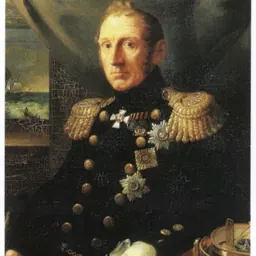

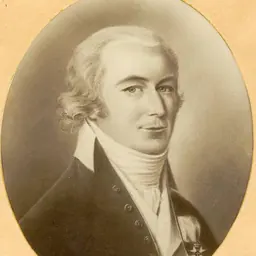
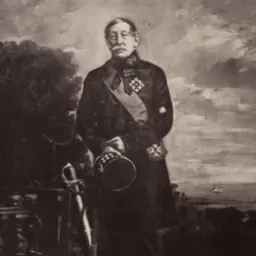
Contemporaries
People whose lives overlapped Louis Emmanuel Rey's




Frequently asked questions
Who was Louis Emmanuel Rey?
French general (1768-1846)
When was Louis Emmanuel Rey born?
Louis Emmanuel Rey was born on 22 September 1768 in Grenoble.
When did Louis Emmanuel Rey die?
Louis Emmanuel Rey died on 18 June 1846 in Paris.
What was Louis Emmanuel Rey's occupation?
Louis Emmanuel Rey was a military personnel.
What nationality was Louis Emmanuel Rey?
Louis Emmanuel Rey was French.
Sources & further reading
· Wikipedia: Louis Emmanuel Rey
Cite this page
APA: Biography.guide. (2026). Louis Emmanuel Rey. https://biography.guide/louis-emmanuel-rey/
MLA: "Louis Emmanuel Rey." Biography.guide, https://biography.guide/louis-emmanuel-rey/.
Chicago: "Louis Emmanuel Rey." Biography.guide. https://biography.guide/louis-emmanuel-rey/.
Data last updated: 2026-09-26 · Spot an error? Report a correction.
Page generated 2026-09-27 05:13 UTC