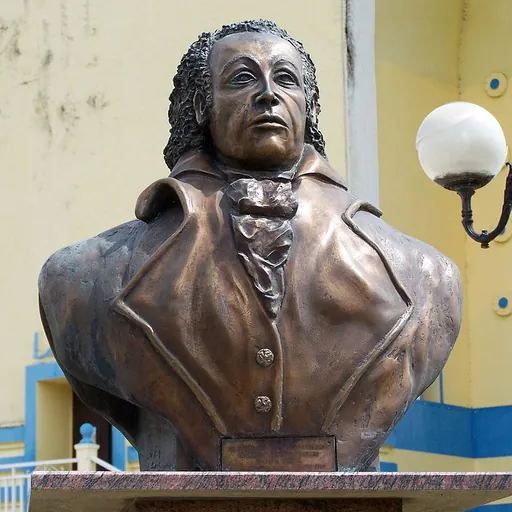
About Louis Delgrès
Lived 1766 – 1802 (aged 35). Louis Delgrès was a French soldier, politician and freedom fighter.
Louis Delgrès (2 August 1766 – 28 May 1802) was a leader of the movement in Guadeloupe resisting reoccupation and thus the reinstitution of slavery by Napoleonic France in 1802. It is supposed that he was the natural son of the Métis woman Élisabeth Morin and Louis Delgrès, the Director-General of the Royal Domains in Tobago.
Military career Delgrès joined the colonial militia in November 1783 and was soon made a sergeant in the Martinique garrison. He fought for France against Great Britain in the Caribbean, and was captured and imprisoned with other French soldiers in Portchester Castle.
Revolution After his release and his return to the Caribbean, Delgrès took over the resistance movement from Magloire Pélage after it became evident that Pélage was loyal to Napoleon. Delgrès believed that the "tyrant" Napoleon had betrayed both the ideals of the Republic and the interests of France's colored citizens, and intended to fight to the death. The Jacobin government had granted the slaves their freedom, in Guadeloupe and the other French colonies, but Napoleon reinstated slavery throughout the French Empire in 1802.
The French army, led by Richepanse, drove Delgrès into Fort Saint Charles, which was held by formerly enslaved Guadeloupeans. After realizing that he could not prevail and refusing to surrender, Delgrès was left with roughly 1000 men and some women. At the Battle of Matouba on 28 May 1802, Delgrès and some of his followers ignited their gunpowder stores, committing suicide in the process, in an attempt to kill as many of the French troops as possible. One of his followers was the pregnant heroine Solitude, who was captured by the French and executed after the birth of her child. In the fictional account of her life by André Schwarz-Bart, her last words were "live free or die", which became the mantra of the resistance movement, and today in poems, songs, libraries, historical markers, museums and statues, symbolizes the spirit of the country.
Legacy and honours In April 1998, Delgrès was officially admitted to the French Panthéon, although the actual location of his remains is unknown. Delgrès' memorial is opposite that of Toussaint Louverture, leader of the Haitian Revolution, the location of whose remains is also a mystery.
In 2002, the bicentenary of the rebellion, a memorial to Delgrès was erected at Basse-Terre.
He is honoured in street names in Menilmontant, Paris; Vaureal, Val d'Oise; and at Saint-Francois, Petit-Canal and Basse-Terre in Guadeloupe.
The contemporary French Caribbean blues trio Delgres is named after Delgrès.
Don’t just read it —
keep it.
Full-length biographies made to live with: read them, listen on the way to work, watch them tonight.
- E-book
- Audio
- Video
Instant download · yours to keep · every purchase keeps this site free
Important facts
People in Louis Delgrès's life
Named in this biography and alive at the same time

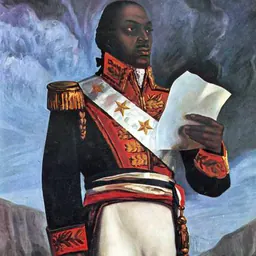
Related people
Same field, nearest in time



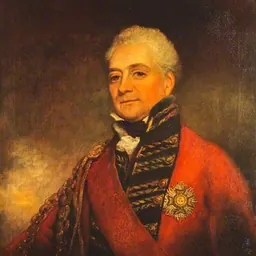
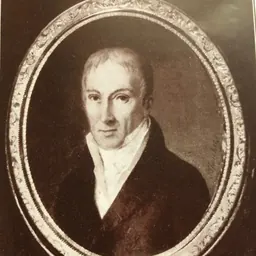
Contemporaries
People whose lives overlapped Louis Delgrès's





Frequently asked questions
Who was Louis Delgrès?
French politician (1766-1802)
When was Louis Delgrès born?
Louis Delgrès was born on 2 August 1766 in Saint-Pierre.
When did Louis Delgrès die?
Louis Delgrès died on 28 May 1802 in Matouba.
What was Louis Delgrès's occupation?
Louis Delgrès was a soldier, politician and freedom fighter.
What nationality was Louis Delgrès?
Louis Delgrès was French.
Sources & further reading
Cite this page
APA: Biography.guide. (2026). Louis Delgrès. https://biography.guide/louis-delgres/
MLA: "Louis Delgrès." Biography.guide, https://biography.guide/louis-delgres/.
Chicago: "Louis Delgrès." Biography.guide. https://biography.guide/louis-delgres/.
Data last updated: 2026-09-21 · Spot an error? Report a correction.
Portrait: Wikimedia Commons · author & licence
Page generated 2026-09-27 04:59 UTC