
About Sir Edward Hamilton, 1st Baronet
Lived 1772 – 1851 (aged 78). Sir Edward Hamilton, 1st Baronet was a British soldier and naval officer.
Admiral Sir Edward Joseph Hamilton, 1st Baronet, KCB (22 March 1772 – 21 March 1851) was a Royal Navy officer who served in French Revolutionary and Napoleonic Wars, eventually rising to the rank of admiral.
Family and early life Hamilton was born on 22 March 1772, the second and younger son of Captain John Hamilton, who was subsequently created a baronet in 1776. Edward Hamilton's mother was Cassandra Agnes, sister of Admiral Charles Chamberlayne. Edward first appeared on the muster books of his father's ship, the 74-gun , in 1777 when he was five years old. He did not actually join the ship until the age of seven, when he came aboard on 21 May 1779 at the rank of midshipman. He sailed with the Hector to the Jamaica station, where he was subsequently lent to . Hamilton did so, returning to Lisbon with dispatches.
Promotion to command He was again promoted, this time to post-captain on 3 June 1797, and was initially appointed to serve aboard the 114-gun first-rate , which had been captured at the Battle of Cape St Vincent. He was then transferred to the 24-gun , aboard which he sailed to Newfoundland, and then on to Jamaica, where he remained between October 1798 and January 1800, serving with the squadrons under Sir Hyde Parker. He was a particularly effective frigate captain, capturing or destroying over 80 armed vessels, privateers and merchants, bringing in an estimated £200,000 in prize money. It was while serving with Parker that Hamilton carried out the most famous act of his career, the cutting-out of the former from the Spanish port of Puerto Cabello.
Recovering the Hermione
The Hermione was a former frigate of the Royal Navy, commanded by Captain Hugh Pigot. In September 1797 a number of the crew had risen up against the apparently tyrannical Pigot and murdered him and nine other officers, throwing their bodies overboard. Fearing retribution for their actions, the mutineers had sailed the Hermione to the Spanish port of La Guaira, and handed her over to the authorities. When news of the mutiny reached Parker, he demanded the return of the ship and the surrender of the mutineers, instigating a process that would eventually see the apprehending of 33 of them. The Hermione meanwhile had been renamed Santa Cecilia, but remained in port. News eventually reached Parker that the Santa Cecilia had been sighted in Puerto Cabello, and ordered the Surprise to intercept her, should she attempt to put to sea. Hamilton decided that the honour of the Royal Navy depended on the recovery of the ship, and was determined to retake her. All but three were subsequently returned to the port the next day. Another 15 Spanish escaped by jumping overboard and swimming ashore, while 20 more escaped in a launch that had been guarding the ship.
Rewards Hamilton was widely lauded for his daring feat. The House of Assembly in Jamaica awarded him a £300 sword. King George III created him a Knight Bachelor on 1 February 1800. He was also voted a freeman of the City of London on 6 March 1800, which was to be awarded him in a gold box with a value of 50 guineas. and on 22 January 1802 brought to court-martial on a charge of having strung his gunner and the gunner's mates in the rigging for a trivial offence, a punishment that was both excessive and illegal. The court heard how, before going ashore, Hamilton had left orders with the gunner, William Bowman, for the guns and carronades on the quarterdeck to be cleaned. On returning, Hamilton, being dissatisfied with what he saw, "dammed the gunner for an old rascal" and instantly ordered him and his whole crew seized up in the shrouds. The first Lieutenant stated that the guns appeared remarkably clean save for the footprints of the topmen who had stood on them to ascend the shrouds some time after. This was explained to Hamilton and verified by the other officers and quartermasters. The weather was cold and frosty and after an hour-and-a-half, the elderly gunner appealed to the ship’s surgeon, who was on the quarterdeck, and after the surgeon had spoken to the captain, Bowman was cut down. Trent's log book reveals that Hamilton was every bit as fond of the lash, which Jackson described as being "incessantly at work".
Admitted as fellow-commoner to Emmanuel College, Cambridge in March 1802, Hamilton did not take a degree at Cambridge. He married on 1 November 1804, and in June 1806 was appointed to the royal yacht Mary. He moved to command the Prince Regent, where he remained until his resignation on 7 January 1819. and was created a baronet on 26 January 1819. He also served for a time as Deputy Lieutenant of Brecknockshire. Through his seniority he continued to receive promotions. He became a rear-admiral on 19 July 1821, a vice-admiral on 10 January 1837 and finally an admiral on 9 November 1846. He died at 17 Cumberland Terrace, Regent's Park on 21 March 1851 at the age of 79, his wife having predeceased him on 27 March 1840. His son, Edward Hamilton, inherited the baronetcy.
Don’t just read it —
keep it.
Full-length biographies made to live with: read them, listen on the way to work, watch them tonight.
- E-book
- Audio
- Video
Instant download · yours to keep · every purchase keeps this site free
Important facts
People in Sir Edward Hamilton, 1st Baronet's life
Named in this biography and alive at the same time

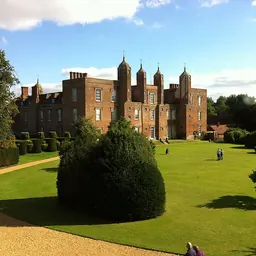



Related people
Same field, nearest in time
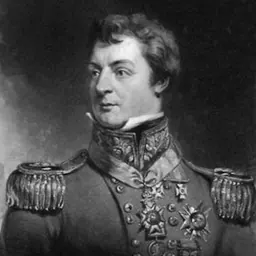


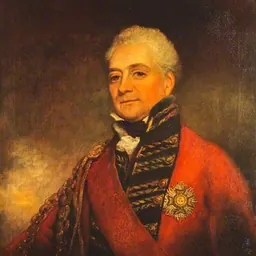
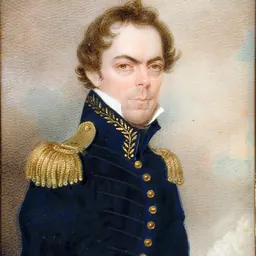
Contemporaries
People whose lives overlapped Sir Edward Hamilton, 1st Baronet's



Frequently asked questions
Who was Sir Edward Hamilton, 1st Baronet?
officer of the Royal Navy (1772-1851)
When was Sir Edward Hamilton, 1st Baronet born?
Sir Edward Hamilton, 1st Baronet was born on 22 March 1772.
When did Sir Edward Hamilton, 1st Baronet die?
Sir Edward Hamilton, 1st Baronet died on 21 March 1851 in Cumberland Terrace.
What was Sir Edward Hamilton, 1st Baronet's occupation?
Sir Edward Hamilton, 1st Baronet was a soldier and naval officer.
What nationality was Sir Edward Hamilton, 1st Baronet?
Sir Edward Hamilton, 1st Baronet was British.
Sources & further reading
· Wikipedia: Sir Edward Hamilton, 1st Baronet
· DBpedia: Sir Edward Hamilton, 1st Baronet
Cite this page
APA: Biography.guide. (2026). Sir Edward Hamilton, 1st Baronet. https://biography.guide/sir-edward-hamilton-1st-baronet/
MLA: "Sir Edward Hamilton, 1st Baronet." Biography.guide, https://biography.guide/sir-edward-hamilton-1st-baronet/.
Chicago: "Sir Edward Hamilton, 1st Baronet." Biography.guide. https://biography.guide/sir-edward-hamilton-1st-baronet/.
Data last updated: 2026-09-21 · Spot an error? Report a correction.
Portrait: Wikimedia Commons · author & licence
Page generated 2026-09-27 04:59 UTC