
About Louis Charbonnier
Lived 1754 – 1833 (aged 78). Louis Charbonnier was a French military personnel.
In May and June 1794, Charbonnier and Jacques Desjardin jointly led an army that tried three times to establish a foothold on the north bank of the Sambre River. After defeats in the battles of Grandreng, Erquelinnes and Gosselies, Charbonnier was recalled to Paris in semi-disgrace on 8 June 1794. After being unemployed for several months, he was assigned to command a series of garrisons in France and Belgium. He was governor of Maastricht from 1801 to 1814. He was buried in his hometown of Clamecy, Nièvre in 1833. His surname is one of the names inscribed under the Arc de Triomphe, on Column 4.
Early career On 9 October 1754, Charbonnier was born the son of a shoemaker in Clamecy, a town in what later became the Nièvre departement. As a young man, he enlisted in the Vintimille Regiment as a simple soldier in 1780. The regiment was later renamed the 49th Line Infantry. His fellow soldiers gave him the nickname Fleur d'Orange (Orange Flower). On 18 July 1789 he joined the National Guard of Paris. On 21 September 1792 he was elected second-in-command of the 21st National Volunteers Battalion. While with the Army of the North Charbonnier was promoted to general of brigade on 14 November 1793.
Army commander
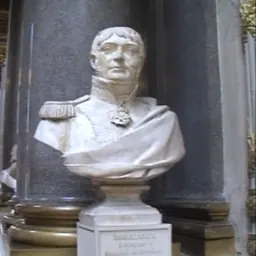
Boussu-lez-Walcourt alt=Bust of a clean-shaven square-faced man in a coat with epaulettes on the shoulders.
On 28 January 1794 Charbonnier was promoted again to general of division. The Army of the Ardennes was a subordinate force to the Army of the North and usually took its orders from that army's commander. On 4 April 1794, the army had 8,347 soldiers available for the field and 30,306 men in garrisons. The major garrisons were Givet and Philippeville while over 20 towns held smaller garrisons. The sole field division was led by Philippe Joseph Jacob and his brigadiers were Jean Thomas Guillaume Lorge, Jean Louis Dessaubaz and Jean Baptiste Augier.
Opposite the French army were 27,000 Habsburg Austrian and Dutch soldiers led by Franz Wenzel, Graf von Kaunitz-Rietberg. The Coalition troops were strung out from west to east, with 5,000 near Dinant, 2,000 at Florennes, 2,000 at Boussu-lez-Walcourt, 5,000 at Beaumont, 2,000 at Erquelinnes, 10,000 at Bettignies and garrisons at Namur and Charleroi. At the end of March, the Committee of Public Safety ordered Charbonnier to march on Namur. He received some reinforcements and assembled 15,000 infantry, 2,000 cavalry and 15 position guns near Givet. In early April, the commander of the Army of the North Jean-Charles Pichegru directed Charbonnier to take position west of Philippeville. After a good deal of hesitation, the general finally marched his troops west to the new position on 22 April. After fighting on 26 April his troops ousted the Austrians under Joseph Binder von Degenschild from Boussu-lez-Walcourt. The tactical direction of the clash was left to the leader of the advance guard, Jean Hardy. Degenschild retreated to the Sambre River at Thuin. On the same day, Jacques Desjardin's division of the Army of the North attacked Beaumont which was farther west. On the 27th, Beaumont and Florennes were abandoned and their Coalition garrisons fell back to the Sambre.
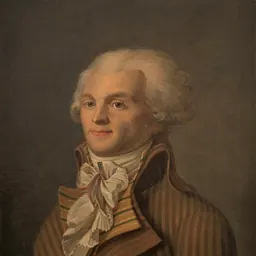
Grandreng alt=Detail from a painting shows a calm-looking man from head to the top of his thighs. On his head he has a late 18th century-style white wig with the hair curled over the ears. He wears a white military uniform with navy blue lapels and cuffs with a red and white sash across his shoulder.
On 30 April 1794, the Coalition army under Prince Josias of Saxe-Coburg-Saalfeld successfully concluded the Siege of Landrecies. This event nearly split the Army of the North in half. The crisis precipitated a change in French strategy. Pichegru with 70,000 troops of the left wing was directed to capture Ypres and Tournai, while Jacques Ferrand and 24,000 soldiers held the center near Guise and Maubeuge. Desjardin with the right wing of the Army of the North and Charbonnier with the Army of the Ardennes were ordered to mass their 60,000 men near Philippeville. This force was directed to cross the Sambre near Thuin and advance northwest toward Mons. Amazingly, Pichegru neglected to appoint a single leader for the force, relying on the two generals to cooperate.
Charbonnier received his orders on 6 May and immediately held a conference with Desjardin, François Séverin Marceau-Desgraviers and their chiefs of staff where they drew up plans for the offensive. Shortly afterward, Charbonnier wanted to delay in order to get clearer instructions from Pichegru, but Desjardin emphasized that their orders were plain. In preparation, Charbonnier divided his 17,000-man field force into two divisions under Jacob and Marceau plus an independent detachment under Claude Vezú. The two divisions and Hardy's advanced guard were grouped into a corps under Marceau's tactical direction. For his part, Desjardin commanded three divisions, his own and those of Éloi Laurent Despeaux and Jacques Fromentin plus an advanced guard under Guillaume Philibert Duhesme. François Muller took over Desjardin's former division.
quotation|The account of the proceedings of Charbonnier and Desjardins sometimes reads like the libretto of a comic opera. –Ramsay Weston Phipps By the 12th Kaunitz had withdrawn his forces from Merbes-le-Château into an intrenched position between Binche on the left and Grand-Reng on the right. In the Battle of Grandreng on 13 May, Muller and Despeaux assaulted Kaunitz's right flank, Fromentin attacked his center and the garrison of Maubeuge mounted a diversion. Austrian cavalry defeated Fromentin's division, then commanded by Duhesme after its commander was injured. Kaunitz counterattacked and compelled Desjardin to retreat to the south bank of the Sambre. The French suffered the loss of 4,000 men and 12 artillery pieces while Coalition losses numbered 2,800 killed, wounded and captured. During the fighting, the Army of the Ardennes divisions were inactive, leaving Desjardin's 35,000 men to fight Kaunitz's 22,000 Austrian and Dutch troops in a strong position. Screened by a handful of enemies, Jacob's division did not help though it was nearby at Buverinnes. Marceau's division, accompanied by Charbonnier in person, was at Fontaine-l'Évêque baking bread! After Desjardin's withdrawal, Charbonnier's two idle divisions quickly followed suit.
On 6 May two representatives on mission had written a letter to the Committee of Public Safety describing Charbonnier as incompetent and requesting a more experienced commander. It was probably during early May that a balloonist serving with the army overheard a weird conversation between the two commanders. Charbonnier complained that his soldiers were starving in their encampments. He wanted to move across the Sambre in order to get food for his troops. Desjardin agreed but noted that they must organize the operation in the correct military way. Charbonnier replied, "Do you think so? Good, you arrange things militarily; you take charge of that. For me, I'm going to take charge of eating vegetables and pumping oils." In a reorganization, Jacob was replaced by Jean Adam Mayer, some battalions were exchanged between Mayer's and Marceau's divisions and Lorge was given command of an independent brigade called the Flankers of the Right. Soon after, Marceau became Desjardin's chief of staff and Vezú took over Marceau's division.
quotation|I was dismayed. I did not know whom to reproach for operations so badly arranged. I did not see the shadow of treason, but the incapacity of the leaders was flagrant. –René Levasseur Vezú's division was at Fontaine-l'Évêque and Charbonnier was preoccupied rounding up cattle and horses. There is evidence from his correspondence that Charbonnier was jealous of his authority as army commander-in-chief and was reluctant to follow Pichegru's instructions. He considered his army as an autonomous force and failed to appreciate that he must cooperate with Desjardin to gain success.
On 22 May, the French troops built fieldworks to fortify their position. A council of war the following day determined to send Kléber with 15,000 men on a raid north toward Nivelles. Despite this decision, Charbonnier gave orders to Vezú and Lorge to move east in the direction of Charleroi. The French generals completely ignored Kaunitz who formed his troops into five attack columns and a Dutch reserve. The assault columns rolled forward at 2:30 AM on 24 May and achieved total surprise in the Battle of Erquelinnes. On the French left, the Austrians quickly overran Erquelinnes and forced the divisions of Anne Charles Basset Montaigu (formerly Despeaux's) and Muller to recross the river to Solre-le-Sambre. Near Péchant (Peissant) Fromentin's division was also routed and fled. Hearing the guns, Kléber turned back from his mission and managed to block the Coalition pursuit long enough for Mayer's division to escape. The French lost 4,000 men, mostly prisoners, and 25 artillery pieces.
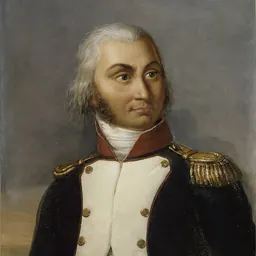
Gosselies alt=Color-tint print of a man with a moustache and hair reaching to his shoulders. He wears a dark hussar uniform of the 1790s.
The next day, the representatives called a council of war at Thuin. The generals hoped for some time to reorganize and supply the soldiers with food and shoes, but during the meeting Saint-Just cut off all further discussion by declaring, "Tomorrow you will make a victory for the Republic: choose between a siege or a battle". On a visit to the army in Alsace, Saint-Just announced that a general must be executed for the good of the army and Augustin-Joseph Isambert was shot for abandoning a position.
The divisions of Montaigu and Muller were placed under Schérer and ordered to guard the Sambre between Solre-le-Sambre and Aulne Abbey. Marceau was given a newly created division and the staffs of Charbonnier and Desjardin were merged. The forces of Marceau, Vezú, Mayer and Fromentin numbered about 30,000. On 26 May Marceau advanced toward the La Tombe camp south of Charleroi. Fromentin's division was repulsed but other divisions crossed the Sambre again. Marceau's troops went on strike and refused to attack, but the Austrians were unaware of this and evacuated the La Tombe camp that night. Encouraged, the French bombarded and captured Marchienne-au-Pont on the 29th, allowing Marceau and Fromentin to cross the Sambre. On 30 May, Charleroi was completely invested by a ring of French troops and Mayer's division entrusted with the siege operations. The French lost 2,000 men and one cannon while Coalition losses numbered 444.
Jean-Baptiste Jourdan arrived the next day with 40,000 men of the Army of the Moselle and took command of the entire force, which would soon be called the Army of Sambre-et-Meuse. The order arrived on 8 June.
Later career After his recall Charbonnier was not used for a time. Returning to Clamecy in disgrace, he nevertheless remained popular in his hometown. While there, he took a prominent part in the Cult of the Supreme Being festival. Soon after, the Thermidorian Reaction resulted in the execution of Maximilien Robespierre and the fall of his government. At this time, Charbonnier reestablished the Clamecy Société Populaire which had been banned by Joseph Fouché and the radicals. Finally, he received instructions to take charge of the Clamecy National Guard on 7 December 1794. He became military governor of Boulogne-sur-Mer on 12 September 1795. He received temporary appointments to command Givet and Charlemont on 18 February 1796 and Liège on 3 April 1798. He served as military governor of Maastricht starting on 21 April 1801. Among his duties was the supervision of advance posts on the south bank of the Scheldt during the Walcheren Campaign of 1809. He continued in command of Maastricht until May 1814, after Napoleon's abdication.
He died on 2 June 1833. Two authorities asserted that he died at Givet while another source declared that he died in his hometown of Clamecy where he was buried.
Don’t just read it —
keep it.
Full-length biographies made to live with: read them, listen on the way to work, watch them tonight.
- E-book
- Audio
- Video
Instant download · yours to keep · every purchase keeps this site free
Important facts
People in Louis Charbonnier's life
Named in this biography and alive at the same time


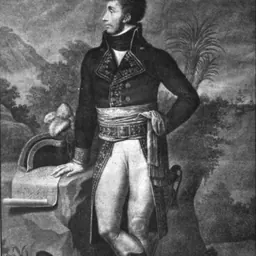
Related people
Same field, nearest in time


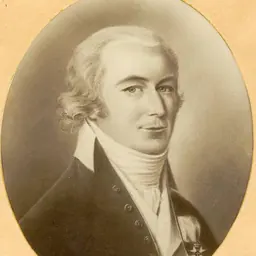
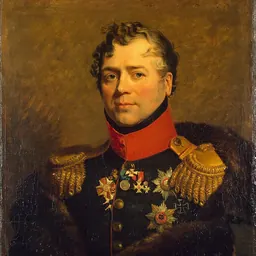

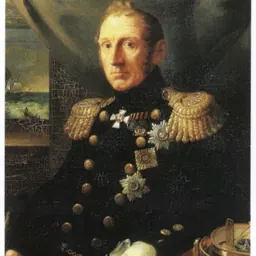
Contemporaries
People whose lives overlapped Louis Charbonnier's




Frequently asked questions
Who was Louis Charbonnier?
French general (1754–1833)
When was Louis Charbonnier born?
Louis Charbonnier was born on 9 October 1754 in Clamecy.
When did Louis Charbonnier die?
Louis Charbonnier died on 2 June 1833 in Clamecy.
What was Louis Charbonnier's occupation?
Louis Charbonnier was a military personnel.
What nationality was Louis Charbonnier?
Louis Charbonnier was French.
Sources & further reading
· Wikipedia: Louis Charbonnier
Cite this page
APA: Biography.guide. (2026). Louis Charbonnier. https://biography.guide/louis-charbonnier/
MLA: "Louis Charbonnier." Biography.guide, https://biography.guide/louis-charbonnier/.
Chicago: "Louis Charbonnier." Biography.guide. https://biography.guide/louis-charbonnier/.
Data last updated: 2026-09-20 · Spot an error? Report a correction.
Page generated 2026-09-27 05:28 UTC