
About Louis C. Fraina
Lived 1892 – 1953 (aged 60). Louis C. Fraina was an American politician.
Louis C. Fraina (October 7, 1892 – September 15, 1953) was an Italian-American writer, educator and theoretician who was a founding member of the Communist Party of America in 1919. After running afoul of the Communist International in 1921 over the alleged misappropriation of funds, Fraina left the organized radical movement, emerging in 1926 as a left wing public intellectual by the name of Lewis Corey. During the McCarthy era, deportation proceedings were initiated against Fraina-Corey. After a protracted legal battle, Corey died of a cerebral hemorrhage before the action against him was formally abandoned.
Biography
Early years Depiction of New York's Bowery district, circa 1910, where Louis Fraina spent his boyhood.
Louis C. Fraina was born as Luigi Carlo Fraina on October 7, 1892, in the Galdo frazione of the town of Campagna, in the Province of Salerno of southern Italy. His father was a radical Republican and left Italy for America in 1897, to be joined by his wife and son a year later. Luigi's name was Americanized to "Louis" upon his arrival.
Fraina grew up in the slums of New York City in the Bowery and working part-time as a newsboy from the age of 6. Other articles in The Truth Seeker followed, causing newspaper editor Arthur Brisbane to show interest in him, which caused him to offer Fraina a job as a cub reporter at the New York Evening Journal, the flagship newspaper of the newspaper chain owned by William Randolph Hearst.
Left wing socialist (1909-1916)
Fraina came to socialism as a youth, later stating that he had joined (and quickly departed) the Socialist Party of America in 1909. Fraina seems to have been greatly influenced by the writings of Daniel DeLeon, editor of the newspaper of the rival Socialist Labor Party of America, a party which Fraina joined shortly after his departure from the SPA.
By 1910, Fraina was writing voluminously for the daily newspaper published by the SLP. According to Fraina's biographer, historian Paul Buhle, "No one, not even DeLeon by this time, wrote more regularly for The Daily People. Fraina's most important journalistic task while on the staff of The Daily People was covering the 1913 Lawrence Textile Strike, one of the pivotal events of the American labor movement of that decade. This strike, in which members of some two dozen nationalities stayed out for weeks to resist a wage reduction, facing violence and arrest, was deeply influential upon Fraina. It was there that the Industrial Workers of the World had a moment of national spotlight which made many revolutionary possibilities for the IWW.
Early in 1914, Fraina resigned from the Socialist Labor Party. Fraina remained at the head of the editorial board of that publication until its termination early in 1916 due to lack of funds. A few months later, Fraina landed another position as a magazine editor, this time as the chief of Isadora Duncan's Modern Dance. The book, entitled The Proletarian Revolution in Russia, gave English-speaking readers their first glimpse at the ideas of the Russian Communist Party and spurred the desire for emulation on the part of many American radicals. Combined with his other speaking, writing, and organizational activities, this position as editor of the leading radical publications of the day helped make Fraina arguably the leading theoretical and political figure of the founding days of the American communist movement. He was also elected International Secretary by that body — the group's de facto first delegate to the Communist International in Moscow.
Although apparently not tipped off by Nosovitsky himself, Amsterdam police authorities were aware of the Comintern's secret gathering in the city, and bugged the conference room with a dictaphone machine. The device was discovered by delegate Michael Borodin on the second day of the proceedings. A raid by the authorities soon followed, during which many delegates were arrested before being ordered to leave the country or physically deported. They remained there a week before returning home to America.
Upon returning to America, a scandal arose. Ferdinand Peterson, a Finnish-American former socialist newspaper editor with extensive linguistic abilities, was induced to join the Justice Department as an undercover informant after being discharged from the American Army in 1919. Peterson confided in his former party comrade Santeri Nuorteva, now a leading member of the Russian Soviet Government Bureau (RSGB) in New York—the de facto consulate of Soviet Russia—of this assignment. Nuorteva helped Peterson provide a stream of uncontroversial and non-revelatory content for his daily reports throughout the summer and early fall of 1919.
Finally allowed to depart for Moscow, Fraina arrived only to find that rumors of the espionage charge had not been dispelled. Two more hearings were held under the auspices of the Comintern itself — one before the convening of the 2nd World Congress and the second one immediately after. The findings of all committees were unanimous and the charges of espionage against Fraina were dismissed, albeit never fully dispelled.
Fraina made the case that Mexico, as well as the rest of Latin America, represented a colonial base of American capitalism, and that in the fight to overthrow the latter, communist revolutionary movements should be sponsored in the former.
While Fraina and his views were widely respected among Comintern delegates, he was not elected as an American representative to ECCI. In Moscow, American communist Charles Phillips later indicated his belief that the Comintern sought "a native-born and quintessentially American exemplar" such as Reed among its councils that gave him the advantage over Fraina in being named to ECCI. When Reed succumbed to typhus on October 17, 1920, Fraina was not selected to join the Comintern's directive body, perhaps owing to a residual aura of suspicion related to discredited espionage charges against him.
Whether to reduce the factional drama between representative of the rival American organizations delegated to Moscow or to remove him altogether from American politics, Fraina was instead dispatched to Mexico to work on behalf of the Comintern there.
Phillips was the first to arrive in Mexico, landing in January 1921, with the others arriving somewhat later.
Fraina and his two Comintern associates soon discovered that the Communist Party of Mexico existed in name only, with only party secretary José Allen and a small group organized as the Young Communist Federation remaining committed to the idea of building a revolutionary Marxist political party in the country. A convention was held in February 1921 which established a new radical national trade union federation, the Confederación General de Trabajadores (CGT). Comintern funds were also used to establish a publishing house, Biblioteca Internacional, which issued pamphlets and books by prominent European radicals. Katayama left the country in October 1921, although Phillips managed to secretly return under the alias "Manuel Gomez."
In December 1921, Fraina and Gomez helped organize a convention to reestablish the Communist Party of Mexico, a gathering attended by 21 delegates, purportedly representing a party membership of 1,000. Fraina reported to the Comintern approvingly of the "sobriety and steadiness" of the delegates, who avoided the "flamboyant, hysterical" behavior characteristic of some Mexican political gatherings. Fraina came to feel overwhelmed by the pressing demand of the few activists in the tiny CPM for immediate revolution, however — a vision that for a long time he had realistically dismissed — and he appealed to the Comintern for the dispatch of a veteran Russian militant to Mexico to guide the organization. The family settled in New York City where Fraina — temporarily adopting the pseudonym "Charles Joseph Skala" — took a job as a clerk in a dry good store for $12 a week, while his wife went to work in a sweatshop. He later landed a job as a proofreader for magazine and pulp fiction publisher Street and Smith Publications and worked part-time as a substitute proofreader at The New York Times. Fraina marked his comeback with the adoption of a new pen name — Lewis Corey — a name formed by adapting his first name and middle initial. This pseudonym was later made permanent by the family through a legal name change. In the pages of the independent Marxist magazine Modern Quarterly, Corey depicted a bifurcated world with collapsing capitalism pitted against the "aspiration" of Soviet communism to engage in the "creation of a new world." Corey expressed a renewed commitment to the latter, noting approvingly that planned economy functioned in the USSR only because "the dictatorship of the proletariat crushed the exploiters and prevents their reappearance," thereby allowing "socialization of the whole national economy." Corey seems to have had no qualms about the political role of the Communist Party, eagerly signing the manifesto of the League of Professional Groups for Foster and Ford, thereby endorsing the CPUSA's 1932 Presidential ticket. After the election, the League truncated its name to the League of Professional Groups and adopted a program written by Corey providing for ongoing political and educational activity. The Communist Party remained aloof from the organization, however, as the group sought to maintain financial and ideological autonomy from the party in order to better appeal to non-party left wing intellectuals.
The middle 1930s saw Corey producing two weighty works on contemporary economics for commercial publisher Covici-Friede — The Decline of American Capitalism (1934) and The Crisis of the Middle Class (1935). During this interval Fraina remained a neo-Marxist, although standing outside the Communist Party. The CPUSA initially treated The Decline of American Capitalism sympathetically, placing a large order for the party's book store network, but in the fall of 1934 it suddenly was made the object of intense criticism, including a harsh serialized critique in the October and November 1934 issues of The Communist, the party's monthly theoretical magazine. By now, the party line had changed from the ultra-radical Third Period to a new, more inclusive effort to build bridges with liberals and non-party radicals known as the Popular Front against fascism. Corey was looked upon by the party no longer as a disreputable political transgressor with a checkered past, but rather as a prestigious intellectual ally. The so-called Lovestoneites embraced the fundamental tenets of Marxism, but oriented themselves towards the American trade union movement and away from foreign domination of the International Communist movement and its centrally-determined obsession with advancing the foreign policy interests of the USSR. With secret police terror beginning to rage in the Soviet Union from 1936 onward, the Lovestone political organization's criticism of the USSR became increasingly harsh and its appreciation of American institutions more pronounced — a perspective which Corey himself shared.
In 1937, Corey worked briefly as an economist in Washington, D.C. with the federal government's Works Progress Administration, remaining in that position for about six months. He left that post to assume the position of education director of Local 22 of the International Ladies' Garment Workers' Union (ILGWU), located in New York City.
Breaking with Marxism (1940–1953) Lewis Corey formally broke with circles that were supportive of the Russian way to communism in 1940, disillusioned with the atrocities committed by the regime headed by Joseph Stalin, by the CPUSA's sugarcoating and endorsing unpalatable Soviet realities, and by the organizational impotence and factionalism of the non-Communist left. In that year he joined with Reinhold Niebuhr, Murray Gross, and other anti-communist liberals in establishing the Union for Democratic Action (UDA) — an organization which later changed its name to Americans for Democratic Action.
Corey's public declaration of his alienation from Marxism came in a three part series published in the liberal news weekly The Nation, in which he declared:
The bitter admission must be made that all variants of Marxism, "revolutionary" and "reformist," meeting the pragmatic test of history, have revealed fatal shortcomings....
All [Marx's] creative originality was congealed into a system which had a "Marxist" explanation for everything..., which was unjust to Marx himself because the system denied his emphasis on the historical relativity of ideas....
"The socialist system of collective ownership is compatible with totalitarianism..." there is a totalitarian potential in the socialist economic system.
Corey's search for a new social philosophy and program to replace the one he had discarded found expression in a 1942 book entitled The Unfinished Task. Corey regarded this as his "final detailed repudiation" of the Marxian edifice.
In 1942, Corey spoke at Antioch College, a private liberal arts school located at Yellow Springs, Ohio at a conference held on the topic of post-war reconstruction. Corey impressed school officials with his knowledge and acumen and was asked to temporarily replace a young economics professor who had been drafted into the American military. Further attacks were launched by J. B. Matthews of the Dies Committee in 1942, Walter Steele of the House Un-American Activities Committee, and the Cleveland League of Justice and Gerald L. K. Smith. The Antioch administration supported the academic freedom of its professor in spite of these attacks.
Ironically, as Corey's politics turned against his Stalinist beliefs, he ran afoul of the federal prosecutors. In December 1950, Corey was served with a deportation warrant from the US Department of Justice charging that he had been in the country illegally almost his entire life and for being a communist. His father had come to the United States without obtaining naturalization papers and young Louis had decided against filing later due to his 1917 conviction as a conscientious objector. The case was tied up for years, and his application for a Certificate of Lawful Entry was denied under the McCarran Act.
Death and legacy In 1952, on Christmas Day, Corey received an announcement of an impending deportation order. The next month he was terminated from employment by the Butcher's Union, for whom he worked. Corey spent his last months traveling between New York City and Washington, working with lawyers in his effort to stave off deportation to his native Italy.
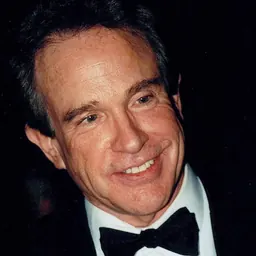
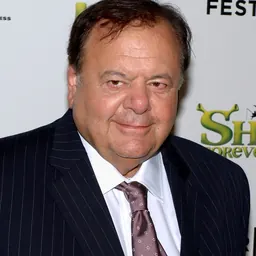
Popular culture In Warren Beatty's film Reds, Fraina was portrayed by Paul Sorvino.
Don’t just read it —
keep it.
Full-length biographies made to live with: read them, listen on the way to work, watch them tonight.
- E-book
- Audio
- Video
Instant download · yours to keep · every purchase keeps this site free
Important facts
People in Louis C. Fraina's life
Named in this biography and alive at the same time





Related people
Same field, nearest in time



Contemporaries
People whose lives overlapped Louis C. Fraina's
Frequently asked questions
Who was Louis C. Fraina?
American communist (1892-1953)
When was Louis C. Fraina born?
Louis C. Fraina was born on 7 October 1892 in Galdo.
When did Louis C. Fraina die?
Louis C. Fraina died on 16 September 1953 in New York City.
What was Louis C. Fraina's occupation?
Louis C. Fraina was a politician.
What nationality was Louis C. Fraina?
Louis C. Fraina was American.
Sources & further reading
Cite this page
APA: Biography.guide. (2026). Louis C. Fraina. https://biography.guide/louis-c-fraina/
MLA: "Louis C. Fraina." Biography.guide, https://biography.guide/louis-c-fraina/.
Chicago: "Louis C. Fraina." Biography.guide. https://biography.guide/louis-c-fraina/.
Data last updated: 2026-09-20 · Spot an error? Report a correction.
Page generated 2026-09-27 05:30 UTC