
About Louis B. Mayer
Lived 1884 – 1957 (aged 73). Louis B. Mayer was an American, Russian and Canadian film producer and screenwriter.
Louis Burt Mayer (; born Lazar Meir; July 12, 1884 – October 29, 1957) was a Canadian-American film producer and co-founder of Metro-Goldwyn-Mayer studios (MGM) in 1924. Under Mayer's management, MGM became the film industry's most prestigious movie studio, accumulating the largest concentration of leading writers, directors, and stars in Hollywood.
Mayer was born in either Minsk or Dymer, then both part of the Russian Empire and grew up poor in Saint John, New Brunswick, Canada. He quit school at 12 to support his family and later moved to Boston and purchased and renovated a small vaudeville theatre in Haverhill, Massachusetts. He renovated and expanded several other theatres in the Boston area catering to audiences of higher social classes. After expanding and moving to Los Angeles, he teamed with film producer Irving Thalberg and they developed hundreds of films. Mayer handled the business of running the studio, such as setting budgets and approving new productions, while Thalberg, still in his twenties, supervised all MGM productions.
Mayer claimed to believe in "wholesome entertainment" and went to great lengths to discover new actors and develop them into major stars. During his long reign at MGM, Mayer acquired many critics and supporters. Some stars did not appreciate his attempts to control their private lives, while others saw him as a concerned father figure. He was controversial for his treatment of the actors under his management, such as in the case of Judy Garland, whom he forced to go on diets, take drugs, and work punishing schedules.
Mayer was forced to resign as MGM's vice president in 1951, when the studio's parent company, Loew's, Inc., wanted to improve declining profits. A staunch conservative, Mayer at one time was the chairman of the California Republican Party. In 1927, he was one of the founders of AMPAS, famous for its annual Academy Awards.
Early life Mayer preferred to say that he was born in Minsk. Bosley Crowther, in an early biography, gave his birthplace as "a little town near Minsk". Other sources cite such places as Demre and Dmra, "a village between Minsk and Vilnius". Charles Higham and Scott Eyman state that Mayer was born in Dymer near Kiev; the date was July 4, 1885. In addition he gave his birth year as 1882 in his marriage certificate while the April 1910 census states his age as 26 (b.1883). His parents were Jacob and Sarah (née Meltzer) Meir (both Jewish) and he had two sisters — Yetta, born ca. 1878 and Ida, born ca. 1883. Mayer first moved with his family to Long Island, where they lived from 1887 to 1892 and where his two brothers were born—Rubin, in April 1888 and Jeremiah, in April 1891. Then, they moved to Saint John, New Brunswick, where Mayer attended school.
His father started a scrap metal business, J. Mayer & Son. An immigrant unskilled in any trade, he struggled to earn a living. Young Louis quit school at age twelve to work with his father and help support his family. Whenever Mayer visited Saint John in later years, he placed flowers on Wilson's grave, just as he did on his mother's.
"It was a crappy childhood", said Mayer's nephew Gerald. His family was poor and Mayer's father spoke little English and had no valuable skills. It thus became young Mayer's ambition and drive that supported the family. With his family speaking mostly Yiddish at home, his goal of self-education when he quit school was made more difficult. which he reopened on November 28, 1907, as the Orpheum, his first movie theater. To overcome an unfavorable reputation that the building had, Mayer opened with a religious film at his new Orpheum, From the Manger to the Cross, in 1912. Within a few years, he owned all five of Haverhill's theaters, and, with Nathan H. Gordon, created the Gordon-Mayer partnership that controlled the largest theater chain in New England. During his years in Haverhill, Mayer lived at 16 Middlesex St. in the city's Bradford section, closer to city center at Temple Street and at 2 1/2 Merrimac St. Mayer also lived in a house he built at 27 Hamilton Ave.
In 1914, the partners organized their own film distribution agency in Boston. Mayer paid D.W. Griffith $25,000 for the exclusive rights to show The Birth of a Nation (1915) in New England. Mayer made the bid on a film that one of his scouts had seen, but he had not, although he was well aware of the plot surrounding the Ku Klux Klan; his decision netted him over $100,000. Using earnings from the popularity of The Birth of a Nation, Mayer partnered with Richard A. Rowland in 1916 to create Metro Pictures Corporation, a talent booking agency, in New York City.
Two years later, Mayer moved to Los Angeles and formed his own production company, Louis B. Mayer Pictures Corporation. The first production was 1918's Virtuous Wives. A partnership was set up with B. P. Schulberg to make the Mayer-Schulberg Studio
In late 1922, Mayer was introduced to Irving Thalberg, then working for Universal Pictures. Mayer was searching for someone to help him manage his small, but dynamic and fast-growing studio. At that first meeting, Thalberg made an immediate positive impression on Mayer, writes biographer Roland Flamini. Later that evening, after Thalberg had left, Mayer told the studio's attorney, Edwin Loeb, to let Thalberg know that if he wanted to work for Mayer, he would be treated like a son.
Although their personalities were in many ways opposite, Mayer being more outspoken and nearly twice the younger man's age, Thalberg was hired as vice president in charge of production at Louis B. Mayer Productions. Years later, Mayer's daughter, Irene Mayer Selznick, found it hard to believe that anyone "so boyish could be so important". Two years later, Schenck agreed to sell Loew's – and MGM – to William Fox, which angered Mayer. But despite his important role in MGM, Mayer was not a shareholder, and had no standing to challenge the sale. So he instead used his Washington connections to persuade the Justice Department to delay the merger on antitrust grounds. During the summer of 1929, Fox was severely injured in an auto accident. By the time he recovered, the stock market crash had wiped out his fortune, destroying any chance of the deal going through even if the Justice Department had lifted its objections. Nonetheless, Schenck believed Mayer had cost him a fortune and never forgave him, causing an already frigid relationship to become even worse.
Working with Irving Thalberg
Mayer and Thalberg were a brilliant team that worked well together. They relied on each other, and neither operated unilaterally. Mayer took charge of the business part of running the studio, such as setting budgets and approving new productions. Thalberg, eventually called the "boy wonder", took charge of all MGM productions. Director Joseph M. Newman said that their skills complemented each other well, with Thalberg having a great story mind, and Mayer having superior business acumen.
Mayer and Thalberg shared a guiding philosophy, to make the best motion pictures they could at any cost, even if it meant reshooting the entire picture. For them it was more important than showing a consistent profit with their films. They strove to see MGM become a high-quality studio. That goal began with their early silent films. Mayer issued statements to the press, calling Thalberg "the finest friend a man could ever have ... the guiding inspiration behind the artistic progress on the screen." His funeral was a major news event in Los Angeles. All the studios observed five minutes of silence, while MGM closed its studio for the entire day. He had the Academy of Motion Picture Arts and Sciences establish the Irving G. Thalberg Memorial Award, given to producers to recognize their exceptional careers, now considered one of the most prestigious awards in the Hollywood film industry.
Continued success after Thalberg's death After Thalberg died, many in Hollywood expected Mayer to "stumble and fall". Director Joseph M. Newman saw the studio start to change for the worse. Some actors were affected, such as Luise Rainer, winner of Hollywood's first back-to-back Oscars, who felt that the death of Thalberg marked the death of her career: "Had it not been that he died, I think I may have stayed much longer in films." Joan Crawford was also concerned, feeling that with Thalberg gone, the concept of the quality "big" picture "pretty much went out the window".
However, MGM under Mayer's leadership continued to produce successful movies. Mayer made himself head of production as well as studio chief. For the next ten years, MGM grew and thrived.
Managing MGM
Management style In his overall management skills, Mayer was considered a great executive, someone who could have run General Motors equally as well as a large studio like MGM, said producer Joseph L. Mankiewicz. Mayer took Hearst's suggestion to build himself an office bungalow on the MGM lot, something Hearst said was appropriate for a studio head: "Everybody of distinction from all over the world comes to Los Angeles and everybody who comes wants to see your studio and they all want to meet you and do meet you, so put on a few airs son, and provide the atmosphere."
Growth of the studio At its peak in the 1940s, MGM employed six thousand people, had three entrances, and covered 185 acres in Culver City, California, outside of Los Angeles. It had forty cameras and sixty sound machines, used on its six separate lots, and connected with its own rail line. About 2,700 people ate in the commissary every day. Power was supplied by an in-house electrical plant which could light a town of 25,000. "Anywhere from sixteen to eighteen pictures were being shot at one time", remembers actress Ann Rutherford. "They were either shooting or preparing to shoot on every sound stage."
Hiring actors and staff Lionel Barrymore's 61st birthday in 1939, standing: Mickey Rooney, Robert Montgomery, Clark Gable, Louis B. Mayer, William Powell, Robert Taylor, seated: Norma Shearer, Lionel Barrymore, and Rosalind Russell During MGM's growth period, Mayer traveled often, and among his personal discoveries were Greta Garbo [note: other Wikipedia entries suggest Greta Garbo was 'discovered' by Thalberg, as well as a second third party, and her own history suggests that she was first connected to California via yet another producer while filming in Germany; please help to improve what is presently an unserious section/entry (see, e.g., the previous section, which includes audacious claims unburdened by evidence)], Hedy Lamarr, Norma Shearer and Greer Garson. He also signed up dancing team Marge and Gower Champion and discovered Mario Lanza, then a young tenor from Philadelphia, who Mayer hoped to turn into a "singing Clark Gable".
When hiring new actors, he typically wanted them to agree to stay with the studio for either three or seven years, during which time they would become one of the MGM "family". The studio usually succeeded in hiring those it wanted since they offered the highest salaries. With executives, Mayer took more time before taking them, wanting to know them first on a personal level. He respected intelligence and talent overall, said manager Joe Cohn: "One time he said to me, 'Never be afraid of hiring a fellow smarter than you are. You'll only learn from them.'" As a result, while other studios went through continuous upheavals or reorganizations, Mayer's hands-off policy kept MGM stable and sound, where employees felt their jobs were secure."
When meeting a new employee, he always told them to come to him personally for help with any problems. Some, like Barbara Stanwyck, considered this attitude to be "pompous," however, since he used his position to meddle in people's lives. Others, such as actor Edward G. Robinson, after his first meeting with Mayer, said "I found him to be a man of truth ... Behind his gutta-percha face and roly-poly figure, it was evident there was a man of steel—but well-mannered steel." British director Victor Saville remembered him as being "the best listener. He wanted to know. He was the devil's advocate. He would prod you and question you and suck you dry of any knowledge."
Working with studio people
In 1951, he was given an honorary Oscar for heading MGM for over 25 years. At the event, screenwriter Charles Brackett presented the award and thanked him for guiding MGM's "production policy with foresight, aggressiveness and with a real desire for taste and quality". Mayer was also thanked for founding and developing new personalities and for bringing the Hollywood "star system into full flower".
Although Mayer was often disliked and even feared by many in the studio, editor Sam Marx explains that "his reputation is far worse than it should be. He had to be strong to do his job, and he couldn't do that without making enemies." Director Clarence Brown compared him to newspaper magnate William Randolph Hearst: Louis B. Mayer ... made more stars than all the rest of the producers in Hollywood put together. ... He knew how to handle talent; he knew that to be successful, he had to have the most successful people in the business working for him. He was like Hearst in the newspaper business. ... He made an empire out of the thing. But he understood movies and their audience. Because of the stars, the stories, the glamour, the music, and the way they were presented, audiences the world over would often applaud the moment they saw the MGM lion. Mayer was the constant at MGM who set the tone. At Mayer's funeral in 1957, Spencer Tracy expressed Mayer's ambitions: The story he wanted to tell was the story of America, the land for which he had an almost furious love, born of gratitude—and of contrast with the hatred in the dark land of his boyhood across the seas. It was this love of America that made him an authority on America. A street in the Canadian city of Laval, Quebec a suburb of Montreal, is named Rue Louis-B-Mayer. The primary screening facility for Loyola Marymount University's School of Film and Television—the Mayer Theatre—is named after him. Mayer permitted the university's sports teams to use the MGM lion as their mascot. The main theatre at Santa Clara University bears his name. Mayer was inducted into the Junior Achievement U.S. Business Hall of Fame in 1990. The Louis B. Mayer Research Laboratories building at the Dana–Farber Cancer Institute in Boston opened in 1988. Mayer is enshrined in the Citizens Hall of Fame in Haverhill, Massachusetts.
Filmography Producer Year Title Director 1915 Always in the Way J. Searle Dawley 1919 Human Desire Wilfrid North 1921 Sowing the Wind John M. Stahl1924 Wine of Youth King VidorGreed Erich von Stroheim1925 Lady of the Night Monta Bell Ben-Hur Fred Niblo 1940 I Take This Woman W.S. Van Dyke
Portrayals in popular culture Mayer has been portrayed numerous times in film and television including: Harlow (1965) (by Jack Kruschen) Gable and Lombard (1976) (by Allen Garfield) Rainbow (1978) (by Martin Balsam) The Scarlett O'Hara War (1980) (by Harold Gould) Mommie Dearest (1981) (by Howard Da Silva) Malice in Wonderland (1985) (by Richard Dysart) RKO 281 (1999) (by David Suchet) The Three Stooges (2000) (by David Baldwin) Life with Judy Garland: Me and My Shadows (2001) (by Al Waxman) De-Lovely (2004) (by Peter Polycarpou) The Aviator (2004) (by Stanley DeSantis) Trumbo (2015) (by Richard Portnow) The Last Tycoon (2016) (by Saul Rubinek) Feud (2017) (by Kerry Stein) Judy (2019) (by Richard Cordery) Mank (2020) (by Arliss Howard)
William Saroyan wrote a short story about L. B. Mayer in his 1971 book, Letters from 74 rue Taitbout or Don't Go But If You Must Say Hello To Everybody.
Characters based on Mayer Pat Brady in the 1941 F. Scott Fitzgerald novel The Last Tycoon. He was played by Robert Mitchum in the 1976 film adaptation, and Kelsey Grammer in the 2016 TV series. Stanley Shriner Hoff in The Big Knife (1955) (by Rod Steiger) was based in part on Mayer. Cyril H. Bean, referred to by his employees as "The Head", in the 1966 Jacqueline Susann novel Valley of the Dolls Jack Lipnick in Barton Fink (1991) (by Michael Lerner, who earned an Oscar nomination for Best Supporting Actor) L.B. Mammoth in the animated film Cats Don't Dance (1997) (voice-acted by George Kennedy)
Don’t just read it —
keep it.
Full-length biographies made to live with: read them, listen on the way to work, watch them tonight.
- E-book
- Audio
- Video
Instant download · yours to keep · every purchase keeps this site free
Important facts
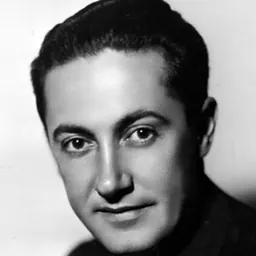
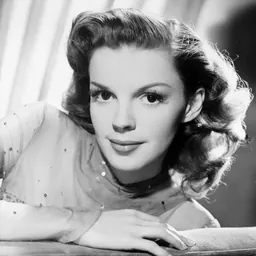
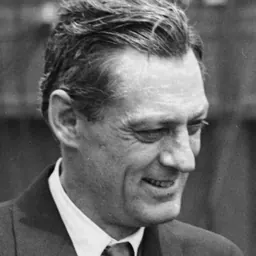
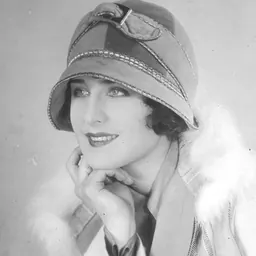
People in Louis B. Mayer's life
Named in this biography and alive at the same time


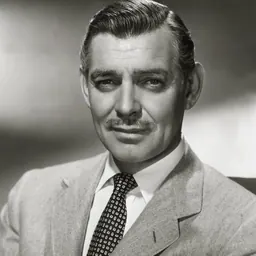
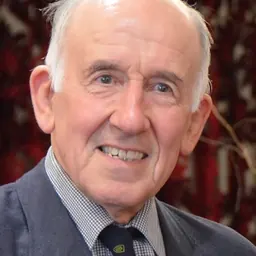
Related people
Same field, nearest in time
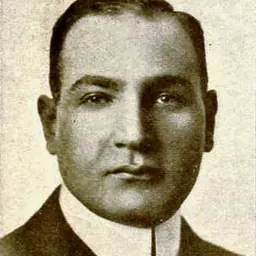
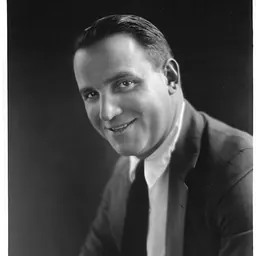


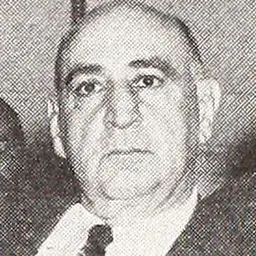

Contemporaries
People whose lives overlapped Louis B. Mayer's
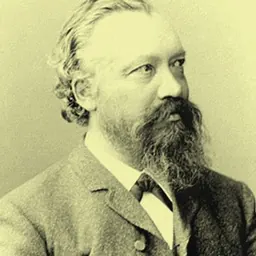
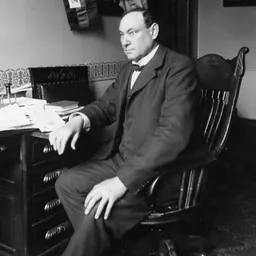
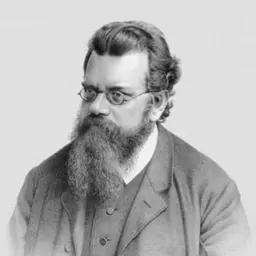


Frequently asked questions
Who was Louis B. Mayer?
Canadian-American film producer (1884–1957)
When was Louis B. Mayer born?
Louis B. Mayer was born on 30 June 1884 in Dymer.
When did Louis B. Mayer die?
Louis B. Mayer died on 29 October 1957 in Los Angeles.
What was Louis B. Mayer's occupation?
Louis B. Mayer was a film producer and screenwriter.
What nationality was Louis B. Mayer?
Louis B. Mayer was American, Russian and Canadian.
Sources & further reading
Cite this page
APA: Biography.guide. (2026). Louis B. Mayer. https://biography.guide/louis-b-mayer/
MLA: "Louis B. Mayer." Biography.guide, https://biography.guide/louis-b-mayer/.
Chicago: "Louis B. Mayer." Biography.guide. https://biography.guide/louis-b-mayer/.
Data last updated: 2026-09-25 · Spot an error? Report a correction.
Page generated 2026-09-27 05:11 UTC