
About Long Yun
Lived 1884 – 1995 (aged 110). Long Yun was a Chinese politician.
Early life Long Yun was an ethnic Yi, and a grandson of a tribal headman (tusi). His Yi name was Naji Niaoti (纳吉鸟梯) or Naji Jiajia (纳吉岬岬), while Long Yun was a Han Chinese name he adopted later. He was a cousin of Lu Han.
Long Yun participated in the anti-Qing struggle in its early years. First he joined the local warlord's army in 1911 and was gradually promoted to the rank of corps commander. He served in Tang Jiyao's Yunnan Army for years until February 1927, when he, together with Hu Ruoyu, launched a coup and expelled Tang from office. Soon after that he became 38th Army commander in the National Revolutionary Army, at the same time continuing as Yunnan chairman for more than a decade.
Governor of Yunnan
After the remarkable "26" coup, Tang Jiyao, then governor of Yunnan, was overthrown by Long Yun and his allies. Long Yun succeeded as the new governor and served as governor of Yunnan from 1928–45. When he was in power he put forward the goal of building a new Yunnan. He carried out a series of reorganizations and reforms from political, military, economic, cultural and educational aspects. During this period Yunnan was politically clear, had good social stability and a strong atmosphere of democracy. He consolidated and reorganized the economy, expanded paper money in the region and reorganized the tariff tax regulations. He prioritized textile export while reorganizing and developing production of tin ore, tungsten, antimony, copper, salt, coal and other resources. Another big part of his project was the improvement of infrastructure, which was very poor in Yunnan. To improve it, he established a transportation enterprise that built the Yunnan–Burma Highway, the Diankang Road, the Sichuan–Yunnan West Road, the Yunnan–Sichuan Road, the Yunnan–Guangxi Highway and the Diankang Highway. He also paid much attention to the agricultural parts of Yunnan. He implemented measuring of land and later used the information they achieved to put through a reformed tax collection. He worked to expand grain farming, reduce tax revenue and strived to achieve food self-sufficiency for all farmers. Due to Long Yun's reforms, Kunming (capital of Yunnan) was commonly known as a "democratic fortress".
Second Sino-Japanese War He was nominated as commander-in-chief of the 1st Army Group, fighting against the Japanese in his province. The Second Sino-Japanese War (1937–45) brought progress and modernization to Yunnan, as the Nationalist government developed the province into a war base against the Japanese. Factories, universities and government agencies were transplanted there from the coastal regions, and fresh manpower, capital and ideas poured into the province. Industries were established and efforts made by the government to develop the resources of the region. The Burma Road made Yunnan the corridor through which supplies flowed to Allied bases in all parts of China, and Kunming became a key U.S. Air Force base. A major advance by the Japanese Army along the upper Salween River in 1942 was halted at Huitongqiao, near Tengchong, indicating the vital role that Yunnan played in the country’s defense.
The campaign involved Chinese troops, assisted by American forces, crossing the upper Salween on 11 May 1944 in order to drive Japanese forces from Yunnan into northern Burma. On 11 May about 40,000 Chinese of the Chinese Expeditionary Force crossed the Salween initially and a further 60,000 arrived later. About 17,000–19,000 Chinese and 15,000 Japanese were killed in the resulting battle. There were more Chinese casualties because the Japanese had time to prepare their fortifications on the south side of the river.
Long was among the Nationalist government insiders implicated in corruption during the 1942-1943 American Dollar Bond scandal. After the 1941 Japanese declaration of war against the United States and the United Kingdom, the two allies sought to support China in a concrete way despite logistical limitations following the loss of British Burma. In early 1953, his position was re-designated as Vice Chairman of the Southwest Administrative Committee.
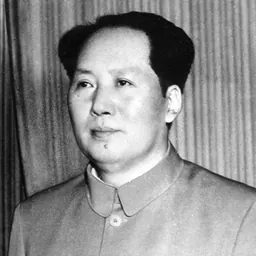
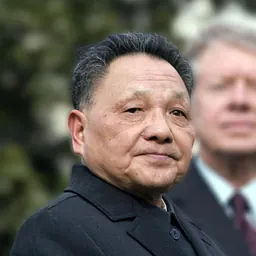
In September 1954, Long was appointed as a Vice Chairman of the National Defense Commission, which was chaired by Mao Zedong. He served alongside senior Communist Party leaders such as Zhu De, Lin Biao, He Long, Peng Dehuai, Chen Yi, Deng Xiaoping, and Ye Jianying. In 1956, he visited Eastern European countries such as the Soviet Union, Romania, Czechoslovakia, Yugoslavia and others. However, he was removed from this position in 1958.
In 1959, he was once again elected as a member of the Standing Committee of the Chinese People's Political Consultative Conference.
On June 27, 1962, Long died in Beijing due to acute myocardial infarction.
Long was buried in Babaoshan Revolutionary Cemetery in grave number 81.
Anti-Rightist movement Later, during the Anti-Rightist Movement, Long Yun was labeled a rightist because of his criticism of Chinese foreign aid policy. He maintained that if the living standard in the Soviet Union was so high that many ordinary workers could own their own car, the responsibility for foreign aid should fall on the Soviet Union, not China, since the Chinese economy was much less advanced than that of the Soviet Union since China was still recovering from wars.
Long Yun refused to change his view and openly complained of his treatment for telling the truth. Ultimately, on the day following his death in 1962, the Chinese government formally declared that he was not a rightist and was thus partially "rehabilitated." In July 1980, nearly two decades after his death, he was finally fully "rehabilitated" in accordance with the Chinese government's policy of admitting the Anti-Rightist Movement had been wrong.
Don’t just read it —
keep it.
Full-length biographies made to live with: read them, listen on the way to work, watch them tonight.
- E-book
- Audio
- Video
Instant download · yours to keep · every purchase keeps this site free
Important facts
People in Long Yun's life
Named in this biography and alive at the same time



Related people
Same field, nearest in time





Contemporaries
People whose lives overlapped Long Yun's

Frequently asked questions
Who was Long Yun?
Chinese politician (1884-1962)
When was Long Yun born?
Long Yun was born on 27 November 1884 in Zhaotong.
When did Long Yun die?
Long Yun died on 27 June 1995 in Beijing.
What was Long Yun's occupation?
Long Yun was a politician.
What nationality was Long Yun?
Long Yun was Chinese.
Sources & further reading
Cite this page
APA: Biography.guide. (2026). Long Yun. https://biography.guide/long-yun/
MLA: "Long Yun." Biography.guide, https://biography.guide/long-yun/.
Chicago: "Long Yun." Biography.guide. https://biography.guide/long-yun/.
Data last updated: 2026-09-20 · Spot an error? Report a correction.
Page generated 2026-09-27 05:22 UTC