
About Lola Rodríguez de Tió
Lived 1843 – 1924 (aged 81). Lola Rodríguez de Tió was an American and Puerto Rican poet, writer and journalist.
Lola Rodríguez de Tió (September 14, 1843 – November 10, 1924) was a Puerto Rican woman who established herself a reputation as a great poet throughout all of Latin America. A believer in women's rights, she was also committed to the abolition of slavery and the independence of Puerto Rico.
Early years Rodríguez de Tió was born Dolores Rodríguez de Astudillo y Ponce de León in San Germán, Puerto Rico. Her father, Sebastián Rodríguez de Astudillo, was one of the founding members of the Ilustre Colegio de Abogados de Puerto Rico (literally, "Illustrious College of Attorneys," the governing body for Spanish attorneys in Puerto Rico, similar to a bar association). Lola's mother, Carmen Ponce de León, was a descendant of Juan Ponce de León, who was an explorer, and the first Spanish Governor of Puerto Rico. She too was a native of the town of San Germán and lived at what is now known as Casa de los Ponce de León. Rodríguez de Tió received her education at home where she was home-tutored. She developed a lifelong love for literature, especially for the works of Fray Luis de León which were to serve her as a source of inspiration. She was very assertive in her early years, at the age of seventeen she demanded to be allowed to wear her hair short, which went against the conventional norm of the time, a personal trademark that she kept through her life.
Political activist
Rodríguez de Tió moved to Mayagüez, with her family. There she met Bonocio Tió Segarra, whom she married in 1863. Rodríguez de Tió became a writer and book importer who often wrote articles in the local press and was as much of an activist against the Spanish regime as was allowed by the government. After marrying Tió, she published her first book of poetry, "Mis Cantos", which sold the then amazing amount of 2,500 copies.
In 1867 and then again in 1889, Rodríguez de Tió and her husband were banished from Puerto Rico by the Spanish appointed Governors. On their first exile they went to Venezuela and on their second banishment they first moved to New York where she helped José Martí and other Cuban revolutionaries, and later to Cuba, where the couple resided until their respective deaths. Their home became a gathering point for politicians and intellectuals as well as exiled Puerto Ricans. In 1868, inspired by Ramón Emeterio Betances's quest for Puerto Rico's independence and by the attempted revolution called the Grito de Lares, she wrote the patriotic lyrics to the existing tune of La Borinqueña. In 1901, Rodríguez de Tió founded and was elected member to the Cuban Academy of Arts and Letters. She was also an inspector of the local school system. She was well known in Cuba for her patriotic poetry about Puerto Rico and Cuba.
On May 29, 2014, The Legislative Assembly of Puerto Rico honored 12 illustrious women with plaques in the "La Plaza en Honor a la Mujer Puertorriqueña" (Plaza in Honor of Puerto Rican Women) in San Juan. According to the plaques the 12 women, who by virtue of their merits and legacies, stand out in the history of Puerto Rico. Rodríguez de Tió was among those who were honored.
Lyrics to the revolutionary version of "La Boriqueña"
The following are the lyrics to Lola Rodríguez de Tió's 1868 revolutionary version of "La Boriqueña":
+Revolutionary version of "La Boriqueña"by Lola Rodríguez de Tió Spanish(original version) Englishtranslation¡Despierta, borinqueño que han dado la señal! ¡Despierta de ese sueño que es hora de luchar!Arise, Puerto Rican! The call to arms has sounded! Awake from this dream, for it is time to fight!A ese llamar patriótico ¿no arde tu corazón? ¡Ven! Nos será simpático el ruido del cañón.Doesn't this patriotic call set your heart alight? Come! We will be in tune with the roar of the cannon.Mira, ya el cubano libre será; le dará el machete su libertad... le dará el machete su libertad.Come, the Cubans will soon be free; the machete will give him his liberty.Ya el tambor guerrero dice en su son, que es la manigua el sitio, el sitio de la reunión, de la reunión... de la reunión.Now the war drum says with its sound, that the countryside is the place of the meeting... of the meeting.El Grito de Lares se ha de repetir, y entonces sabremos vencer o morir.The Cry of Lares must be repeated, and then we will know: victory or death.Bellísima Borinquén, a Cuba hay que seguir; tú tienes bravos hijos que quieren combatir.Beautiful Puerto Rico must follow Cuba; you have brave sons who wish to fight.ya por más tiempo impávido no podemos estar, ya no queremos, tímidos dejarnos subyugar.Now, no longer can we be unmoved; now we do not want timidly to let them subjugate us.Nosotros queremos ser libres ya, y nuestro machete afilado está. y nuestro machete afilado está.We want to be free now, and our machete has been sharpened.¿Por qué, entonces, nosotros hemos de estar, tan dormidos y sordos y sordos a esa señal? a esa señal, a esa señal?Why then have we been so sleepy and deaf to the call?No hay que temer, riqueños al ruido del cañón, ¡que salvar a la patria es deber del corazón!There is no need to fear, Puerto Ricans, the roar of the cannon; saving the motherland is the duty of the heart.ya no queremos déspotas, caiga el tirano ya, las mujeres indómitas también sabrán luchar.We no longer want despots, may the tyrant fall now; the unconquerable women also will know how to fight.Nosotros queremos la libertad, y nuestros machetes nos la darán... y nuestro machete nos la dará...We want liberty, and our machetes will give it to us... and our machetes will give it to us...Vámonos, borinqueños, vámonos ya, que nos espera ansiosa, ansiosa la libertad. ¡La libertad, la libertad!Come, Puerto Ricans, come now, for freedom awaits for us anxiously, freedom, freedom!
Don’t just read it —
keep it.
Full-length biographies made to live with: read them, listen on the way to work, watch them tonight.
- E-book
- Audio
- Video
Instant download · yours to keep · every purchase keeps this site free
Important facts
People in Lola Rodríguez de Tió's life
Named in this biography and alive at the same time
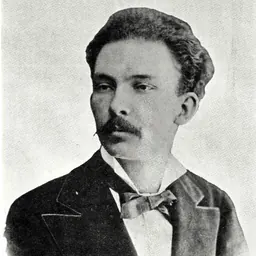

Related people
Same field, nearest in time

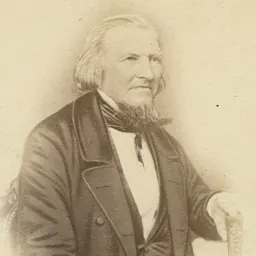
Contemporaries
People whose lives overlapped Lola Rodríguez de Tió's

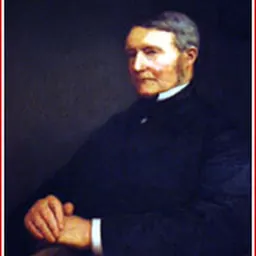
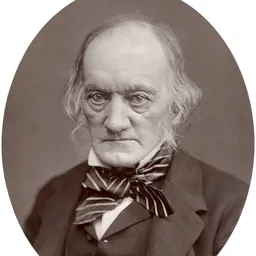
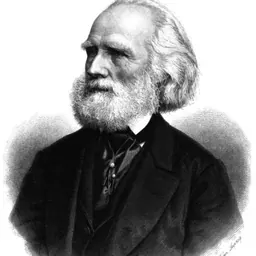
Frequently asked questions
Who was Lola Rodríguez de Tió?
Puerto Rican poet and writer (1843-1924)
When was Lola Rodríguez de Tió born?
Lola Rodríguez de Tió was born on 14 September 1843 in San Germán.
When did Lola Rodríguez de Tió die?
Lola Rodríguez de Tió died on 10 November 1924 in Havana.
What was Lola Rodríguez de Tió's occupation?
Lola Rodríguez de Tió was a poet, writer and journalist.
What nationality was Lola Rodríguez de Tió?
Lola Rodríguez de Tió was American and Puerto Rican.
Sources & further reading
· Wikipedia: Lola Rodríguez de Tió
· DBpedia: Lola Rodríguez de Tió
Cite this page
APA: Biography.guide. (2026). Lola Rodríguez de Tió. https://biography.guide/lola-rodriguez-de-tio/
MLA: "Lola Rodríguez de Tió." Biography.guide, https://biography.guide/lola-rodriguez-de-tio/.
Chicago: "Lola Rodríguez de Tió." Biography.guide. https://biography.guide/lola-rodriguez-de-tio/.
Data last updated: 2026-09-20 · Spot an error? Report a correction.
Page generated 2026-09-27 05:19 UTC