
About Lloyd Tayler
Lived 1830 – 1900. Lloyd Tayler was an Australian architect.
Lloyd Tayler (26 October 1830 – 17 August 1900) was an English architect in Melbourne, Victoria. Several family members subsequently used "Lloyd-Tayler" as a double-barreled surname.
History Tayler was born in London, the youngest son of merchant William Tayler and Priscilla Tayler, née Lloyd, of St John's Wood, London. He was educated at Mill Hill Grammar School, an establishment of the Independent Church, of which his father was an adherent. He was an apt and successful student and in 1846 was sent to the Sorbonne for a liberal education, and became involved in the heady atmosphere of Parisian politics. In 1848 he began a course of study at the Department of Applied Sciences at King's College London, in his third year winning several prizes. His career as an architect began as a pupil of the civil engineer H. J. Castle of Adelphi Chambers, London, and a Mr Molesworth, district surveyor of Southwark. In 1850, following the death of a brother Richard Tayler, he inherited a share of a sheep station near Albury in New South Wales. In June 1851 he left London to assist his brother Alfred, who was a partner in the enterprise, only to learn, when he landed in October 1851, that the whole property — flocks and herds, homestead, outbuildings and machinery — had been destroyed in the bushfires of 6 February 1851, dubbed "Black Thursday". This was the time of the great Victorian gold finds, and Taylor joined a party of professional men in the rush to Mount Alexander, where he was successful, and progressed from digging to gold buying; one of his clients was the future Town Clerk of Melbourne, E. G. Fitzgibbon. a civil engineer. His partner had higher ambitions however, and within two years quit, and with his wife established a Ladies' College in East Melbourne. Tayler had hoped, on leaving England, to catch up with an old schoolmate from Mill Hill, He did however meet his sister, Sarah Toller; they married at St Andrew's Church of England, Brighton, on 9 September 1858, managed the Commercial Bank of Australia building in Collins Street.
In 1889 the Victorian Institute became the Royal Victorian Institute and Tayler was its first president.
Tayler maintained an active interest in architecture after retirement, and at the 1890 Australasian Science Congress in Melbourne contributed an interesting history of Melbourne's buildings.
Tayler died at his residence Pen-y-Bryn, Middle Crescent, North Brighton, Victoria.
Family Tayler (died 17 August 1900) married Sarah Toller (1834 – 15 December 1912) on 9 September 1858. Sarah was a daughter of Rev. Thomas Toller (died 30 November 1885), of Kettering. They had four daughters and one son: Mary Lloyd Tayler (1859–1951) married James Caldwell Anderson on 3 January 1883. Anderson, a barrister, was a son of Robert Stirling Hore Anderson, M.L.C. W. Northcote Lloyd-Tayler (1861 – 29 June 1919) was an architect in the Colonial Architect's Office, Coolgardie, Western Australia. He died at Blackheath, New South Wales. Emily Elizabeth Lloyd Tayler (9 August 1864 – 26 November 1948) married Percy Dobson on 1 July 1885. Emily married again, to Dr Charles Fitzmaurice Harkin (died 25 September 1950) on 23 June 1896. daughter 24 November 1868 daughter 25 November 1873
Selected works St Mary's Church of England, Hotham (1860) St Philip's, Collingwood (1865) Presbyterian Church, Punt Road, South Yarra (1865) Trinity Church, Bacchus Marsh (1869) "Kamesburgh", 74-104 North Road, Brighton (1872) for W. K. Thomson "Chevy Chase" 203 Were Street, Brighton (1881) for John Binnie. It has been instanced as "boom style architecture". Portland House (1872) Bank of Australasia (1876). Australian Club (1879). "Mynda", 5 Molesworth Street, Kew for his son-in-law J. C. Anderson "Thyra", Wilson Street, Middle Brighton (1883) for J. W. Shevill? but later home of William Addison Adamson MLC St Andrew's Church, Brighton enlarged (1886) (with Alfred Dunn) Commercial Bank of Australia Limited on Collins Street, Melbourne (1891–1893) Eastern Hill Fire Station, Melbourne (1892) "Leighswood", Toorak for Charles E. Bright "Rosecraddock", Hawthorn Road, Caulfield for Charles Pettey Langdon "Blair Athol", Brighton Beach for shipowner Archibald Currie (1830–1914) "Kilwinning", Balaclava Road, East St Kilda for James Service
Don’t just read it —
keep it.
Full-length biographies made to live with: read them, listen on the way to work, watch them tonight.
- E-book
- Audio
- Video
Instant download · yours to keep · every purchase keeps this site free
Important facts
People in Lloyd Tayler's life
Named in this biography and alive at the same time




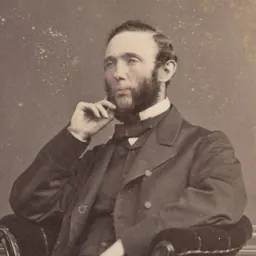
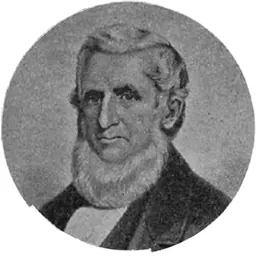
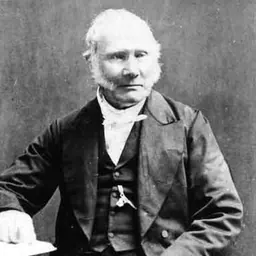

Related people
Same field, nearest in time
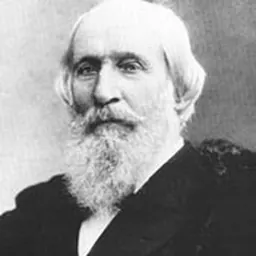



Contemporaries
People whose lives overlapped Lloyd Tayler's




Frequently asked questions
Who was Lloyd Tayler?
(1830-1900) architect
When was Lloyd Tayler born?
Lloyd Tayler was born on 26 October 1830.
When did Lloyd Tayler die?
Lloyd Tayler died in 1900.
What was Lloyd Tayler's occupation?
Lloyd Tayler was an architect.
What nationality was Lloyd Tayler?
Lloyd Tayler was Australian.
Sources & further reading
Cite this page
APA: Biography.guide. (2026). Lloyd Tayler. https://biography.guide/lloyd-tayler/
MLA: "Lloyd Tayler." Biography.guide, https://biography.guide/lloyd-tayler/.
Chicago: "Lloyd Tayler." Biography.guide. https://biography.guide/lloyd-tayler/.
Data last updated: 2026-09-20 · Spot an error? Report a correction.
Page generated 2026-09-27 05:09 UTC